 Life & Style
NA President sets June 2027 deadline for APEC projects, rules out delays, quality cuts and violations
1.
|
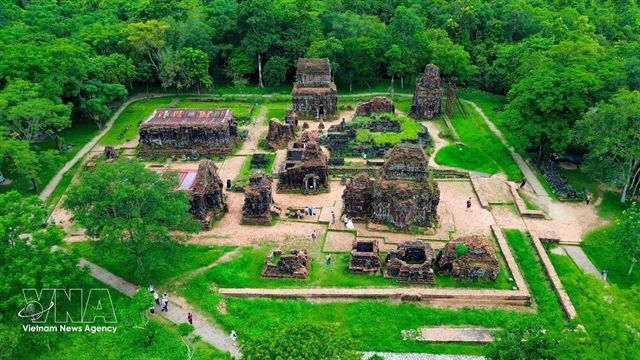
| Despite the test of time and changes in modern life, efforts to preserve the "soul" of heritage continue with dedication, carefully safeguarding every distinctive cultural identity. |
ĐÀ NẴNG — Digital technology is showcasing the World Cultural Heritage site of Mỹ Sơn Sanctuary, enabling visitors to experience its historical and cultural significance while supporting long-term conservation. The site's authenticity is being preserved through scientific restoration and digital transformation, enhancing the visitor experience, and promoting sustainable tourism.
As competition among tourist destinations across the region intensifies, sustainable tourism has become a key priority. Destinations are improving service quality, diversifying tourism products, safeguarding the authenticity of heritage sites, and applying digital technologies in management and promotion. At the World Cultural Heritage site of Mỹ Sơn Sanctuary in Thu Bồn Commune, central Đà Nẵng City, these efforts are helping preserve the sustainable use of tourism resources without adversely affecting the monument.
Preserving authentic values of heritage
Nguyễn Công Khiết, Director of the Mỹ Sơn Cultural Heritage Management Board, said the site is to welcome more than 490,000 visitors in 2026, up by 52,000 from the previous year. Ahead of this year's summer tourism season, Mỹ Sơn had already received over 210,000 visitors.
|
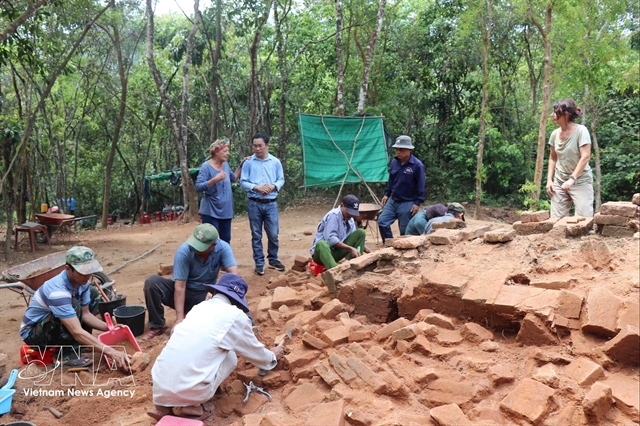
| The Mỹ Sơn World Cultural Heritage Management Board, in coordination with the Institute for Conservation of Monuments, the Việt Nam Institute of Archaeology, the C.M. Lerici Foundation of Italy, and the Archaeological Survey of India (ASI), is implementing a restoration project for tower groups L, E and F within the world cultural heritage site of Mỹ Sơn Sanctuary for the 2025–2029 period. |
While touring the temples and towers of Mỹ Sơn Sanctuary, American visitor Gentry Kitty said the site's multilingual audio guide provided detailed information about the restoration of each tower group. She learned that the conservation of Tower Group L was carried out by Italy's C.M. Lerici Foundation in collaboration with Vietnamese experts, who conducted the careful archaeological excavation and scientific clearance of the group's ruins.
The primary objective was to establish a reliable scientific basis for reinforcing and preserving the original architectural foundations of the tower group while ensuring that the authenticity of the ancient heritage remained intact.
Kitty described Mỹ Sơn as one of Việt Nam's most attractive cultural tourism destinations.
Mỹ Sơn Sanctuary has received strong support from international experts from many countries in preserving the site's authenticity and advancing digitalisation. Conservation projects include UNESCO, the Japan International Cooperation Agency (JICA), Italy's Lerici Foundation, the University of Milan, UNESCO Office in Hà Nội, the Archaeological Survey of India (ASI), the Institute for Conservation of Monuments, the Institute of Archaeology, the Department of Cultural Heritage under the Ministry of Culture, Sports and Tourism, and the Đà Nẵng Department of Culture, Sports and Tourism.
|
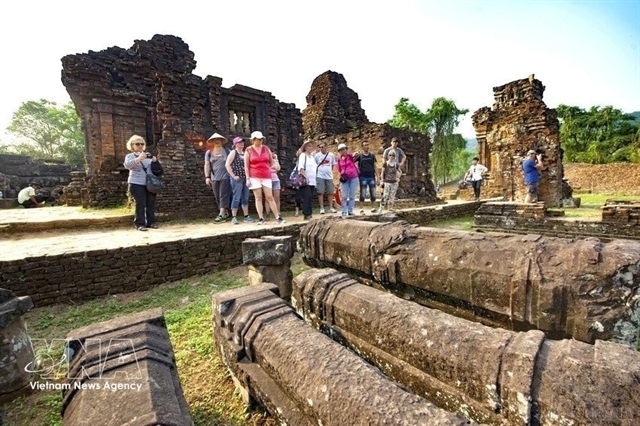
| Visiting the Mỹ Sơn Sanctuary, tourists are supported with many services, including online ticketing, QR code ticket scanning, bank transfer payments, and Visa card payments. |
Nguyễn Thanh Sơn, Chairman of the People's Committee of Thu Bồn Commune, said new tourism products such as photography packages included with admission tickets, Chăm costume rentals combined with photo printing on souvenirs, and cultural performances at the foot of the towers have brought new vitality to the heritage site.
"These initiatives are practical measures to protect the site's original values while digitalising tourism products to attract more visitors to Mỹ Sơn," he said.
Advancing digital transformation
Mỹ Sơn is a priceless heritage site, with many relics still buried underground. Given its history spanning many centuries, many visitors have yet to experience its historical, architectural, and artistic values.
The introduction of multilingual digital interpretation services is therefore regarded as an innovative approach to deepening public awareness of heritage conservation while encouraging broader engagement in protecting tourism resources.
Nguyễn Văn Thương, a visitor from Đà Nẵng, said tourists receive digital information throughout their visit, including online ticket purchases, QR code admission, cashless payment by bank transfer and Visa card, as well as access to information via Google Maps, YouTube, and the management board's website.
"This is especially useful during this summer, when more students and teachers visit Mỹ Sơn," he said.
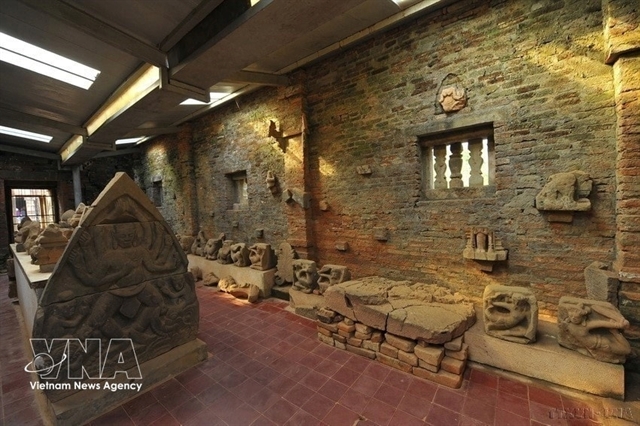
|
| Artifacts displayed inside towers. — VNA/VNS Photos |
Since UNESCO recognised Mỹ Sơn Sanctuary as a World Cultural Heritage Site in 1999, Vietnamese and international scientists have carried out extensive research, archaeological excavations and restoration work, achieving significant progress in conserving the towers. International cooperation has played an important role in improving the effectiveness of preserving the site's authenticity while supporting the digitalisation of its cultural, historical and architectural values in recent times.
Khiết said Mỹ Sơn has completed and handed over a 3D digitalisation project covering the entire temple complex, upgraded its automatic audio guide system and virtual reality applications at the Mỹ Sơn Museum, and enhanced visitors' access to information.
The site is also continuing to develop an AI-powered digital guide providing multilingual interpretation services, improving service quality and moving towards a smart tourism model. At the same time, it is digitalising all heritage records, artefacts and research materials to ensure centralised storage, efficient data sharing and more effective use of heritage resources, he said. — VNA/VNS
Life & Style
 Life & Style
 Life & Style
 Life & Style
 Life & Style
 Life & Style
 Life & Style
 Life & Style
 Life & Style
 Life & Style
 Life & Style
 Life & Style
 Life & Style
 Life & Style
 Life & Style