 Life & Style
European higher education week opens new opportunities
1.
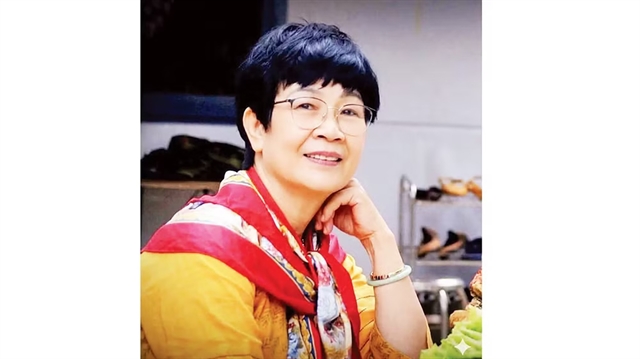 |
| Scriptwriter Nguyễn Thị Hồng Ngát. Photo nhandan.vn |
Scriptwriter Nguyễn Thị Hồng Ngát is known for her award-winning films Canh Bạc (The Gamble) and Trăng Trên Đất Khách (Moon in A Foreign Land). Her latest script, Ông Ké (Mr Ke), has yet to secure funding for production.
She spoke to the media about the need to encourage films that take on subjects of major significance.
What inspired you to write the script Ông Ké, which focuses on President Hồ Chí Minh – a large and challenging subject?
Writing Ông Ké is something that I consider a duty. Those who have worked in the film industry for a long time understand that certain subjects come to you with a sense of responsibility.
The period when President Hồ Chí Minh was in Pác Bó, directly leading the revolution at home, is particularly significant. Yet it has remained a notable gap, as it has rarely been explored in feature films or on television.
I previously wrote about President Hồ Chí Minh at the age of 18 in Nhìn Ra Biển Cả (Looking Out To Sea), which was directed by Vũ Châu and produced by the Việt Nam Cinema Association Film Studio in 2010.
So when I was invited to write about him during his time in Pác Bó, I knew that this would be a far greater challenge.
That period was historically decisive and also marked the man as deeply human. He was a great figure living in a cave, leading a modest life under harsh conditions, yet he made decisions of profound historical significance.
That challenge pushed me to find a way to portray Hồ Chí Minh on screen who is both intimate and relatable, while still embodying his greatness not through slogans, but through cinematic expression.
How did you incorporate everyday elements to portray President Hồ Chí Minh in the Ông Ké script?
Pác Bó, where he lived in a cave and worked by a stream in the mountains of Cao Bằng, offers no grand battle scenes. Instead, it is defined by small and intimate details, such as a simple fire or a modest meal. Hồ Chí Minh washes his face by the stream, or tends vegetables and does laundry alongside his fellows. It is precisely these moments that add depth to the character.
I want to recreate a setting in which Hồ Chí Minh emerges as he truly was: simple, truthful, resilient and above all, constantly thinking about the fate of the nation.
He was an Ông Ké in the eyes of the people, yet he was also the one making decisions that would change the course of history.
In the mountains of Cao Bằng, Ông Ké convened the 8th Party Central Committee Plenum (May 1941) to assess both domestic and international situations and seize opportunities for the Vietnamese revolution.
He founded the Việt Minh Front, led the resistance against the French and established the Việt Nam Propaganda Liberation Army, the precursor to today’s People’s Army of Việt Nam, marking the shift from political struggle to armed resistance.
If there is something new in the film, it lies in its approach rather than in presenting an idealised, one-dimensional portrayal. It allows the character to shine naturally through his everyday life.
You devote considerable effort to completing the script for Ông Ké. Where did you get the funding to carry out that work?
I funded the research myself, travelling for fieldwork, gathering materials and meeting witnesses. I made several trips to Cao Bằng, working with the provincial museum and local researchers, and reviewing a wide range of historical documents.
What proved most valuable was the opportunity to collect vivid details from local residents, their oral history, shared memories and preserved spaces that remain largely intact.
Cao Bằng today is still remarkably beautiful, with many places little changed since the time President Hồ Chí Minh lived there. That is a great advantage for filmmaking.
My team and I scouted locations and travelled to President Hồ Chí Minh's hometown in Nghệ An to seek actors, especially for the role of Hồ Chí Minh, which is an exceptionally challenging part for anyone.
In terms of production preparation, we have done almost everything possible, even though the project has yet to secure any official funding.
Filmmaking is not driven by passion alone. It requires a support system from institutional mechanisms and financial resources. And this is precisely where the Ông Ké project has faced difficulties.
We are still awaiting further support, including from authorities and local administrations, before shooting.
What policy mechanisms are needed to support filmmakers?
Cinema is a unique art form. It does not simply tell stories; it has the power to bring to life what exists in imagination, history and collective memory. A good film can reach and resonate with millions of people at once.
The challenge is that we have yet to fully harness that power. Major subjects like history, national leaders and foundational values are not easy to translate onto the screen. They require significant financial resources and a serious, comprehensive investment. If we rely solely on the private sector, it is very difficult to bring such projects to fruition.
I believe there needs to be a genuinely supportive mechanism not only in terms of funding, but also in respect, encouragement and close collaboration between artists.
When creators take on a major subject, they need to be heard, receive feedback and be supported and trusted by the State and society to bring the work to completion.
Bringing a work to life does not end with finishing a film. That is only the first step. What follows is equally important: distribution, promotion and ensuring the film reaches audiences both at home and abroad. If done well, a film can become a vivid lesson in history and ethics.
What recommendations would you make for State management as well as improving the promotion and distribution of art and cinema?
I believe that in the current context, to effectively implement Resolution 80 on developing Vietnamese culture and advancing cultural industries, the first step is to change the mindset and approach to management. The arts cannot be governed through purely administrative methods or rigid, one-size-fits-all procedures.
Policymakers need to understand that a strong artistic work depends not only on investment but also on a supportive creative environment. Artists should be enabled to focus on their work, rather than being burdened by excessive procedures and unnecessary constraints.
Fairness and transparency are also essential. Scripts and projects should be evaluated based on their artistic merit and social value, not on external factors.
Finally, there must be genuine respect. Artists need not only funding, but also recognition and meaningful dialogue. An open attitude and a willingness to listen can, in themselves, provide powerful motivation. — VNS
Life & Style
 Life & Style
 Life & Style
 Life & Style
 Life & Style
 Life & Style
 Life & Style
 Life & Style
 Life & Style
 Life & Style
 Life & Style
 Life & Style
.jpg) Life & Style
Life & Style
 Life & Style
 Life & Style