 Life & Style
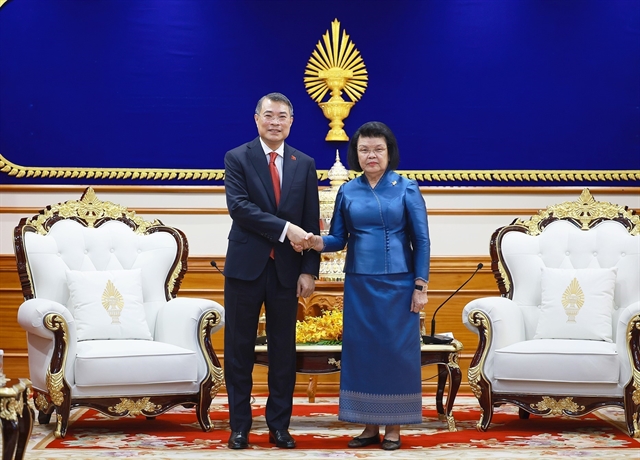
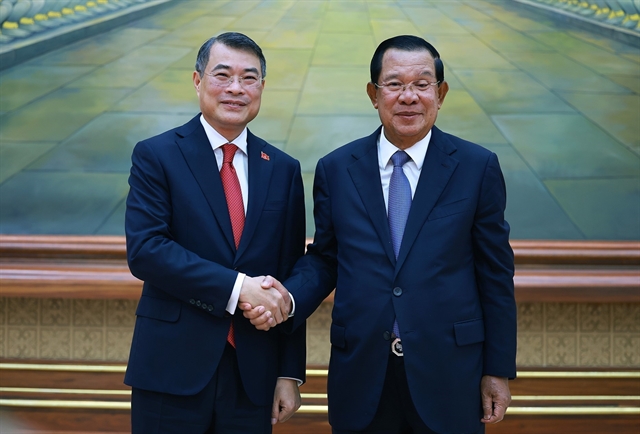
Vietnamese Prime Minister meets Cambodian National Assembly President
1.
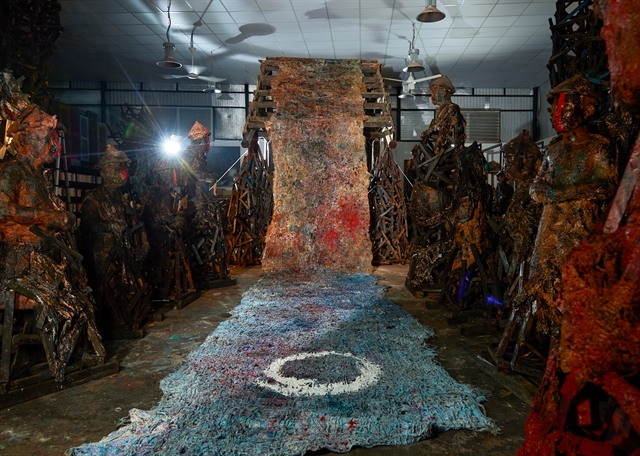 |
| An installation by Lê Hữu Hiếu at the 61st Venice Art Biennale in Italy. — Photo courtesy of Venice Art Biennale |
HÀ NỘI — Việt Nam will make its debut at the 61st Venice Biennale with a showcase of lacquer works by ten artists, marking a major milestone for the country at one of the world’s most prestigious art events.
Entitled Vietnam: Art in a Global Flow, the exhibition, running from May 9 to November 22, brings together the artists to explore the medium as both tradition and an evolving artistic language, reflecting time, craft and Việt Nam’s place in a global dialogue.
It showcases works by Thành Chương, Trịnh Tuân, Công Kim Hoa, Bùi Hữu Hùng, Đoàn Thị Thu Hương and Lê Hữu Hiếu among others, curated by Đỗ Tường Linh.
According to the culture ministry, Việt Nam’s participation in the international exhibition in Italy marks a significant milestone, affirming the presence of Vietnamese art at one of the world’s most prestigious and influential contemporary art forums.
The exhibition centres on lacquer as its primary medium. Across painting, installation and spatial experimentation, the artists approach lacquer through both traditional techniques and contemporary practices.
Known for its layered process and depth of surface, lacquer is presented not only as a material but as a living artistic language shaped by time, labour and transformation.
With its characteristic layering process and rich colour palette, the artworks offer multi-layered visual experiences in which imagery, light and materials interact closely.
In this context, lacquer is viewed not only as a traditional craft technique but also as an artistic language rich in cultural depth and adaptable to contemporary issues. It represents a dynamic practice, reflecting the cyclical rhythm of life and the artists’ persistent creative process.
Artist Hiếu’s installation is a highlight of Việt Nam’s debut at Ca’ Faccanon, a 15th-century Gothic palace in Venice that has reopened after more than a year of renovation.
His exhibition, the only solo show by Vietnamese artists at the Biennale, is more than a work of art. It is a multi-layered structure intertwining traditional elements, history and contemporary life in a distinctive artistic dialogue.
Even when engaging with modern artistic approaches or Western academic traditions, one’s cultural roots remain a vital foundation, according to Hiếu.
"Our ancestors have left an immensely rich cultural heritage," said Hiếu. "I feel fortunate to be standing on a 'goldmine' from which to research and create new works."
Vietnam: Art in a Global Flow also responds to the Biennale’s 2026 theme, In Minor Keys, which foregrounds subtlety, resonance and quieter forms of expression.
In Minor Keys will feature 110 invited participants, including individual artists, collaborative duos, collectives and artist-centred organisations.
Tuan Andrew Nguyen is among invited artists. The overseas Vietnamese received his Master of Fine Arts from the California Institute of the Arts in 2004 and currently lives and works in HCM City.
The Venice Art Biennale, first held in 1895 and organised every two years, is widely regarded as one of the most prestigious art events in the world.
It brings together hundreds of artists, curators and organisations from across the globe, showcasing contemporary trends and key issues shaping international art.
Việt Nam’s appearance at the Venice Art Biennale 2026 is not only a symbolic milestone for the country’s fine arts scene but also a new chapter in the integration of Vietnamese art into the global landscape.
Resolution 80 adopted by the Communist Party of Việt Nam in January on the development of Vietnamese culture in the new era outlines a strategic vision to foster cultural growth alongside the cultivation of well-rounded Vietnamese citizens, with the aim of strengthening the country’s global position and soft power.
In line with this vision, the country has in recent years intensified its cultural integration efforts through a range of tangible and practical activities.
In the coming period, Việt Nam will prioritise forging stronger ties with international partners, promoting its cultural products overseas and taking part in major global events such as the US Academy, the Cannes Film Festival, the World Expo and the Venice Biennale.
At the same time, efforts will focus on developing human resources, attracting talent, facilitating technology transfer and expanding cultural promotion across digital platforms.
This is not solely the responsibility of the cultural sector but a broader mandate for the entire political system. It is a long-term endeavour aimed at advancing the nation’s development aspirations in the new era. — VNS
Life & Style
 Life & Style
 Life & Style
 Life & Style
 Life & Style
 Life & Style
 Life & Style
 Life & Style
 Life & Style
 Life & Style
 Life & Style
 Life & Style
 Life & Style
 Life & Style
 Life & Style