 Life & Style
Two women recognised for farming excellence, promotion of local specialties
1.
|
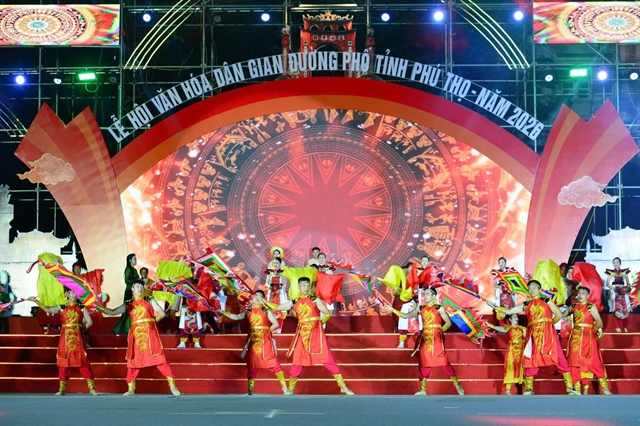
| More than 1,500 artisans and community performers take part in the vibrant parade of Thanh âm nguồn cội (Echoes of Origins) in Việt Trì City. Photos phunuvietnam.vn |
PHÚ THỌ — Thanh Âm Nguồn Cội (Echoes of Origins), a large-scale street folk arts festival, lit up Việt Trì City on the evening of April 24, offering a vivid reimagining of the cultural depth of Việt Nam’s ancestral land.
As a highlight of the Hùng Kings Commemoration Festival – Hùng Temple Festival and the 2026 Ancestral Land Culture and Tourism Week, the event brought together past and present through the language of contemporary performance.
|
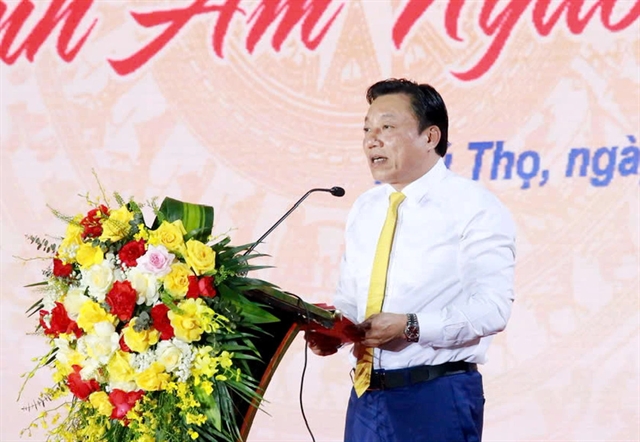
| Vice Chairman of the Phú Thọ People’s Committee Nguyễn Huy Ngọc emphasises that the street folk festival aims to honour and promote the rich cultural values of the ancestral land. |
Speaking at the opening ceremony, Vice Chairman of the provincial People’s Committee, Nguyễn Huy Ngọc reaffirmed the enduring place of the Hùng Kings in the Vietnamese consciousness.
“For generations, the Hùng Kings have been revered as the founding ancestors of the nation, embodying the origins of the Vietnamese state,” he said, adding that the worship of the Hùng Kings has become a defining cultural identity and a moral tradition expressing deep gratitude across generations.
From the beginning of the lunar year to April 24, the Hùng Temple Historical Site welcomed an estimated four million visitors – a testament to the enduring appeal of the festival season in the ancestral land.
A living archive of festivals
|
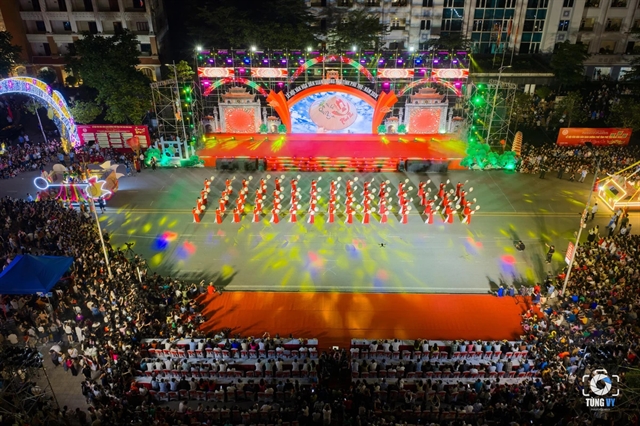
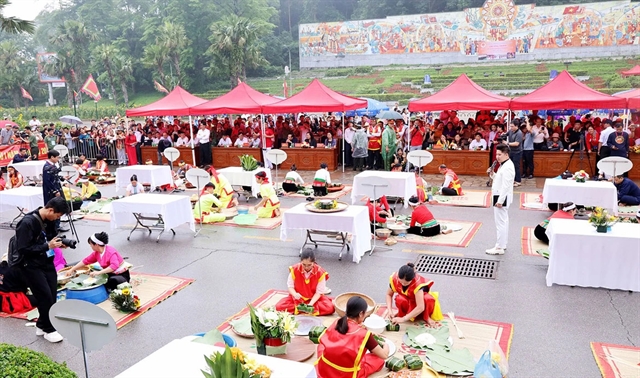
| Heritage truly lives only within the community, as reflected in the performances by local residents during the festival. Photo Tùng Vy |
The 120-minute programme featured 18 artistic troupes representing communes and wards across the newly expanded Phú Thọ Province, with more than 1,500 artisans and community performers taking part in parades and staged performances.
Each troupe presented a uniquely designed float, recreating distinctive cultural symbols from across the province following the administrative merger of Phú Thọ, Vĩnh Phúc and Hòa Bình.
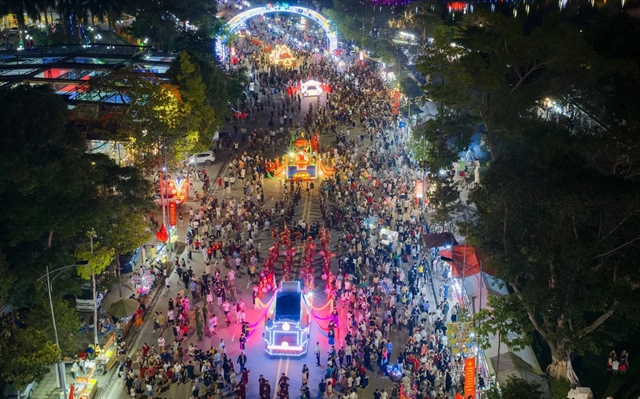
The procession moved through central Việt Trì, from the Nguyễn Tất Thành–Hai Bà Trưng intersection to Văn Lang Park and onward to the Hùng Kings Museum, guided by narration from Meritorious Artist Lê Chức and MC Thanh Huyền, adding emotional depth to the spectacle.
One of the festival’s defining features was its ability to gather the cultural essence of three regions (Phú Thọ, Vĩnh Phúc and Hòa Bình) into a single night.
Audiences were treated to a rich sequence of performances, including the Hùng Temple Festival, the legend of the Hùng Kings teaching rice cultivation, Phú Thọ xoan singing, Tây Thiên Festival, Trò Trám Festival with its well-known fertility rituals, Xên Mường, Gầu Tào festivals of the Mông people, Tết Nhảy (the Dao Jumping Festival), the Đào Xá elephant procession, as well as field festivals of the Cao Lan and Mường communities.
Traditional art forms such as trống quân singing, gong performances, bamboo dance and Mo dance were also showcased.
Though each segment lasted only a few minutes, the meticulous staging (combining floats, traditional costumes, folk props and modern lighting) transformed the city into a vibrant “living museum”.
A heritage land with renewed aspirations
According to provincial authorities, Phú Thọ is home to 2,778 historical sites, including six special national relics, 176 national-level sites and 797 provincial sites. The province also preserves six recognised national treasures alongside thousands of valuable artefacts.
In terms of intangible heritage, nearly 2,000 forms are recorded, notably two UNESCO-recognised elements: the Worship of the Hùng Kings in Phú Thọ and Phú Thọ xoan singing. Other practices are part of multinational heritage dossiers, including tug of war rituals, ca trù ceremonial singing, and Tam Phủ practices (Mother Goddess worship).
The year 2026 marks a significant milestone, as the festival takes place under a new two-tier local governance model following the merger of three provinces into an expanded Phú Thọ.
This transition opens up broader space for cultural exchange, economic development and tourism growth.
Through the festival, the province aims to present itself as a dynamic cultural destination, where heritage is not only preserved but actively reinterpreted and shared.
This vision resonates strongly with Resolution No. 80-NQ/TW on building and developing Vietnamese culture and people to meet the requirements of sustainable national development, which calls for the safeguarding and creative promotion of cultural values in contemporary society.
A festival of the people
|
| The Thanh âm nguồn cội (Echoes of Origins) street festival stands out as a highlight of the 2026 Hùng Kings Commemoration Festival and the Ancestral Land Culture and Tourism Week. |
What ultimately set Thanh Âm Nguồn Cội apart was not its scale, but its people.
The performers were not professional artists alone, but community members – from xoan singers and Mường women playing gongs, to village youths, Dao drummers and children embodying descendants of Lạc Hồng.
Together, they told the story of their homeland in their own voices.
It was a powerful reminder that heritage truly lives only within the community. And on that April night in Việt Trì, heritage spoke – through music, colour and a shared sense of identity.
At the same time, the festival’s contemporary staging, large-scale coordination and integration of modern presentation techniques reflect the growing role of technology and innovation in cultural expression, in line with Resolution No. 57-NQ/TW on promoting science, technology, innovation and national digital transformation.
In this sense, Thanh Âm Nguồn Cội is more than a festival. It is a resonant echo from the nation’s origins – carried forward into the rhythm of modern life. — VNS
Life & Style
 Life & Style
 Life & Style
 Life & Style
 Life & Style
 Life & Style
 Life & Style
 Life & Style
 Life & Style
 Life & Style
 Life & Style
 Life & Style
 Life & Style
 Life & Style
 Life & Style