 Life & Style
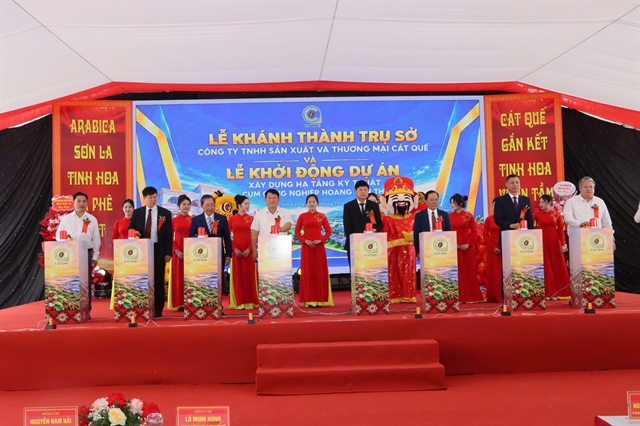
Sơn La launches $24 million industrial cluster project
1.
Thúy Hằng
HÀ NỘI — At the Spring Fair 2026, trunks are turning heads as master artisans from centuries-old craft villages across Việt Nam gather to present their skills and creations to thousands of visitors.
Among them is artisan Nguyễn Trọng Điểm from Phú Vinh bamboo and rattan weaving village on the outskirts of Hà Nội, and for him, the fair is more than a showcase – it marks a turning point with the debut of his papaya-trunk lamps, a product he spent eight years researching and perfecting.
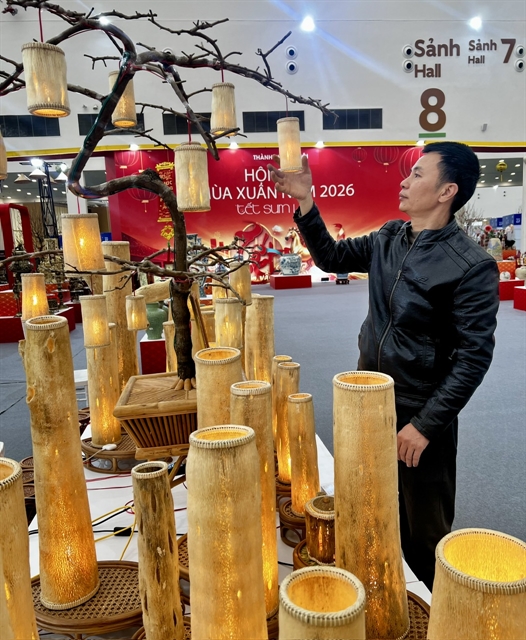 |
| Artisan Nguyễn Trọng Điểm beside his papaya‑trunk lamps on display at the Spring Fair 2026. — VNS Photo Thúy Hằng |
Điểm, who also runs a workshop producing interior products, recalls how the idea first came to him. He once discovered a papaya tree trunk whose core had rotted away, leaving only a thick fibre shell.
This unusual material proved ideal for his ongoing artwork, an ant made from dried coconut and bamboo carrying an object many times larger than its body, symbolising the belief that strength is not defined by size.
“I put a light bulb inside the shell, and it looked beautiful. After enjoying the satisfaction of completing the piece, I began to think about how to develop it into a new product,” he said.
The journey was far from simple. For years, Điểm studied the properties of this unconventional material: the age at which a papaya tree can be harvested, how easily the shell is damaged by humidity and its vulnerability to pests. He found that a tree should be at least three years old to provide the right quality, and each lamp requires more than three months to complete.
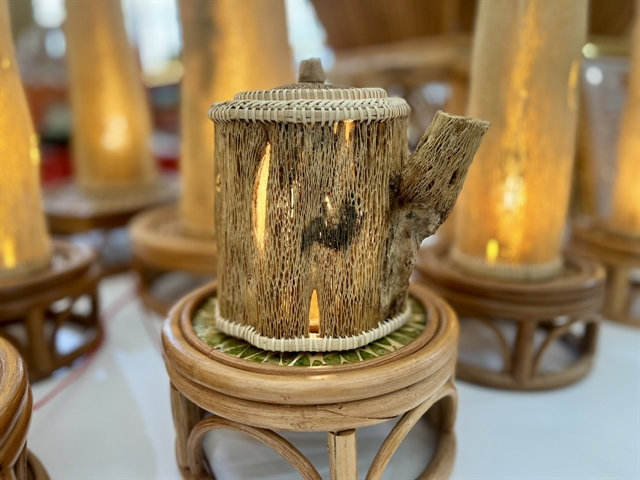 |
| A teapot‑shaped lamp crafted by artisan Nguyễn Trọng Điểm from papaya trunk. — VNS Photo Thúy Hằng |
His display of papaya lamps has drawn keen interest. Many visitors were surprised by the unusual material, while some questioned its durability. Điểm moved to reassure them: “The lamp that was part of the ant installation is still intact and in good condition, so I am confident in the strength of this material.”
He said he was delighted to unveil the creation at such a major event. In October, the product had already won second prize at a handicraft design competition organised by the Hà Nội Department of Industry and Trade.
The Spring Fair offers more than papaya lamps. Visitors can explore a wide range of traditional handicrafts, watch live demonstrations, talk with artisans and even join workshops to try their hand at crafting.
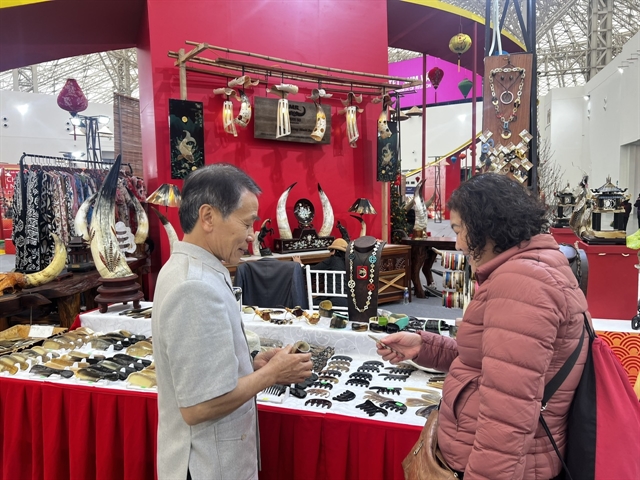 |
| Artisan Nguyễn Văn Sử (left) from Thụy Ứng craft village presenting his buffalo and cow horn products to a visitor. — VNS Photo Thúy Hằng |
At a booth dressed with bamboo screens and sedge mats, artisan Nguyễn Văn Sử from Thụy Ứng craft village introduces his buffalo and cow horn products.
His brand, Mười Sử, carries on the village tradition of making spoons, combs, hairpins, vases and jewellery while adapting to market demand with tools for traditional health care. Visitors can try their hand at crafting horn products under his guidance, getting a taste of several basic steps in a process that normally involves around 30.
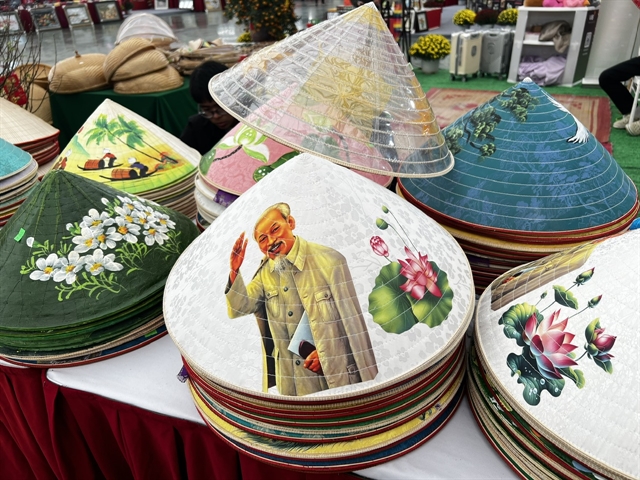 |
| Chuông Village conical hats, crafted from a variety of materials including palm leaves, lotus leaves, bodhi leaves, and even transparent plastic, are available for sale at the Spring Fair 2026. — VNS Photo Thúy Hằng |
Nearby, the Chuông conical hat village booth draws crowds with its colourful Tết-inspired designs. A young woman carefully finishes a drawing on a palm-leaf hat, creating a customised piece to take home. The hats, far beyond practical headwear, are hand-painted with pastoral scenes, landmarks and blossoms that symbolise the Lunar New Year.
Artisan Tạ Thu Hương says her booth appeals to both younger and middle-aged visitors, with lotus and bodhi leaf hats proving especially popular for their uniqueness and sacred meaning. Transparent plastic hats, meanwhile, catch the eye of younger customers who pair them with áo dài during Tết.
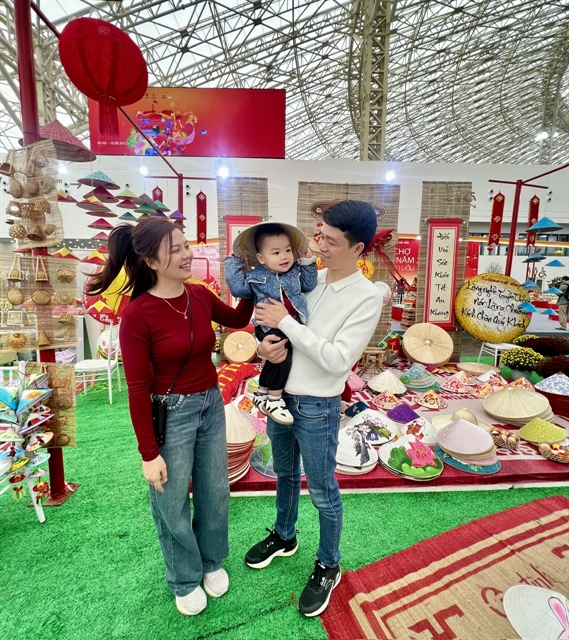 |
| A baby girl wears a conical hat at the booth of artisan Tạ Thu Hương. — VNS Photo Thúy Hằng |
At another booth, rhythmic tapping draws a crowd as artisan Phạm Văn Vững carves a wooden sculpture. From Thiết Ứng Village in Hà Nội’s Vân Hà Commune, renowned for woodcarving and statue-making since the 17th century, Vững has practised the craft since childhood. Returning to the fair after his success last autumn, he presents his latest works: rounded horses in varied postures, symbolising prosperity and abundance for the coming Year of the Horse.
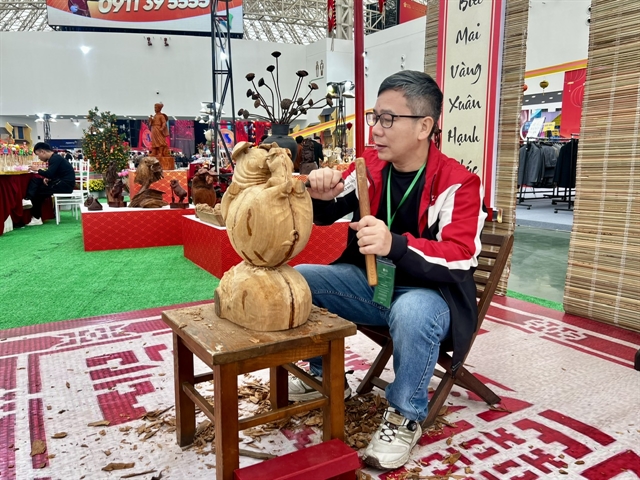 |
| Artisan Phạm Văn Vững from Thiết Ứng Village demonstrating woodcarving at the Spring Fair 2026. — VNS Photo Thúy Hằng |
The Spring Fair 2026 not only highlights the creativity and resilience of Việt Nam’s craft villages, but also shows how traditional skills continue to evolve, offering visitors both a glimpse of heritage and the excitement of new ideas. — VNS
Life & Style
 Life & Style
 Life & Style
 Life & Style
 Life & Style
 Life & Style
 Life & Style
 Life & Style
 Life & Style
 Life & Style
 Life & Style
.jpg) Life & Style
Life & Style
 Life & Style
 Life & Style
.jpg) Life & Style
Life & Style