 Life & Style

AITO Looks Ahead to Europe, Building a Thriving Automotive Ecosystem
1.
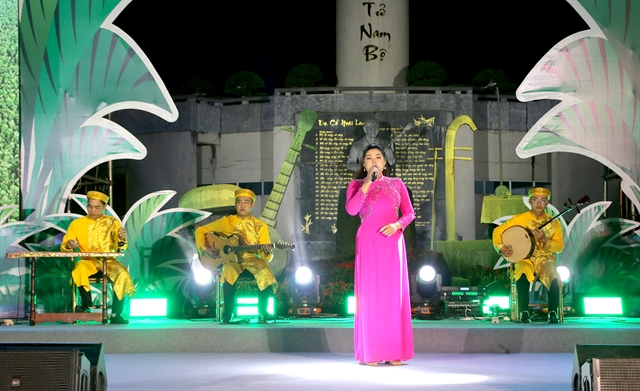 |
| The Cửu Long (Mekong) province of Cà Mau is striving to promote tài tử music, a traditional music genre of the Southern region from 2026-2030. — VNA/VNS Photo Tuấn Kiệt |
CÀ MAU — The Cửu Long (Mekong) Delta province of Cà Mau is developing a new plan for tài tử music from 2026 to 2030 as part of the province’s efforts to preserve and promote the traditional art genre of the southern region.
Ngô Vũ Thăng, Vice Chairman of the provincial People’s Committee, said the plan should focus on training courses on tài tử music to nurture love for this traditional music form among young people.
The province will offer more classes and performances free of charge to students and residents, helping them learn and understand more about the art.
The province will also support tài tử music clubs to boost their operation and quality, and launch performance and composition courses to help musicians improve their skills and performances.
The clubs will perform at tourism sites and homestays to build typical cultural products of the province.
According to the provincial Department of Culture, Sports and Tourism, Cà Mau is now home to 750 clubs with more than 5,000 members.
Around 100 training courses were launched in the 2021-2025 period, attracting over 4,000 artisans and musicians. The courses focused on playing traditional musical instruments and writing lyrics for tài tử music compositions.
The province also offered training courses and performances in 14 high schools and other educational facilities.
Thăng asked the department and relevant agencies to focus on seeking and collecting old and rare compositions and documents on tài tử music and digitalising them, as well as applying digital transformation in preserving and promoting the heritage.
He added that the department should organise provincial-level scientific conferences on tài tử music and expand exchange and cooperation with musicians in the region to spread the art among the artists and the community.
Tài tử music is the prototype for vọng cổ (nostalgic tunes) and cải lương (reformed opera) of southern Việt Nam. It is part of the region’s traditional music that began about 100 years ago.
The music is often performed during festivals and special occasions in the Mekong Delta provinces of Cần Thơ, Vĩnh Long, Bạc Liêu and Cà Mau.
Musicians play traditional instruments, including kìm (two-stringed guitar), cò (vertical violin with two strings), tranh (16-string zither) and bầu (monochord zither), and are accompanied by singers who express varying emotions.
Tài tử music was recognised as an Intangible Cultural Heritage of Humanity by UNESCO in 2013. — VNS
Life & Style
 Life & Style
 Life & Style
 Life & Style
 Life & Style
 Life & Style
 Life & Style
 Life & Style
 Life & Style
 Life & Style
 Life & Style
 Life & Style
 Life & Style
 Life & Style
 Life & Style