 Life & Style
Việt Nam, Google seek closer cooperation on AI, digital economy
1.
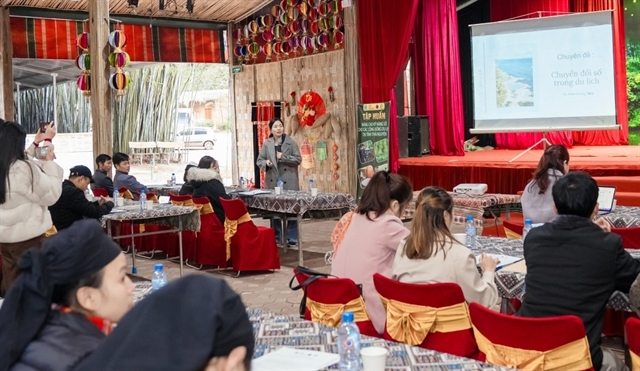 |
| Participants at a training programme titled 'Enhancing digital skills for tourism communities in Thái Nguyên'. — Photo vov.vn |
THÁI NGUYÊN — From 2026 to 2030, Thái Nguyên Province plans to achieve a significant breakthrough in tourism by developing smart and green initiatives and accelerating the use of digital technology to enhance connectivity and support for visitors' information and service needs. This effort aligns with Resolution No. 57-NQ/TW from the Politburo, which emphasises breakthroughs in science, technology, innovation, and national digital transformation.
Thái Nguyên anticipates a transformation in its tourism industry next year, after the province welcomed over 7.3 million visitors in 2025 and generated total tourism revenue of VNĐ7.4 trillion (US$281 million).
This growth will reinforce its status as a key destination in northern Việt Nam's midland and mountainous region and its progress towards the goal of making tourism a vital economic sector for the province.
Recently, the promotion and marketing of Thái Nguyên tourism through websites, smart tourism portals and social media channels have been effectively maintained.
The implementation of the digital transformation in the tourism sector has been robust, particularly through the province’s smart tourism portal, which includes the website mythainguyen.vn and the Thái Nguyên Tourism mobile app.
These platforms connect with the nation's smart tourism system and help support local socio-economic development. Additionally, there has been a focus on strengthening tourism development links through surveys and fam trips to engage travel companies nationwide, developing tours and routes around unique local products.
The Thái Nguyên Department of Culture, Sports and Tourism has also organised numerous professional training courses, which include raising awareness of the digital transformation in tourism development.
They equip participants with the knowledge and skills necessary for implementing digital strategies in tourism, exploring opportunities for leveraging technology and crafting digital marketing and communications plans. A key component involves guiding citizens on how to create engaging content and videos for digital and social media platforms to attract tourists.
According to the Thái Nguyên Tourism Development Plan for 2026-2030, the province aims to welcome at least 12 million tourists by 2030, with annual tourism revenue exceeding VNĐ25 trillion ($951 million). This growth is expected to create approximately 10,000 jobs in the tourism sector and develop at least 300 new tourist accommodations, including a minimum of five 4-5 star hotels.
To achieve these goals, Thái Nguyên recognises the importance of prioritising the digital transformation. Specifically, the province plans to digitise all data related to tourist attractions, tour guides, travel agencies, accommodations, restaurants and entertainment facilities.
It will also develop mobile applications to provide visitors in key areas with information about destinations and tourism products and services, as well as automated translations of tour guides into popular languages.
The province will continue to embrace artificial intelligence, virtual tourism assistants and advanced technologies for tourism promotion and marketing.
The implementation of the Thái Nguyên Smart Tourism Development Project for 2026-2030 will focus on building a comprehensive electronic tourism portal that meets State management requirements, supports tourism enterprises and promptly addresses tourist needs.
There will be a commitment to transparently disclose administrative procedures, processing times, policy mechanisms and priority projects to attract tourism investment through the province’s electronic information portal and public administrative centre.
From 2026 to 2030, the Thái Nguyên tourism industry will pursue the goal of 'Two Key Areas, One Driving Force, One Foundation'.
Central to this ambition is the development of smart and green tourism initiatives, enhancing digital technology connectivity for visitors, constructing a smart tourism ecosystem that integrates tourism services and applying green and clean technologies in tourism services and accommodations. — VNS
Life & Style
 Life & Style
 Life & Style
 Life & Style
 Life & Style
 Life & Style
 Life & Style
 Life & Style
 Life & Style
 Life & Style
 Life & Style
 Life & Style
 Life & Style
 Life & Style
 Life & Style