 Life & Style
PM orders urgent completion of decree on petroleum trading by November 10
1.
|
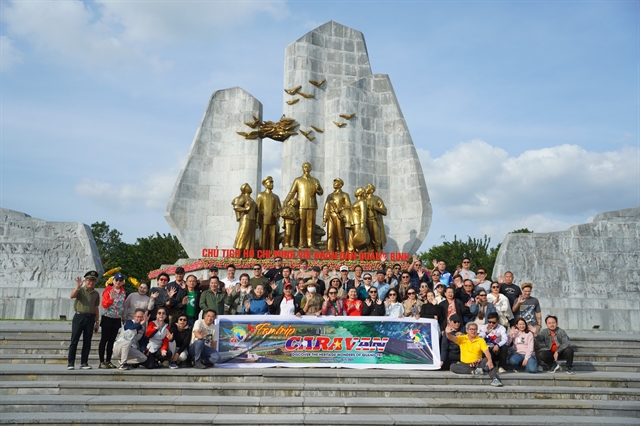
| The Thailand - Laos Famtrip delegation takes souvenir photos at HCM Square Quảng Trị Province. — Photo baovanhoa.vn |
QUẢNG TRỊ — Quảng Trị is fast emerging as a standout destination for caravan tourism, drawing keen interest from travel businesses in Laos and Thailand thanks to its renowned landscapes, diverse tourism products and strategic position on the East–West Economic Corridor.
With its blend of sea, forest, culture and history within short travel distances, the central province is using its natural advantages to position itself as a regional hub for self-driving travellers. To showcase this potential, the Quảng Trị Tourism Association has organised a Caravan Famtrip for travel businesses from Laos, Thailand and other international partners. Running from November 25–28, the trip gives participants a closer look at Quảng Trị’s rich heritage while deepening tourism links across the region.
The programme, which surveys the Quảng Trị – Laos – Thailand route, has received strong feedback from international operators who praised the province’s growing appeal following its merger. Insights from the Thailand – Laos Famtrip delegation, coupled with commitments from local enterprises to enhance accommodation and services, signal promising growth for cross-border road tourism.
During their journey, delegation members said they were impressed by the province’s wide range of attractions, including the beaches of Cửa Tùng and Cửa Việt, historical and cultural landmarks and convenient links to the Phong Nha – Kẻ Bàng World Natural Heritage site. Many highlighted Quảng Trị’s rare ability to offer varied experiences in a compact area.
A key advantage is the province’s position along the East–West Economic Corridor, described by tourism operators as a strategic asset for caravan development. The Lao Bảo and Cha Lớ border gates allow self-driving tourists from Laos and Thailand to easily reach Quảng Trị and continue to major destinations such as Phong Nha, Huế and Đà Nẵng.
"Quảng Trị offers everything caravans seek: convenient transit, stunning landscapes and diverse experiences," said a Thai business representative.
Lao travel companies also see strong potential in developing tours centred on the region’s sea, cave and cultural routes, which align with the rising popularity of self-driving travel. Their assessments reinforce the view that Quảng Trị is well placed to become a caravan hub.
Đoàn Xuân Tiến, Chairman of Đoàn Gia Group, noted that Lao and Thai partners have set high requirements for accommodation, from room quality and parking capacity to services tailored specifically to caravan groups.
"These standards exceed those for regular guests, but we are prepared to meet them because the caravan route holds great promise for the future," Tiến said.
In response, Đoàn Gia Resort Phong Nha has standardised services, prioritised room allocations, expanded parking areas and developed dedicated packages covering accommodation, dining, laundry and technical support. Flexible pricing and additional staffing during peak periods are also in place to ensure smooth operations.
“We aim to establish a product of ‘reception – service – operation of the caravan’ that meets international standards, enhancing our ability to attract and retain caravan guests in the future,” Tiến said.
From a regional perspective, businesses see substantial potential for deeper cooperation among Vietnamese, Lao and Thai tourism enterprises. Such collaboration could create a steady customer base and build a cross-border ecosystem for caravan services, encouraging investment in transport, accommodation and distinctive experiences along the 'one journey - three experiences' route.
Nguyễn Anh Tuấn, Chairman of the Quảng Trị Tourism Association, said the association will assist local businesses in standardising services, strengthening human resource training and establishing rapid coordination mechanisms across the three countries to attract more self-driving tourists. With strong local commitment and positive assessments from Laos and Thailand, caravans are emerging as a strategic pathway for the future of Quảng Trị tourism. VNS
Life & Style
 Life & Style
 Life & Style
 Life & Style
 Life & Style
 Life & Style
 Life & Style
 Life & Style
.jpg) Life & Style
Life & Style
 Life & Style
 Life & Style
 Life & Style
 Life & Style
 Life & Style
 Life & Style