 Business Beat



French Institute to host Digital November
1.
|
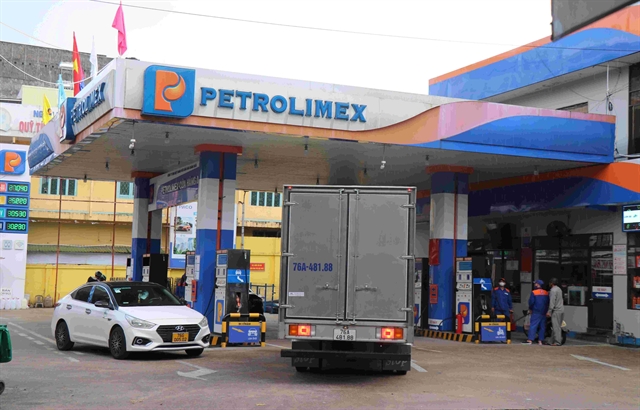
| A petrol station in Quảng Ngãi Province. The petrol price stabilisation fund had a balance of nearly VNĐ196.3 billion at the end of the second quarter of 2026. VNA/VNS Photo |
HÀ NỘI — The Ministry of Industry and Trade has proposed ending contributions to, and disbursements from, the petrol price stabilisation fund from January 1, 2027, a move expected to mark a shift in the management of domestic fuel prices.
Under the 14th draft of a decree on petroleum trading currently open for consultation, the ministry proposes removing the petrol price stabilisation fund from the list of price stabilisation measures and terminating all fund contributions and spending from the beginning of 2027.
The proposal signals a significant change in the approach to fuel price management. However, scrapping the fund would not mean the State would lose all tools to intervene in the event of unusual market fluctuations.
Under the draft, competent authorities could impose price ceilings, price bands or specific prices for a defined period when necessary. If the period expires without a decision to extend the measure, it would automatically lapse, allowing businesses to resume setting, announcing and declaring their own prices, unless otherwise decided by the authorities.
The approach aims to clarify the duration and conditions for applying price stabilisation measures while strengthening the role of prices set and announced by businesses. Its effectiveness will depend on the availability of alternative intervention tools, their scope of application and the timeliness of responses to fluctuations in supply, import costs and global energy prices.
Ending contributions to and disbursements from the fund would also require the settlement of outstanding financial obligations, particularly advances from the State budget and balances held by major petroleum wholesalers.
The draft sets out a roadmap for settling budget advances made to the fund under Government Resolution No. 69/NQ-CP.
If, by early 2027, the fund balances held by major wholesalers are insufficient to repay the State budget, the ministry would continue directing contributions until the required amount has been recovered.
After the fund is settled, any remaining surplus must be remitted in full to the State budget within 15 working days of the Government's approval of the final settlement report.
The draft also proposes penalties for delays in finalising the accounts. Major petroleum wholesalers could face temporary suspension of operations if settlement is delayed by more than 60 days, and have their certificates of eligibility to operate as major wholesalers revoked if the delay exceeds 90 days.
Businesses would also be responsible for the accuracy of reported figures and required to freeze the fund's account in accordance with the proposed regulations.
For businesses, the changes could affect cash flow planning, accounting and the reconciliation of receivables and payables related to the fund.
Under the 2023 Law on Prices, which took effect on July 1, 2024, the fund is no longer used routinely in every fuel price adjustment cycle, as it was previously.
Nguyễn Thúy Hiền, deputy director of the Domestic Market Management and Development Agency under the Ministry of Industry and Trade, said the decision to activate the fund must now be considered alongside other price management measures.
Before proposing the use of the fund, regulators must assess price trends, the potential impact on the macroeconomy and inflation, and the implications for production and consumption.
A fuel price increase in a single adjustment cycle does not provide sufficient data to conclude that the market has become unstable enough to warrant intervention through the fund, she explained.
Another factor is that in previous years, the fund was often used to moderate increases during individual price adjustment cycles, helping smooth market fluctuations.
Under the current mechanism, however, domestic fuel prices are updated more regularly in line with international market movements and have therefore tracked global prices more closely. This has gradually reduced the fund's role, shifting it from a frequently used intervention tool to a reserve measure for major market shocks.
Rather than being activated whenever fuel prices rise, the fund is now retained as a 'safety valve' for genuinely abnormal market conditions that could significantly affect macroeconomic stability and people's lives.
Lawyer Trương Thanh Đức director of ANVI Law Firm told Nhadautu.vn that the fund essentially functions like a tax-based mechanism for regulating prices, with the State having full discretion over the amounts collected and disbursed.
He said: “When prices fall, money is contributed to the fund without a limit. When prices rise, spending is restricted to the amount already collected, in the hope of stabilising prices.
"Is the fund still necessary when it can be depleted or even run into a deficit, making price stabilisation impossible precisely when it is most needed?”
The Ministry of Finance’s statistics showed that the fund had a balance of nearly VNĐ196.3 billion (US$7.4 million) at the end of the second quarter of 2026.
At individual wholesalers, several companies reported substantial positive balances. Vietnam National Petroleum Group (Petrolimex) had nearly VNĐ1.1 trillion, while Đồng Tháp Petroleum Trading Company had almost VNĐ297 billion and HCM City Petroleum Company had more than VNĐ270 billion. VNS
Business Beat
 Business Beat
 Business Beat
 Business Beat
.jpg) Business Beat
 Business Beat
 Business Beat
 Business Beat
 Business Beat
 Business Beat
 Business Beat
 Business Beat
 Business Beat
 Business Beat
 Business Beat