 Business Beat



Vietnamese Prime Minister meets Cambodian National Assembly President
1.
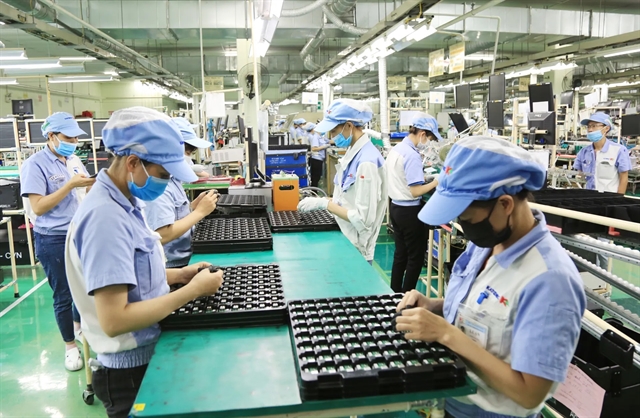 |
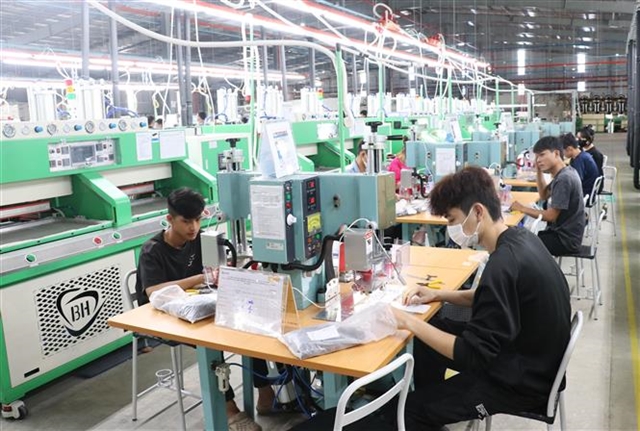
| During challenging economic times, businesses urgently need access to capital to stabilise production and expand operations, according to experts. — Photo kinhtedothi.vn |
HCM CITY — A broad easing trend in deposit rates is spreading across the banking system, yet lending rates continue to adjust only gradually, with limited real impact on businesses.
At the same time, input costs remain elevated, leaving firms under multiple layers of pressure and making the need for cheaper credit increasingly urgent.
Following an April 9 meeting with State Bank Governor Phạm Đức Ấn, most commercial banks revised their interest rate schedules, cutting deposit rates by around 0.1 to 0.5 percentage points per year, mainly for tenors of six months and longer.
In contrast to the relatively swift movement in deposit rates, lending rates have been adjusted more cautiously.
So far, only a handful of banks have taken the lead in trimming lending rates, and even then, the reductions have been modest, while most institutions have kept their existing levels unchanged.
Speaking to Vietnam News Agency reporters, Phạm Văn Việt, chairman of Việt Thắng Jean Co Ltd and vice chairman of the HCM City Textile and Garment Embroidery and Knitting Association, said that although interest rates are showing signs of easing, the decline remains insufficient, especially as textile and garment firms are grappling with mounting financial strain.
According to Việt, if short-term lending rates for working capital could be maintained at around 5 per cent per year, businesses would still be able to cope.
At present, however, cash flows are being disrupted by large inventories of raw materials, longer delivery cycles, and rising costs, all of which are driving up demand for working capital.
For medium- and long-term loans, he suggested that a reasonable range would be around 8 to 10 per cent per year to enable firms to pursue investment plans.
In reality, rates remain above 10 per cent, posing a significant barrier to production expansion.
“To stay competitive internationally, businesses must invest in productivity improvements and technological upgrades. Without investment, productivity remains low and costs stay high, making it difficult to compete with other countries. However, high medium- and long-term interest rates are limiting our ability to implement such plans,” he said.
Việt also stressed that beyond rate cuts, stability in the interest rate environment is equally important to give businesses the confidence to invest.
In practice, despite the downward trend in interest rates, the actual cost of capital borne by businesses remains high.
Meanwhile, input costs including raw materials, logistics and inventory continue to rise.
Not only textile firms, but many production and trading enterprises are facing a dilemma where costs are increasing but selling prices cannot be raised due to weak consumer demand.
This has led to tightening cash flows and reduced financial flexibility.
Lư Nguyễn Xuân Vũ, CEO of Xuân Nguyên Group JSC, said that rising input costs have forced businesses to accept a new cost baseline, yet they are unable to pass these increases on to customers.
Weak purchasing power means that any price hikes could drive customers away, making cost control the top priority.
In this context, Vũ argued that interest rate policy should play a supportive role rather than adding to cost pressures.
“To maintain reasonable pricing, businesses need support from the Government and cooperation from banks in adjusting lending rates towards a supportive level, around 6 per cent per year. If rates continue to rise as they did before the Lunar New Year, it will be very difficult for businesses to cope,” he said.
From this reality, the business community expects lending rates to decline more substantially to ease financial pressure, especially as input costs remain high.
Nguyễn Thị Hợp, head of Business at APG Eco JSC, said companies are hoping for more effective policies from the State and banks to stabilise and reduce interest rates.
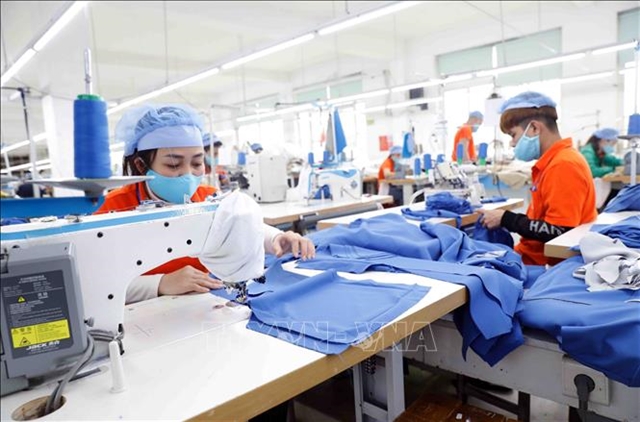
Lower capital costs would give firms more room to optimise production and expand operations in the near future.
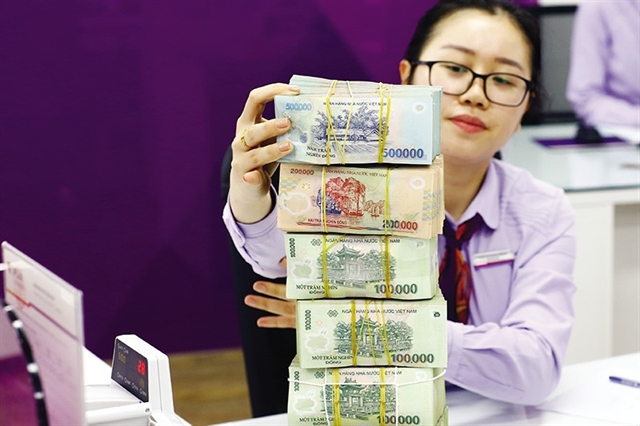 |
| Reducing interest rates and simplifying lending conditions and procedures will help ensure credit reaches the right businesses in a timely and effective manner. — Photo tinnhanhchungkhoan.vn |
Limited room for further cuts
From an expert perspective, Nguyễn Hữu Huân, a senior lecturer at the University of Economics in HCM City, said the State Bank’s recent directive urging commercial banks to cut interest rates is a positive signal aimed at supporting businesses.
High interest rates in recent periods have weighed heavily on production and business activities, thereby affecting overall economic growth.
One notable issue, he said, is the gap between listed lending rates and the actual cost of capital.
While banks may announce certain rates, the effective rates paid by businesses and individuals can differ depending on loan conditions, risk profiles and associated fees.
As such, real access to credit remains a key factor to monitor.
With ambitious growth targets set for the year, policy management is under considerable pressure.
While lowering interest rates is one option to support the economy, it must be handled carefully, as inflationary risks persist, particularly from oil price volatility and geopolitical uncertainties.
“The Prime Minister has emphasised the priority of maintaining macro-economic stability. This is a complex task, as policymakers must balance stability with high growth. Achieving this requires close coordination among ministries, especially between monetary and fiscal policies,” Huân said.
Analysts believe that in this context, supporting businesses cannot rely solely on interest rate measures.
Instead, stronger coordination between monetary and fiscal policy is needed, along with solutions to ease input cost pressures.
According to Suan Teck Kin, head of Market Research and Global Economics at UOB, Việt Nam will continue to face multiple challenges in the 2026-27 period that could affect its goal of achieving growth above 10 per cent.
Among the most notable risks is the possibility of new US tariffs, which could have adverse effects.
In addition, ongoing tensions in the Middle East are significantly impacting energy prices and, more critically, supply stability.
This raises energy and input costs for businesses, increasing operational expenses and exposing production activities to greater risks.
In this context, UOB experts forecast that the State Bank of Vietnam will likely maintain a stable interest rate environment throughout 2026.
As inflation is largely driven by supply side factors, fiscal policy is expected to play a greater role in reducing input costs and supporting economic activity. — VNS
Business Beat
 Business Beat
 Business Beat
 Business Beat
.jpg) Business Beat
Business Beat
 Business Beat
 Business Beat
 Business Beat
 Business Beat
 Business Beat
 Business Beat
 Business Beat
 Business Beat
 Business Beat
 Business Beat