 Economy

HCMC chairman concludes AEF 2026 with development committments
1.
|
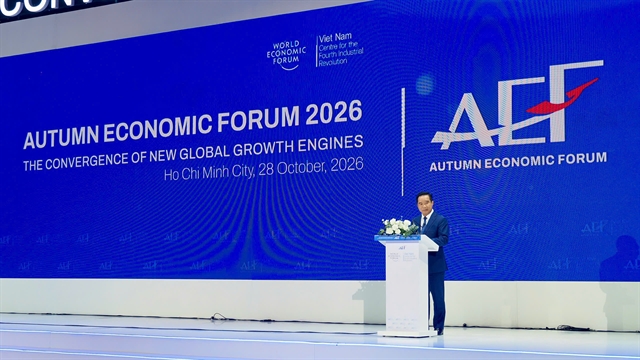
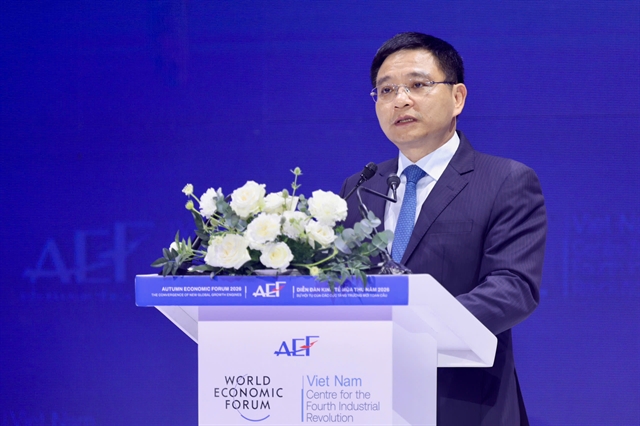
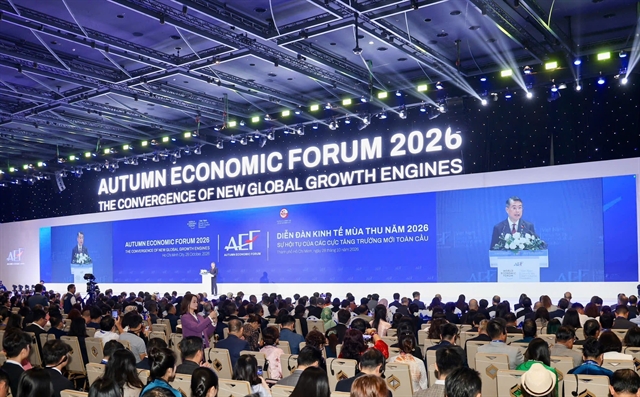
| Deputy Prime Minister Nguyễn Văn Thắng makes a speech at the Autumn Economic Forum 2026 in HCM City on Wednesday. — Photo Courtesy of organiser |
HCM CITY — HCM City, Việt Nam’s leading economic centre and innovation hub, is at a historic moment, with an opportunity to connect resources and turn them into frameworks for co-operation, innovation and the creation of new value, Deputy Prime Minister Nguyễn Văn Thắng said.
He made the remarks at an afternoon working session on Wednesday during the Autumn Economic Forum 2026, which is being held in HCM City.
Thắng said the city aspires to become more than a meeting point for regional flows of capital, knowledge and technology. It aims to be a trusted and responsible growth centre, ready to engage with international partners.
The world is undergoing a transition in which digital transformation and green transition are unfolding in tandem, reshaping production, market standards and competitive advantages.
Growth poles are shifting towards Asia, Africa and Latin America, while value and supply chains are being restructured to become more diversified, regionalised and resilient to disruption.
Investment decisions are no longer based solely on cost. Investors also consider safety, flexibility and long-term strategic connections.
Technological breakthroughs, the rapid growth of artificial intelligence (AI) and automation, and environmental, social and governance (ESG) standards are increasingly becoming prerequisites for participation in global value chains and are reshaping nations’ competitive advantages.
These shifts create new opportunities but also bring significant challenges and competitive pressures. They underline the need for dialogue platforms that can build trust and foster co-operation among all parties, Deputy Prime Minister Thắng said.
He outlined four priorities for Việt Nam and HCM City as they adapt to these changes: building domestic capacity in human resources, technology and governance; strengthening stable, transparent and predictable institutions that allow room to test new approaches; deepening multilateral, regional and South-South co-operation; and effectively mobilising capital, green finance and technology while strengthening ties with domestic businesses and upgrading value chains.
To turn that opportunity into reality, Việt Nam and HCM City need to develop substantive, far-reaching strategic directions in co-operation with countries and international organisations, he said.
From dialogue to action
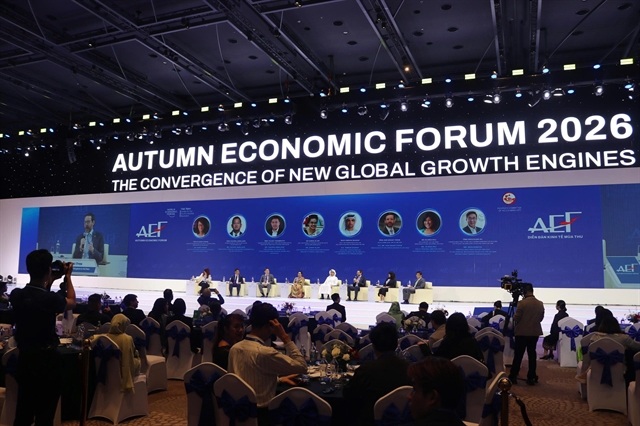
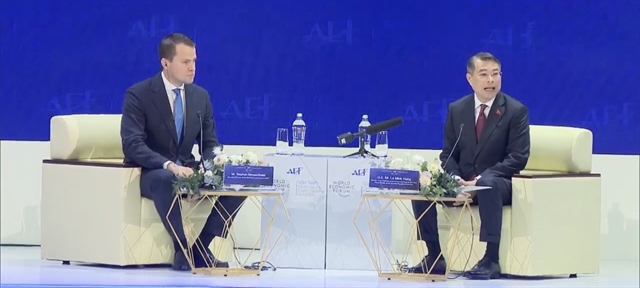
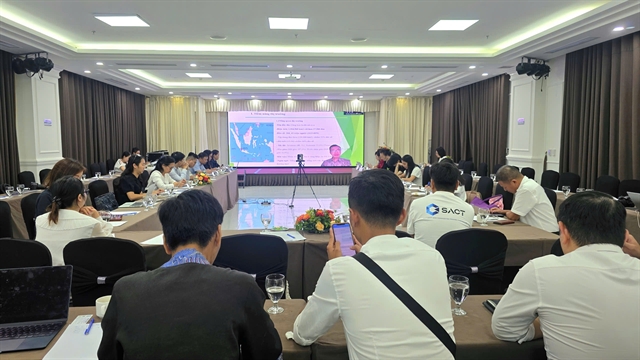
At a session entitled “Global Trends: Identifying New Growth Engines”, experts, business leaders and representatives of international organisations discussed capital flows, the role of megacities, breakthrough technologies and innovation ecosystems, new models of co-operation, and the role of the private sector.
|
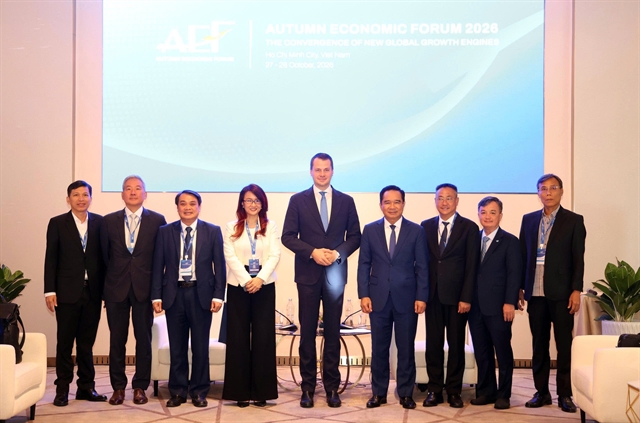
| Experts discuss at a working session at the Autumn Economic Forum 2026 in HCM City on Wednesday. — VNS Photo Hồng Linh |
Denis Depoux, global managing director of Roland Berger, described the future of Asian economies in terms of “tokens” and “concrete” in which “tokens” represented the digital and AI ecosystem.
Depoux outlined seven priorities for Việt Nam and HCM City. These are positioning the city as a centre for resilient supply chains, infrastructure and growth capital; building ecosystems spanning electronics, automation, software, energy, biotechnology, culture and education; and connecting ports, railways, power infrastructure and industrial clusters with data networks across Việt Nam and other Asian hubs. Other priorities include applying AI to manufacturing and related services; developing the next generation of talent; strengthening climate competitiveness through circular production and resilience; and expanding Việt Nam’s global reach by growing high-value services, technology-led companies and Vietnamese businesses across Asia.
Alongside capital, presentations at the forum outlined a strategy for Việt Nam to move from a connected economy to an intelligently connected one through the adoption of intelligent infrastructure.
Intelligent infrastructure integrates physical assets with data, digital networks and AI, enabling systems to sense, co-ordinate and respond. While conventional digital infrastructure provides visibility, intelligent infrastructure enables active, system-wide responses.
Drawing on Việt Nam’s priorities and the direction set out in HCM City’s draft master plan to 2050, speakers proposed two pilot projects to strengthen the city’s and the country’s industrial competitiveness.
The first would create a trusted co-ordination platform connecting factories, logistics providers and ports along the manufacturing-to-export corridor. It would synchronise cargo readiness, vehicle locations and vessel cut-off times.
“This is important because the city’s draft master plan connects innovation, manufacturing, logistics, ports and coastal assets across a much larger economic system. The city has also set an export growth ambition of approximately 10 to 11 per cent annually for the next five years. Achieving that will depend not only on producing more, but on making the entire system faster, more reliable and more connected,” said Devendra Jain, senior manager for advanced manufacturing and supply chains at the World Economic Forum.
The second proposal was to provide shared capabilities – including high-speed connectivity, digital twins and AI models – to support small- and medium-sized enterprises.
Participants also discussed global economic trends and prospects in financial markets, smart infrastructure, AI and cyberspace, as well as governance frameworks and economic corridors for emerging growth centres.
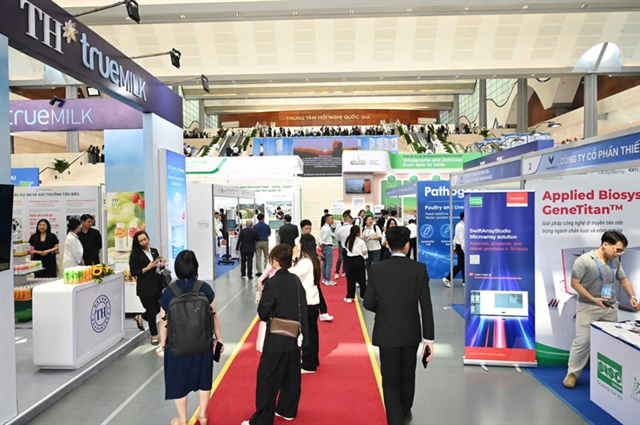
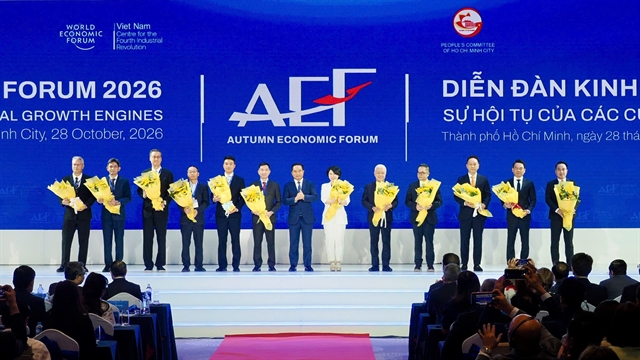
The Autumn Economic Forum 2026 is being held in HCM City under the title “Convergence of New Global Growth Poles” until October 29. It is chaired by the HCM City People’s Committee and organised by the HCM City Centre for the Fourth Industrial Revolution (HCMC C4IR) under the direction of the Prime Minister. — VNS
Economy
 Economy
 Economy
 Economy
 Economy
 Economy
 Economy
 Economy
 Economy
 Economy
 Economy
 Economy
 Economy
 Economy
 Economy