 Economy

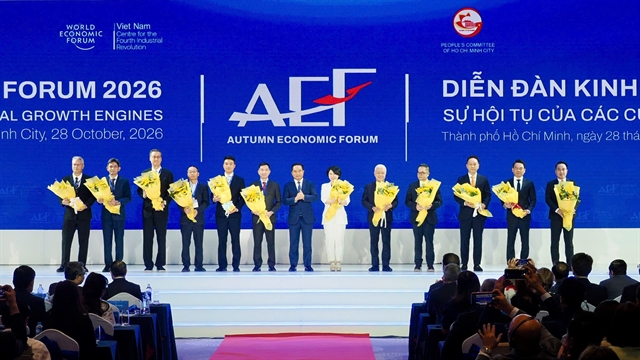
Vietnam International Financial Centre in HCM City reveals first 10 official members
1.
|
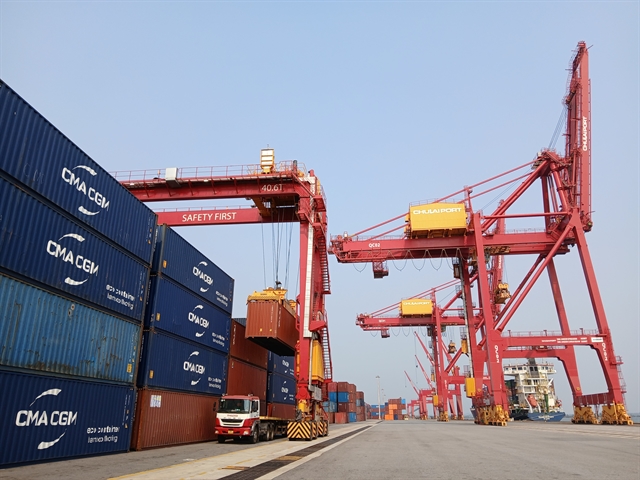
| Containers loaded on a truck at a port in Đà Nẵng. — VNA/VNS Photo |
Ly Ly Cao
HÀ NỘI — Businesses seeking to expand exports to ASEAN need to strengthen partner screening, understand country-specific regulations and manage payment, logistics and contractual risks, according to experts.
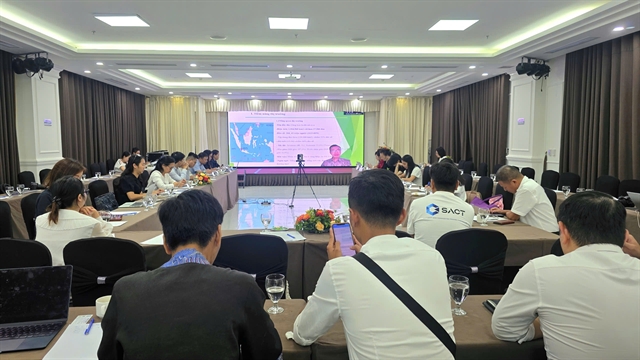
Speaking at a workshop titled 'Risk Management in Trade Promotion and Export Business with ASEAN Markets' on October 27, Nguyễn Thị Thu Thủy, deputy director of the Trade and Investment Promotion Support Centre of the Vietnam Trade Promotion Agency (Vietrade), said ASEAN offered considerable opportunities for Vietnamese goods thanks to geographical proximity, convenient transport routes, increasingly developed regional distribution networks and similarities in consumer demand across some member countries.
Agricultural products, processed foods, seafood, beverages, consumer goods, textiles and garments, construction materials and supporting-industry products and services were among the Vietnamese product groups with export potential in the region.
For small- and medium-sized enterprises (SMEs), ASEAN could also serve as a stepping stone for gaining export experience, improving management capabilities and gradually expanding into more distant markets.
However, Thủy cautioned that geographical proximity did not mean that countries shared the same institutional frameworks or business practices. ASEAN is diverse in economic development, market size, legal systems, business environments, logistics capabilities and consumer behaviour, requiring exporters to tailor their approaches to individual markets.
Singapore plays a prominent role in international trade, financial services and regional logistics, while Malaysia has specific requirements for standards, certification and market access.
Indonesia offers a large consumer market but requires exporters to understand import regulations, licensing procedures and distribution conditions. And the Philippines has its own requirements concerning logistics, payment and distribution networks.
Laos, Cambodia and Myanmar also have distinct market sizes, infrastructure conditions, regulatory arrangements and transaction practices.
"ASEAN is a diverse region in terms of economic development, market size, industry structure, legal systems, business environments, logistics capabilities and consumer behaviour," Thủy said.
The representative of Vietrade identified six major risk categories for Vietnamese exporters: trading partners and commercial fraud; payment, credit and foreign-exchange risks; contracts; standards, import regulations and customs procedures; logistics, supply chains and goods delivery; and business culture, market information and competitiveness.
These risks are interconnected and can trigger a chain of problems across an export transaction.
Inadequate partner screening, for example, can lead a business to select an unsuitable payment method, face delayed receivables or fail to collect payment.
Ambiguous delivery terms may cause disputes over logistics costs and the responsibilities of the parties involved. Failure to keep up with import regulations can result in goods being held at the border, delaying payment, disrupting cash flow and damaging a company's reputation.
Thủy advised businesses to establish risk-management procedures suited to their size, product categories and target markets. Priorities include researching counterparties before entering transactions, clearly defining obligations and dispute-handling mechanisms in contracts and preparing contingency plans for risks that could significantly affect cash flow, delivery schedules and business credibility.
Risk management should also cover payment-method selection, transport-cost control, monitoring regulatory changes and maintaining communication with partners throughout contract execution. Exporters should assess transactions not only by order value but also by implementation costs, the likelihood of collecting payment and potential additional obligations.
These precautions are particularly important for SMEs, whose financial and human resources may be limited. Problems involving payment or delivery can directly affect their ability to maintain production, fulfil subsequent orders and expand into new markets.
|
| An overview of the workshop. — VNS Photo Ly Ly Cao |
Rules of origin
At the workshop, Hoàng Đức Minh of the Ministry of Industry and Trade's Agency of Foreign Trade highlighted the need for exporters to handle certificates of origin (C/Os) accurately when trading within ASEAN.
Businesses should avoid using the wrong certificate form, providing inaccurate declarations, submitting incomplete documentation or failing to meet requirements for third-party invoices and certificates issued retrospectively. Such errors can lead to customs-clearance difficulties or requests to verify the origin of goods.
Even after goods have entered another ASEAN market, exporters must be able to demonstrate to customs authorities that they satisfy the applicable rules of origin. Failure to provide sufficient evidence could result in the loss of preferential tariff treatment and additional tax liabilities.
Malaysia presents opportunities for Vietnamese exporters, but businesses need to pay close attention to the country's product standards and import requirements.
According to Phùng Văn Thành, Việt Nam's trade counsellor in Malaysia, halal certification is a major consideration, particularly for food, processed agricultural products, beverages, cosmetics and other consumer goods. Certification involves not only the finished product but also the entire supply chain, including raw materials, processing, storage and transportation.
Products entering the market must comply with technical standards, food safety and sanitary and phytosanitary (SPS) requirements, with some requiring quarantine certificates, food safety documents or conformity certification from SIRIM (the Standards and Industrial Research Institute of Malaysia). Shipments may also face border inspections, while Malaysia maintains strict limits on chemical residues, antibiotics and additives.
Thành added that competition is intense, with imports competing against domestic products and established suppliers from China, the US, Japan, Indonesia and Thailand. — BIZHUB/VNS
Economy
 Economy
 Economy
 Economy
 Economy
 Economy
 Economy
 Economy
 Economy
 Economy
 Economy
 Economy
 Economy
 Economy
 Economy