 Economy

Lotte, Phát Đạt combine strengths in Thu Thiem project
1.
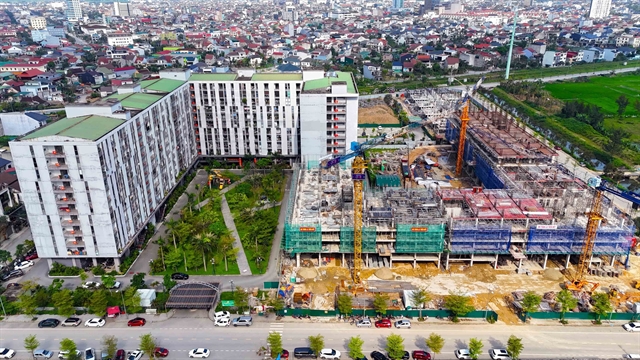 |
| Construction of a social housing project in Hà Tĩnh Province. Property prices have been falling recently on high interest rates and weak buyer absorption. — VNA/VNS Photo Hữu Quyết |
HÀ NỘI — The real estate market needs greater transparency, tighter controls on speculation and a shift towards affordable housing to restore buyer confidence after years of rapid price increases, experts have said.
Although supply has improved, transactions have weakened as housing prices remain beyond the reach of a majority of homebuyers, highlighting a growing mismatch between available properties and actual demand.
The Ministry of Construction also reported that more than 59,000 commercial housing units were eligible for sale in the third quarter, along with more than 216,000 social housing units. Total property transactions exceeded 92,000, down year-on-year and about 8 per cent lower than the previous quarter.
While more properties are entering the market, supply remains concentrated in mid-range and high-end segments.
Other figures of the Vietnam Real Estate Association showed that the market had recorded about 98,000 property units launched for sale in the first half of 2026, up 50 per cent from a year earlier.
However, the primary market recorded only about 48,000 transactions during the same period. The absorption rate fell to 49 per cent from 62 per cent a year earlier.
The association’s vice president Nguyễn Văn Đính said high land-use costs, rising construction expenses and financing pressures made it difficult for developers to reduce prices. Lengthy project approval procedures also added to borrowing costs, which were reflected in selling prices.
Speculative buying had further distorted the market, with some investors using borrowed money to acquire properties in anticipation of short-term gains rather than to meet housing needs, he said.
Trần Quang Trung, business development director at OneHousing, said the market had experienced rapid price increases in 2024-25 amid limited supply, relatively affordable borrowing costs and the return of speculative capital.
Rising prices at newly launched projects also established higher benchmarks for the secondary market, where short-term investors buying and reselling properties within three to six months contributed to further increases, he said.
However, property prices have fallen by around 15-20 per cent since the beginning of 2026, Trung said, adding that price movements varied by location, property segment and sellers’ financial positions.
A recent report by Đất Xanh Services' Institute of Economics, Finance and Real Estate Research showed that primary housing prices in fell by 5-20 per cent in the third quarter from the previous quarter across most regions and property segments, as high interest rates and weak buyer absorption weighed on the market.
Economist Ngô Trí Long said higher interest rates could further weaken purchasing power and market liquidity, putting particular pressure on developers and investors heavily reliant on borrowing.
Transparency, affordability key to recovery
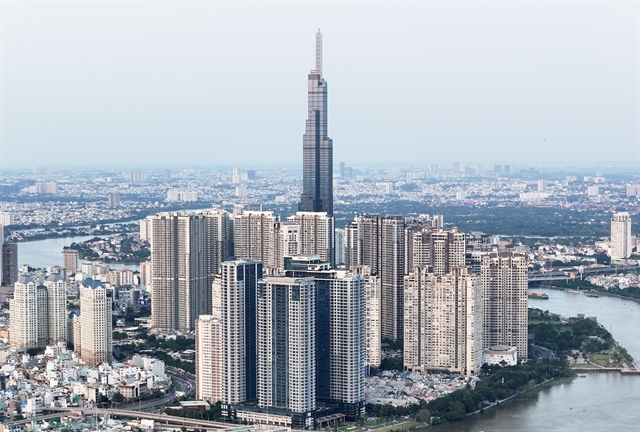 |
| Apartments buildings along Sài Gòn River in HCM City. — VNA/VNS Photo Hồng Đạt |
Hoàng Thu Hằng, deputy director of the Ministry of Construction’s Department of Housing and Real Estate Market Management, said high property prices reflected a combination of land costs, compensation and site clearance, construction, infrastructure investment, marketing and financing expenses as well as speculation.
Hằng said the ministry was working with local authorities and businesses to improve the national housing and real estate market information system with better access to reliable data to allow buyers to check project legal status and assess supply and demand in individual areas before making purchasing decisions.
A more transparent database would also help developers identify actual demand and enable regulators to monitor market developments, detect unusual price movements and respond to potential distortions, she said.
Authorities are working to resolve obstacles affecting more than 5,000 property projects, with more than 3,500, or about 71 per cent already addressed.
The government has set a target of completing 97,271 social housing units in 2026 as part of a goal of nearly 900,000 units for 2026-30.
Expanding social housing, affordable commercial housing and rental accommodation is expected to help address the gap between available products and household purchasing power, Hằng said.
Hằng also urged developers to shift their focus from maximising profits on individual properties to improving cash flow and accelerating sales.
For homeseekers, Hằng advised assessing a property's value, location and suitability against their financial capacity rather than waiting indefinitely for the market to reach its lowest points while investors without immediate housing needs should remain cautious.
According to Đính, it is necessary to restructuring supply towards more affordable homes, shortening administrative procedures and improving access to reasonably priced credit for homeseekers with real demand.
He also called for stronger legal measures to prevent price manipulation and specualtion. — VNS
Economy
 Economy
 Economy
 Economy
 Economy
 Economy
 Economy
 Economy
 Economy
 Economy
 Economy
.jpg) Economy
 Economy
.jpeg) Economy
 Economy




