 Economy


ECO Expo Asia opens at Hong Kong AsiaWorld-Expo in late October
1.
|
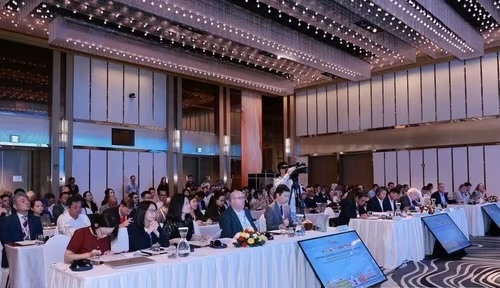
| Representatives of Vietnamese and international businesses attend the CPTPP 2026 Senior Officials–Business Dialogue and Business Matching Forum in HCM City on Wednesday. — Photo congthuong.vn |
HCM CITY — Senior officials and business leaders from CPTPP economies met in HCM City on Wednesday to strengthen government-business dialogue and promote practical trade and investment cooperation.
Held alongside the third Senior Officials' Meeting (SOM3) of Việt Nam's 2026 CPTPP chairmanship, the forum brought together senior government representatives, chief negotiators from CPTPP economies, business executives, industry associations and other stakeholders.
Organisers said the event was designed to create a platform for governments and businesses to exchange views on emerging opportunities and challenges in implementing the trade pact, while encouraging stronger commercial partnerships across member economies.
Bridging two perspectives
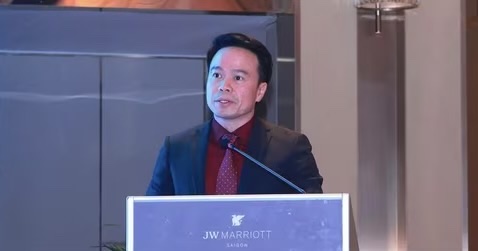
Opening the forum, Ngô Chung Khanh, deputy director general of the Multilateral Trade Policy Department under the Ministry of Industry and Trade and Việt Nam's Chief CPTPP Negotiator, said the dialogue was intended to bring together two perspectives that ultimately shape the future of regional trade.
"As Chair of CPTPP this year, Việt Nam sees today's dialogue as an important opportunity to connect these two perspectives in one forum," he said.
Khanh noted that businesses make decisions every day on where to invest, how to organise supply chains, which technologies to adopt and which markets to prioritise. Collectively, those decisions help shape the future direction of trade and investment across the region.
At the same time, CPTPP members are considering how the agreement should continue to evolve in response to a rapidly changing economic landscape, including digital trade, green transformation, supply chain connectivity and new forms of cross-border commerce.
"The objective of today's dialogue is to ensure these two perspectives complement one another through a strategic and forward-looking exchange," Khanh said.
He said organisers hoped to hear directly from businesses about commercial opportunities across CPTPP markets, the capabilities they expected from regional partners and the factors influencing future investment decisions and business strategies.
In return, senior officials would provide businesses with a clearer understanding of the priorities being pursued by CPTPP members, the issues currently under discussion within the agreement's institutional framework and areas where deeper economic cooperation could be developed.
According to Khanh, the exchange would help identify where government priorities and business interests already align, while highlighting areas requiring closer collaboration in the years ahead.
He said CPTPP provides a strong foundation for such dialogue because it brings together economies with different levels of development across multiple regions.
Beyond trade in goods, the agreement covers services, investment, government procurement and other areas that directly influence business decisions.
Turning opportunities into partnerships
Khanh said the true value of the CPTPP network ultimately depends on businesses' ability to connect opportunities across different markets.
A company may source raw materials from one member economy, manufacture products in another, obtain specialised services from a third and distribute finished goods throughout the region, he said.
"CPTPP provides a common framework and a stable, predictable environment to support these business models. But businesses themselves are best placed to identify where the next commercial opportunities will emerge," he said.
The forum's policy dialogue therefore focused on four closely connected themes: trade facilitation, investment and supply chains, digital transformation and green transition.
According to Khanh, these issues should no longer be viewed as separate policy agendas but increasingly form part of a unified business strategy.
Companies seeking to diversify supply chains require efficient logistics networks and streamlined customs procedures.
Businesses investing in digital transformation need confidence that they can operate seamlessly across multiple markets.
Those pursuing green transition require access to technology, finance, skilled workers and reliable suppliers.
For governments, understanding these business requirements is essential in assessing whether ongoing work within CPTPP working groups reflects market realities and future commercial trends.
Likewise, a better understanding of CPTPP priorities would enable companies to identify emerging opportunities earlier, develop investment plans and build partnerships throughout the region.
"Dialogue is not simply an opportunity for governments to explain what they are doing or for businesses to present recommendations," Khanh said.
"It is also a chance to compare two future-oriented agendas: what businesses are preparing for and what CPTPP members are working to facilitate. Where these agendas are aligned, we should strengthen that alignment. Where differences remain, early dialogue allows both sides to understand why and adjust their approaches where necessary."
|
| Ngô Chung Khanh, Việt Nam's Chief CPTPP Negotiator, delivers the opening remarks at the forum. — Photo congthuong.vn |
From dialogue to concrete projects
Khanh said the business matching session following the policy dialogue would add a practical commercial dimension to the process.
While policy discussions help shape long-term direction, cooperation only becomes meaningful when businesses find suitable partners, combine complementary strengths and jointly implement concrete projects, he said.
Through the forum, Việt Nam hopes to achieve two key outcomes.
The first is to help CPTPP senior officials gain a better understanding of the trade priorities and development strategies of businesses operating across CPTPP markets.
The second is to strengthen connections among enterprises so that opportunities created by the agreement can be translated into investment projects, supply chain partnerships and new business ventures.
As Chair of CPTPP in 2026, Việt Nam also aims to work closely with fellow members to encourage greater participation by the business community in the continued development of the agreement.
According to Khanh, this does not necessarily require creating complex institutional mechanisms at this stage.
Instead, meaningful progress can begin with strategic, practical and forward-looking dialogue that reflects the evolving priorities of both governments and businesses. — VNS
Economy
 Rikkeisoft ký kết MOU với LAC.Co, LTD - thúc đẩy hợp tác kinh doanh toàn diện trong lĩnh vực an ninh mạng.jpg) Economy
Economy
 Economy
 Economy
 Economy
 Economy
 Economy
 Economy
 Economy
 Economy
 Economy
 Economy
 Economy
 Economy
 Economy