 Economy


ZOOD Real Estate launches Élevée, a $667 million project in north Riyadh
1.
|
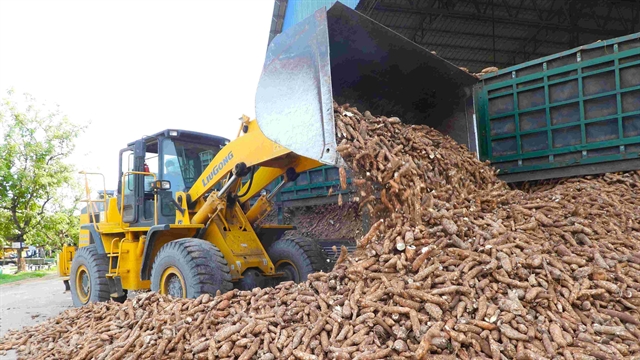
| Cassava could see annual demand for ethanol production reach 5.5 million tonnes. VNA/VNS Photo |
HÀ NỘI — E10 petrol is not only reshaping Việt Nam’s fuel market but also creating new opportunities for the country’s agricultural sector. From sugarcane, corn and cassava to agricultural by-products, a wide range of farm outputs are beginning to enter the green energy value chain, unlocking significant growth potential.
Since June 1, E10 RON95-III petrol is being widely distributed nationwide, gradually replacing conventional RON95-III petrol. The move is considered a major milestone in Việt Nam’s transition toward cleaner fuels and lower carbon emissions.
For Vietnamese agriculture, the widespread use of E10 petrol presents a new opportunity for several commodity sectors that have long struggled with unstable market demand and limited value addition.
According to an assessment by VietinBank Securities (VBSE) released in late May, using E10 petrol nationwide is expected to generate demand for approximately two million cubic metres of ethanol annually. Since ethanol is produced from agricultural feedstock, this demand could be substantial enough to reshape domestic agricultural supply chains.
The sugar industry is expected to play a central role in this emerging landscape.
VBSE estimates that ethanol production could require between 14 and 20 million tonnes of sugarcane each year – enough to revitalise many sugarcane-growing regions that have recently struggled.
Provinces likely to benefit most include Tây Ninh, Thanh Hóa, Nghệ An, Quảng Ngãi, Đắk Lắk and Gia Lai. These traditional sugarcane-producing areas have long faced pressure from imported sugar and volatile market prices.
Corn is also emerging as a key feedstock, with annual demand projected at around six million tonnes. Provinces including Sơn La, Lào Cai, Nghệ An and Đắk Lắk are expected to see significant gains if the ethanol market develops as anticipated.
Cassava, meanwhile, stands to benefit from a more stable and diversified market. Long vulnerable to cycles of oversupply, price collapses and heavy dependence on exports to China, cassava could see annual demand for ethanol production reach 5.5 million tonnes.
Cassava production is expected to be concentrated in Tây Ninh, Gia Lai, Quảng Ngãi and several other central provinces. For a crop that has often been sold below production cost during bumper harvests, this represents a welcome development.
Perhaps, the most transformative aspect of the ethanol boom lies not in primary crops, but in the use of agricultural residues. Rice straw, molasses, rice bran and other by-products that are often burned or underutilised can now enter a new value chain through second-generation ethanol technology.
Industry analysts believe that E10 petrol could drive a structural transformation in Vietnamese agriculture. Agricultural products would no longer serve mainly as food commodities or raw exports but could become integral components of the green energy supply chain, reducing dependence on volatile markets and informal cross-border trade.
From a market perspective, VBSE expects E10 petrol adoption to have a positive impact on agricultural enterprises by creating a large and stable market for sugarcane, corn, cassava and other agricultural products.
Rising demand is also expected to support more sustainable pricing, increasing product value and improving incomes for both farmers and businesses.
Beyond market access, E10 petrol is expected to encourage stronger and more sustainable agricultural value chains. According to VBSE, clearer links will gradually emerge among cultivation, procurement, processing and ethanol supply activities.
At the same time, greater use of agricultural by-products will promote green and circular farming models, helping reduce straw burning, cut emissions and improve rural environmental conditions.

|
| Ethanol production could require between 14 and 20 million tonnes of sugarcane each year. — VNA/VNS Photo |
Green agriculture
Growing expectations for the ethanol fuel market are already prompting companies in the agricultural and sugar industries to accelerate investment plans.
At the 2026 shareholders’ meeting for Quảng Ngãi Sugar JSC, company vice chairman and CEO Võ Thành Đàng revealed that its ethanol plant project — with a designed capacity of 200,000 litres per day — has been approved by the board of directors.
Đàng said the company has signed an investment cooperation memorandum with the Gia Lai provincial government and is currently completing the necessary legal procedures. The plant will use molasses, a by-product of sugar production, as its primary feedstock rather than relying on externally sourced raw materials.
Under current plans, the facility will produce approximately 30 per cent food-grade alcohol and 70 per cent ethanol for biofuel blending. Commercial operations are expected to begin in early 2028.
“Việt Nam currently consumes around 25 million tonnes of common petrol annually and is gradually transitioning toward E10 petrol. This creates substantial room for growth in the ethanol fuel market,” Đàng said.
Many other companies in agriculture and food processing are closely monitoring developments in the ethanol market as they prepare new investment strategies. This wave of investment could provide the production infrastructure and feedstock supply chains needed for Việt Nam’s ethanol industry to truly take off.
The potential bioenergy value chain also offers opportunities to upgrade Việt Nam’s broader agricultural ecosystem, particularly in the Mekong Delta, the country’s largest agricultural production region.
Researchers from Vietnam National University in HCM City note that the Mekong Delta’s abundant biomass resources could support the conversion of agricultural waste into bio-based carbon materials used in desalination, water treatment and greenhouse gas adsorption.
However, comprehensive policy support will be essential to make E10 petrol become a genuine growth engine for agriculture. Experts emphasise the need to develop dedicated feedstock zones for sugarcane, corn and cassava, alongside support measures such as improved crop varieties, mechanisation, preferential credit and tax incentives for ethanol producers. — VNS
Economy
 Economy
 Economy
 Economy
 Economy
 Economy
 Economy
 Economy
 Economy
 Economy
 Economy
 Economy
 Economy
 Economy