 Economy
Deputy PM urges stronger commercialisation of sci-tech research
1.
|
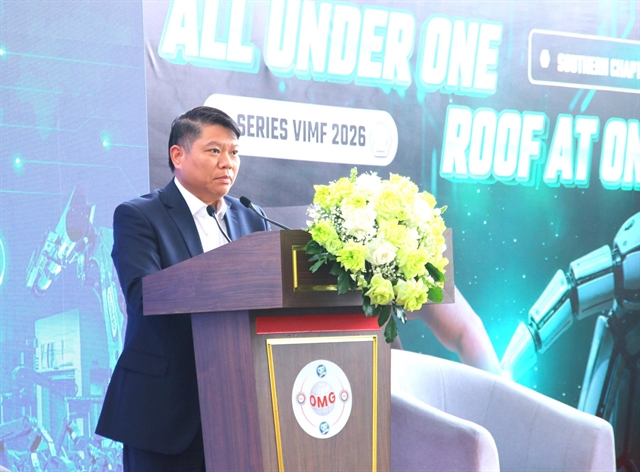
| Lê Văn Danh, deputy director of the HCM City Department of Industry and Trade, speaks at the Industry 4.0 and Smart Supply Chain Forum in HCM City. — Photo vnbusiness.vn |
HCM CITY — HCM City is looking to harness industry 4.0 technologies and smart supply chains to strengthen its industrial competitiveness, a forum heard on Tuesday.
At Industry 4.0 and Smart Supply Chain Forum – A Driving Force for HCM City, experts said Việt Nam is looking to attract higher-quality investment and enhance its position in global manufacturing and logistics networks through digital transformation and smart industrial development.
As AI, automation and other digital technologies reshape manufacturing worldwide, they said efficient supply chains, digital connectivity and automated production are becoming key factors in maintaining competitiveness.
Hoàng Quang Phòng, vice chairman of the Vietnam Chamber of Commerce and Industry, said the Fourth Industrial Revolution is reshaping production, business and public administration, making low labour costs a less important competitive advantage.
Instead, competitiveness increasingly depends on supply chain efficiency, automation and the adoption of digital technologies across production and distribution.
According to Phòng, the Industry 4.0 would also accelerate the development of the digital economy while promoting smart production and intelligent services across manufacturing, agriculture, finance, banking, tourism, logistics and robotics.
"Digital technologies will become an essential foundation for future industrial development and help enterprises create greater added value while supporting sustainable economic growth."
The forum heard that HCM City is entering a new stage of industrial development following the expansion of its economic space.
HCM City has more than 43,000 industrial enterprises and 90 industrial and export processing zones. It plans to expand to 105 industrial parks covering over 49,000 hectares by 2050.
The plan aims not only to expand industrial capacity but also to restructure the sector towards high-tech, knowledge-intensive and high value-added industries, creating new growth drivers for the economy.
Despite these advantages, experts said the city still faces several challenges in achieving its long-term industrial ambitions.
Transport infrastructure has yet to be fully connected, logistics costs remain high, labour productivity needs further improvement, and indigenisation rates are low in many industries.
Meanwhile, manufacturers are facing growing pressure from rapid technological changes and intensifying international competition as automation becomes more widespread.
Participants said digital transformation and green development should be implemented simultaneously to improve industrial competitiveness and ensure sustainable growth.
This includes applying advanced technologies to production management, accelerating automation and gradually converting traditional industrial parks into smart and eco-industrial zones.
Nguyễn Trung Tín, deputy head of the city Export Processing and Industrial Zones Authority, said the traditional industrial development model is showing clear limitations.
Industrial land is becoming increasingly scarce in southern Việt Nam, while pressure on urban infrastructure and rising production costs are creating new challenges for both investors and local authorities, he said.
At the same time, international investors are placing greater emphasis on digital infrastructure, renewable energy, and environmental standards when selecting investment destinations, he pointed out.
|
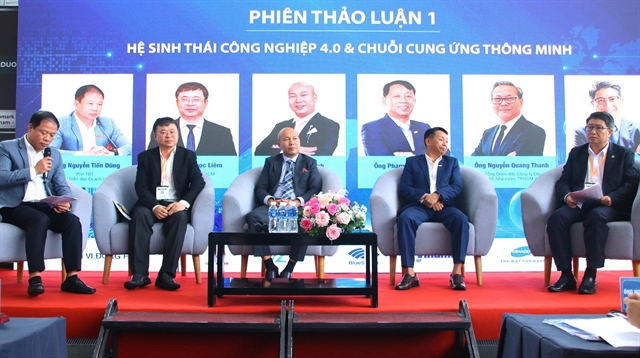
| Experts in a panel discussion.— Photo vnbusiness.vn |
"They no longer focus only on competitive land rental costs.
"Today, they expect industrial parks to provide reliable digital infrastructure, transparent data management and access to green energy."
He said industrial parks would need to transform themselves into modern production centres capable of supporting advanced manufacturing technologies, innovation and sustainable development.
Robert Linh, director of Vietnam Industry Zone and an expert at the Academy of Institute for Science and Technology in Construction, said many industrial parks operate under fragmented management systems with disconnected databases.
Administrative procedures remain complicated, while environmental monitoring, energy management and infrastructure operations continue to rely largely on conventional methods.
These shortcomings increase operating costs and reduce the ability of industrial parks to respond quickly to changing market conditions, he said.
Linh called for wider application of digital technologies capable of integrating infrastructure management, environmental monitoring, energy optimisation and administrative services on a single platform to improve operational efficiency and support smarter industrial development.
Lê Văn Danh, deputy director of the city's Department of Industry and Trade, said shifting global supply chains and growing competition are making digital transformation and green development essential for maintaining competitiveness.
He noted that Politburo Resolution No. 09-NQ/TW positions HCM City as a pioneer in innovation, new growth models and modern governance, reinforcing its role as the country's leading economic hub.
Danh said the national logistics development strategy for 2025–35 aims to turn HCM City into an internationally recognised logistics hub.
The city will continue to prioritise logistics as a strategic sector to strengthen links between manufacturing, transport and trade, and deepen integration into global value chains.
Delegates said digital infrastructure, smart manufacturing and stronger public-private cooperation would be key to HCM City's goal of becoming a regional industry and logistics hub.— VNS
Economy
 Economy
 Economy
.jpg) Economy
Economy
 Economy
 Economy
 Economy
 Economy
 Economy
 Economy
 Economy
 Economy
 Economy
 Economy
 Economy