 Economy



Masan’s national brands bolster global expansion
1.
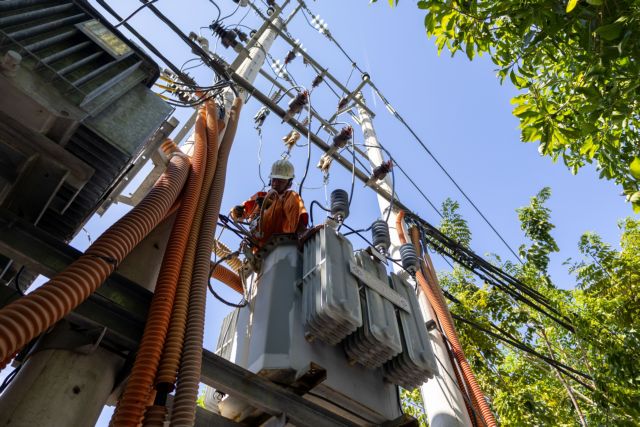 |
| Electrical workers in Đà Nẵng upgrading the electronic components in the power grid amid an intense heatwave. — VNA/VNS Photo |
HÀ NỘI — The National Electricity System and Market Operation Company Limited (NSMO) recommends that agencies, businesses and people work together to use electricity economically and limit the simultaneous use of high-capacity electrical appliances during evening peak hours from 5.30 to 10.30pm.
Weather forecasts show that the northern Red River Delta region, including Hà Nội and other northern and central provinces, is about to enter a severe heat wave.
Temperatures in Hà Nội and the northern delta may reach 39 degrees Celsius or more, while temperatures in the area from Thanh Hoá to Quảng Trị provinces may rise to 40 degrees Celsius next week.
Widespread and prolonged heat causes electricity demand to increase dramatically, especially during peak hours from noon through the evening.
During the record heat wave at the end of May, the maximum capacity of the national power system reached 58,103MW, an increase of 15.4 per cent over the same period in 2025. The northern region's power system alone reached 29,966MW, up 27.5 per cent over the same period in 2025, according to NSMO.
Meteorologists say the heat waves expected at the end of June may be as intense – or even more severe – than those seen in late May, placing very high demand on the electricity supply, especially for the northern power system.
In response, NSMO said it will regularly update weather and hydrological forecasts and develop mobilisation methods, manage and exploit water sources effectively and maintain reservoir water levels at a suitable level, ensuring the ability to generate maximum capacity during evening peak hours.
The company will also review the status of each power generating unit, urge units to troubleshoot problems and take advantage of short-term repairs during the period between heat waves, as well as closely monitor cooling water temperature to maximise electricity generation during peak hours.
It plans to coordinate closely with other electricity companies, including PVGAS, EVN and others, to ensure fuel sources and flexibly switch between domestic gas, LNG and oil to maximise power generation when load increases, while optimising system-wide costs.
As for the power grid, NSMO will coordinate with electricity transmission units, corporations and operations management units to review operating methods, promptly handle equipment defects and arrange on-duty forces and backup materials, ensuring the highest level of availability for the transmission and distribution system.
In conjunction with EVN, NSMO will work with electricity corporations and local departments of Industry and Trade to deploy solutions to manage demand and save power during peak evening hours. — VNS
Economy
.jpg) Economy
Economy
 Economy
 Economy
 Economy
 Economy
 Economy
 Economy
 Economy
 Economy
 Economy
 Economy
 Economy
 Economy
 Economy