 Economy


VPS leads brokerage market share on HNX in Q3
1.

|
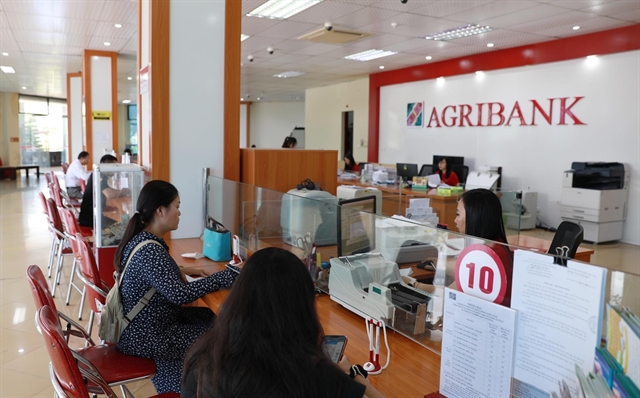
| Customers tend to choose banks that offer more convenient transactions, better multi-platform connectivity, better personal finance management, better integration of investment and consumption, faster customer service and a richer ecosystem. — VNA/VNS Photo |
HÀ NỘI — The competition for drawing in CASA (current accounts and savings accounts) in the banking industry is entering a new phase, replacing technological advancements and free services with ecosystems, cash flow management and data to attract cheap capital sources.
In fact, CASA boomed in the 2020-23 period thanks to banking digitalisation and free transfer policies. However, that advantage has now almost disappeared, as most banks offer free transactions and digital banking applications with similar user experiences and processing speeds.
Phan Hoàng Minh, head of the Corporate Customer Department at Agribank’s An Giang branch, said that the era of easy CASA growth thanks to free transactions has ended. Currently, business cash flow management, integrated consumer ecosystems, or flexible deposit products with the potential for automatic returns are key to retaining customers.
That's also why many banks are now shifting their goals from getting customers to open multiple accounts to becoming their customers' primary transaction bank. This is a huge difference. A customer might open several different bank accounts, but only one is their primary source of daily cash flow. Banks that achieve this position will gain a long-term CASA advantage.
Leading banks in terms of CASA currently all have unique advantages in attracting and retaining customer deposits.
As of the end of Q1 2026, Vietcombank led the system with a ratio of demand deposits to total customer deposits of approximately 32.6 per cent, although this has decreased by nearly three percentage points compared to the end of 2025. MB and Techcombank followed with 32.3 per cent and 31.4 per cent, respectively.
It's clear that these banks share a very strong ability to control transaction cash flow. MB has a military ecosystem, a high-payroll customer base and a digital platform with high transaction frequency. Vietcombank maintains a significant advantage thanks to its massive payroll accounts from the public sector and FDI enterprises.
Meanwhile, Techcombank has pursued a zero fee strategy for many years, while simultaneously building a financial, securities, insurance and real estate ecosystem to increase customer engagement and maintain cash flow within the system.
The CASA race is also rapidly shifting from the traditional transactional banking model to a 'super financial ecosystem’ model. Banks are not only competing on interest rates or digital platforms, but also aiming for a presence throughout the entire financial life cycle of their customers.
Customers are more likely to choose the bank that offers more convenient transactions, better multi-platform connectivity, better personal finance management, better integration of investment and consumption, faster customer service and a richer ecosystem.
Several banks are currently focusing on three main pillars to increase CASA and maintain cash flow within the system.
First is controlling retail cash flow. This segment generates the highest transaction frequency. Banks are actively partnering with supermarkets, businesses operating in e-commerce, e-wallets, education, healthcare, transportation and tourism to transform bank accounts into central payment tools.
After retail, the second pillar is managing corporate cash flow. Corporate CASA is now considered a new gold mine. When banks control the payment cash flow of businesses, they can maintain extremely large amounts of demand deposits at low cost. Banks are now promoting cash flow management solutions, trade finance, letters of credit, supply chain payments and automated payroll to attract cash flow from small and medium-sized enterprises.
The last pillar is a prominent recent trend: automated interest-bearing account products. Instead of letting money sit idle in accounts, many banks are developing products that automatically convert balances into accounts flexibly generating income while still ensuring immediate payment capabilities. This model helps banks maintain cash flow within their ecosystem instead of allowing customers to transfer to other banks or withdraw to external investment channels.
Minh said that to sustainably attract CASA, banks should focus on building a consumer ecosystem broad enough to be present throughout the entire customer spending journey, from bill payments, shopping, education and healthcare to investment and insurance.
Banks are positioned as comprehensive financial centres — not just places to deposit money, but also places where customers manage their assets, investments, insurance and daily cash flow, he said.
According to Minh, personalising the digital experience is becoming a dominant trend, as users no longer lack banking apps but rather financial solutions tailored to their individual needs. In this context, AI and big data are expected to be key to helping banks increase customer engagement and retention. — BIZHUB/VNS
Economy
 Economy
 Economy
 Economy
 Economy
 Economy
 Economy
 Economy
 Economy
 Economy
 Economy
 Economy
 Economy
 Economy