 Economy

VPS leads brokerage market share on HNX in Q3
1.
|
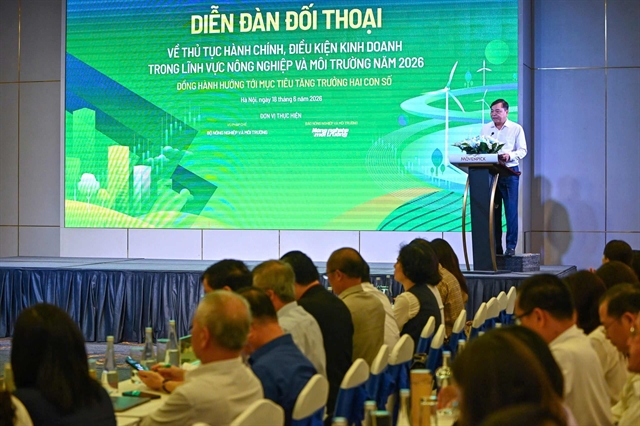
| Deputy Minister of Agriculture and Environment Nguyễn Hoàng Hiệp speaks at the event. — VNS Photo Tố Như |
HÀ NỘI — Business associations and companies have urged the Ministry of Agriculture and Environment to continue streamlining administrative procedures to further support investment and business expansion activities.
At a forum on reforming procedures and business regulations in the agriculture and environment sector on Thursday, representatives of domestic and international organisations welcomed the ministry’s efforts to cut red tape, while urging further action to remove regulatory bottlenecks and improve the investment climate.
The reforms have reduced the total processing time required across all administrative procedures by 8,987 days, equivalent to a 53.4 per cent decrease.
The reforms are estimated to save businesses and citizens about VNĐ5.3 trillion (US$202 million) in compliance costs, a reduction of 54.7 per cent.
The ministry has also abolished 108 administrative procedures, simplified 88 others and cut the number of conditional business sectors by 36.3 per cent, exceeding targets set by the Government.
Deputy Minister of Agriculture and Environment Nguyễn Hoàng Hiệp said streamlining business and investment regulations is key to unlocking economic resources, lowering costs and improving the business environment.
“These results are not the end point,” Hiệp said.
“Success should be measured not by the number of procedures removed, but by the convenience and satisfaction of citizens and businesses, the greater autonomy of local authorities, and the effectiveness of State administration.”
Hiệp said the agriculture ministry will continue reviewing and improving the legal framework – from laws and decrees to implementing circulars – to ensure greater consistency, transparency and practicality.
Despite the ministry’s reform efforts, a survey conducted by the Vietnam Chamber of Commerce and Industry (VCCI) earlier this year recorded nearly 800 recommendations from businesses concerning regulations, administrative procedures and business conditions, many of which fall under the ministry’s jurisdiction.
The VCCI said businesses continue to face a range of regulatory obstacles, including inconsistent regulations, unclear business conditions, high compliance costs and excessive administrative checks.
It called for the next phase of reform to focus on reducing compliance burdens, improving policy predictability and providing a more stable environment for investment.
Lê Thị Hồng Nhi, a representative of the European Chamber of Commerce (EuroCham) and head of corporate affairs, communications and sustainability at Unilever Vietnam, said companies appreciate recent reforms in environmental management and sustainable development.
However, several environmental procedures continue to require lengthy processing times, affecting the implementation of investment projects, particularly in high-tech industries, she said.
EuroCham called on regulators to simplify environmental licensing procedures, shorten approval timelines and adopt risk-based regulatory approaches.
Companies with strong compliance records or investments in green technologies should benefit from more streamlined mechanisms to encourage innovation and sustainable investment.
Regarding the Extended Producer Responsibility (EPR) framework, European businesses expressed support for Việt Nam’s circular economy objectives but urged authorities to establish a reasonable implementation roadmap that avoids sudden increases in compliance costs or administrative requirements.
Nguyễn Thị Hồng Nhung, deputy secretary general of the Vietnam Seaculture Association, said industrial-scale offshore aquaculture continues to face obstacles related to marine spatial planning, sea area allocation procedures and technical standards.
Meanwhile, representatives of associations in the crop protection, livestock, animal feed and breeding sectors called for simpler product registration procedures and fewer testing, conformity assessment and quality inspection requirements.
Many industry groups argued that Việt Nam should move to post-customs clearance checks and recognise international standards for low-risk products, helping reduce compliance costs and administrative burdens while maintaining effective regulatory oversight.
|
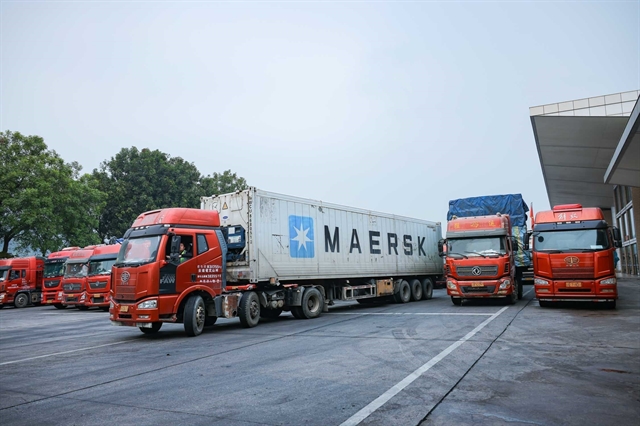
| Agricultural products at the Kim Thành border gate in Lạng Sơn Province. Businesses have proposed a shift from pre- to post-customs clearance checks. Photo chinhphu.vn |
Solutions
Responding to businesses, ministry officials said the recommendations would be considered in future reforms.
Nguyễn Hồng Quang, deputy director general of the Environmental Department, said the ministry would continue reviewing regulations on environmental assessments, permits, wastewater reuse, EPR obligations and data management to improve clarity and consistency.
He added that recent reforms had significantly reduced the number of entities required to obtain environmental permits.
Hiệp said administrative reform would remain a key priority for the ministry.
Proposed amendments to the Law on Environmental Protection, expected to be submitted to the National Assembly in July, would reduce licensing requirements, shift from pre- to post-inspection management and place greater emphasis on technical standards and regulations. — VNS
Economy
 Economy
 Economy
 Economy
 Economy
 Economy
 Economy
 Economy
 Economy
 Economy
 Economy
 Economy
 Economy
 Economy