 Economy

VPS leads brokerage market share on HNX in Q3
1.
|
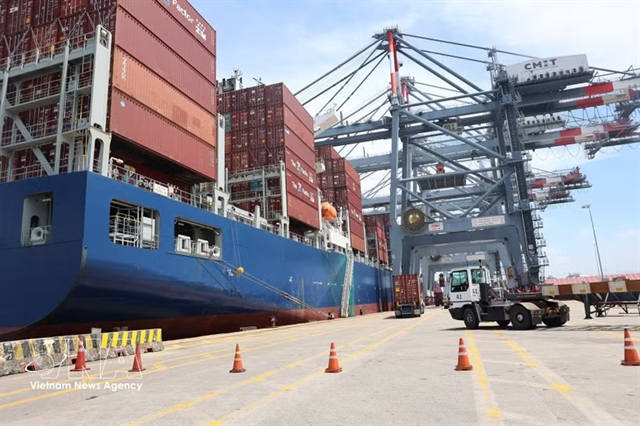
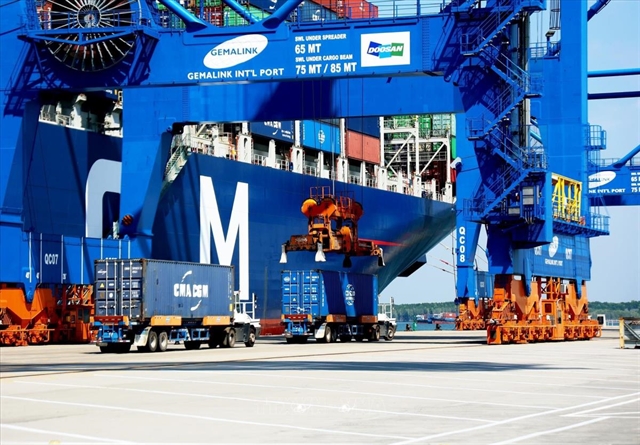
| The CMIT deep-water port in the Cái Mép-Thị Vải area, Tân Phước Ward, HCM City, can accommodate container ships with a deadweight tonnage of up to 214,121DWT. — VNA/VNS Photo |
HÀ NỘI — Three decades after joining the Association of Southeast Asian Nations (ASEAN), Việt Nam has transformed from an economy opening up to the world into one of the region’s key growth drivers. While ASEAN once served as Việt Nam’s gateway to the global economy, the country is now helping generate new momentum for the bloc through trade, investment, logistics, digital transformation and green growth.
Since joining ASEAN in 1995 and the ASEAN Free Trade Area (AFTA) a year later, Việt Nam has pursued deep regional integration as a strategic path to reform and development. Subsequent agreements, including the ASEAN Trade in Goods Agreement (ATIGA), ASEAN-plus-one free trade deals and the Regional Comprehensive Economic Partnership (RCEP), have created a vast economic space with ASEAN playing the central role.
Dr Lê Quốc Phương, former Deputy Director of the Industry and Trade Information Centre under the Ministry of Industry and Trade, said the extensive and intensive economic integration into ASEAN has been a major driver of Việt Nam’s trade growth. Việt Nam's participation in a series of free trade agreements within the bloc has resulted in breakthrough growth in its trade with ASEAN. Bilateral trade increased from just over US$3 billion in the early years of membership to around $91 billion in 2025, making the bloc one of Việt Nam’s largest trading partners.
Beyond trade, Việt Nam has gradually shifted from being a beneficiary of regional integration to a contributor to ASEAN’s future development.
The country has become an important link in regional supply chains spanning electronics, machinery, textiles, agriculture and food products. Vietnamese goods are not only present in ASEAN markets but also increasingly integrated into intra-regional production networks.
Vũ Bá Phú, director of the ministry's Vietnam Trade Promotion Agency, said ASEAN economies are becoming more complementary, creating favourable conditions for Vietnamese firms to engage more deeply in regional supply chains. Opportunities are expanding in manufacturing, processing, supporting, electronics and automobile industries – sectors with higher added value.
The trend is reflected in Thailand, Việt Nam’s largest ASEAN trading partner, where exports of Việt Nam's computers, electronic products and components have recorded robust growth, signalling closer production linkages and Việt Nam's improving position in regional value chains.
As labour-cost advantages become less decisive, future growth is expected to come from supply chain connectivity, innovation and high-value services. Logistics is emerging as a strategic pillar in this process.
Nguyễn Anh Sơn, director of the Agency of Foreign Trade, said there remains substantial room for logistics cooperation between Việt Nam and other ASEAN members as global supply chains undergo strong restructuring. Việt Nam’s geopolitical location advantage, between ASEAN and China, along with its expanding seaport network and transport infrastructure, complements Singapore’s strengths in transshipment and digital logistics and Thailand’s expertise in multimodal transport.
The combination of these advantages could form a more efficient regional logistics network, he noted, adding that cooperation is expected to expand beyond traditional transport and warehousing to include cross-border e-commerce logistics, cold-chain services, logistics for semiconductor and energy industries, and regional distribution centres.
Digital transformation is also becoming a new growth driver. ASEAN is working towards a smart logistics ecosystem based on digital platforms linking customs, transportation, ports, warehouses and product-traceability systems. Meanwhile, Việt Nam is well positioned to participate deeply in this ecosystem thanks to its rapidly growing e-commerce sector and important role in Asian supply chains.
Green growth and sustainable development are emerging as another major area of cooperation. As global markets impose stricter requirements on carbon emissions, traceability and ESG standards, ASEAN is increasingly competing on growth quality rather than costs alone.
According to Sơn, ASEAN countries should coordinate in developing common standards for green logistics, green transport, green warehousing and emissions measurement to strengthen the region’s export competitiveness.
Cooperation opportunities are also expanding in renewable energy, carbon credits, circular economy, green industries and sustainable supply chains.
At the third ASEAN Future Forum held recently, Deputy Minister of Industry and Trade Nguyễn Hoàng Long highlighted the need for ASEAN to adopt a more comprehensive approach to energy security to ensure not only supply sources but also resilience to crises while maintaining reasonable costs and supporting sustainable energy transition. He suggested that in the new phase, energy cooperation in the region should focus on guaranteeing supply chains, improving energy efficiency, promoting just energy transition, and effectively utilising new technologies like energy storage, hydrogen and biofuel technologies.
Another promising area is the Halal economy. With strengths in agriculture, food production, tourism and an extensive network of free trade agreements, Việt Nam is well placed to integrate more deeply into regional Halal supply chains.
Experts said ASEAN is entering a new stage of development in which competitive advantages are no longer determined solely by labour costs or market size, but increasingly by the ability to strengthen supply chain connectivity, harness technology, advance green development and adapt to global uncertainties. In this context, Việt Nam is no longer merely a beneficiary of regional integration but is emerging as one of the key drivers of growth in the region. — VNA/VNS
Economy
 Economy
 Economy
 Economy
 Economy
 Economy
 Economy
 Economy
 Economy
 Economy
 Economy
 Economy
 Economy
 Economy