 Economy

PVI Insurance, SAVICO partner to streamline motor insurance services
1.
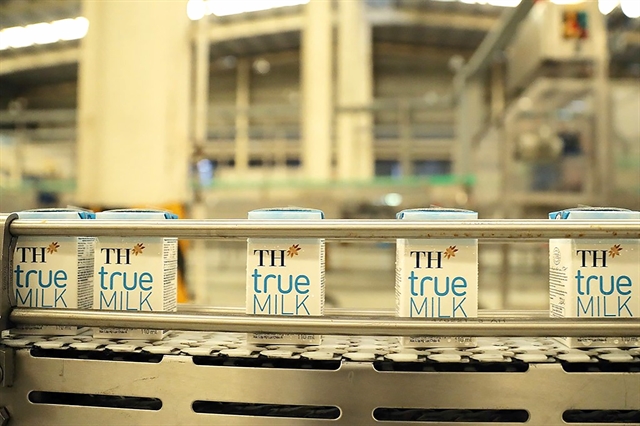 |
| The industry aims for an average annual growth rate of 12–14 per cent by 2030, with processed liquid milk output reaching approximately 4.2 billion litres per year. — Photo bnews.vn |
HÀ NỘI — Việt Nam’s dairy market still has significant room for growth, creating opportunities for the industry to strengthen raw material self-sufficiency, enhance competitiveness and work toward sustainable development goals through 2045.
Currently, annual per capita milk consumption in Việt Nam is only about 36kg. This figure remains far below that of countries such as Denmark (394 kg), France (251 kg), the US (228 kg) and Japan (61 kg).
This gap highlights substantial growth potential in the domestic market, especially as incomes rise and public awareness of nutrition continues to improve.
Alongside this growth potential, the country’s dairy industry has undergone significant structural changes over the past 15 years.
The proportion of liquid milk products made from reconstituted milk powder declined sharply, from 92 per cent in 2008 to 48.6 per cent in 2020 and further to 32.3 per cent in 2023.
Conversely, the share of fresh milk used in processing increased to 67.7 per cent. This shift demonstrates that Vietnamese consumers are becoming more discerning, favouring products with higher nutritional value and transparent origins, thus creating a high-quality growth segment for fresh milk products.
However, domestic fresh milk production currently meets only about 40 per cent of actual processing demand.
As a result, Việt Nam spends more than US$1 billion annually importing milk and dairy products, primarily milk powder.
Dependence on imported raw materials not only puts pressure on the trade balance and foreign exchange reserves, but also slows the expansion of domestic dairy herds, limits the competitiveness of local enterprises and affects broader goals related to agricultural and rural development.
Ambitious targets for 2030 and 2045
To address these challenges, the Dairy Industry Development Strategy to 2030, with a vision to 2045, has established specific growth targets for each phase.
The industry aims for an average annual growth rate of 12–14 per cent by 2030, with processed liquid milk output reaching approximately 4.2 billion litres per year. Domestic fresh milk production is targeted at about 2.6 billion litres annually, raising the domestic supply ratio to 60–65 per cent of processing demand.
For the milk powder segment, annual growth is expected to reach 7–8 per cent, with production of approximately 245,000 tonnes per year. The industry also aims to increase average milk consumption to about 40 litres per person annually.
Looking ahead to 2045, the industry is expected to maintain an average annual growth rate of 5–6 per cent.
Processed liquid milk output is projected to rise to approximately 9.7 billion litres per year, of which fresh milk production would account for around eight billion litres, covering 80–85 per cent of domestic processing needs.
Milk powder production is expected to reach about 415,000 tonnes annually, while per capita milk consumption is targeted at approximately 100 litres per year.
Vietnam Livestock Association Chairman, Dr Nguyễn Xuân Dương, said that achieving per capita milk consumption of over 100kg by 2045, with domestic fresh milk accounting for more than 60 per cent of consumption, is entirely feasible.
The association emphasised that transitioning from reconstituted milk to fresh milk is a strategic choice that supports national development and agricultural self-reliance, while delivering broad benefits to public health and farmers.
Developing raw material regions is considered a key task to realise the domestic market’s potential, said Dương.
The dairy industry plans to establish large high-tech dairy farms while integrating cooperatives and household farmers to rapidly increase raw milk output and reduce dependence on imports, he noted.
Building a stronger domestic supply chain
Based on practical production experience, chairman of TH Group's board of directors Ngô Minh Hải said that Việt Nam is able to become fully self-sufficient in fresh milk production, and that this should be treated as a national priority.
TH Group proposed two herd development scenarios to meet approximately 70 per cent of domestic demand by 2035.
Under a high-tech, concentrated farming model with average productivity of 35 litres per cow per day, Việt Nam would need around 700,000 dairy cows.
In contrast, if production continues to rely primarily on traditional smallholder farming with lower productivity, the herd would need to expand to approximately 1.2 million cows to achieve equivalent output.
Expanding the dairy herd is therefore considered a prerequisite for breakthroughs in raw material self-sufficiency, Hải said.
At the same time, companies must stay closely aligned with market trends by diversifying products and focusing on high value-added dairy products tailored to specific nutritional needs.
According to Bùi Thị Thu Hoài, director of Research and Development at Vinamilk, businesses need to be responsive to consumer trends, ranging from healthy products to environmentally friendly offerings.
Companies should also leverage data analytics and market research technologies to forecast emerging demand and help shape healthier lifestyles within society.
In particular, effective use of the School Milk Programme and School Nutrition Programme, which serve approximately 13.8 million preschool and primary school children, could create a massive and sustainable domestic consumption channel, she said.
To stimulate domestic demand, experts and businesses have proposed a range of breakthrough policies.
On the financial side, TH Group recommended applying a 0 per cent VAT rate to domestically consumed fresh milk and implementing subsidies for fixed-asset investments, preferential loan interest rates and breeding stock support for high-tech dairy farming.
Regarding land policy, Hải said the Government should encourage land consolidation and convert underutilised State-owned agricultural and forestry farms into concentrated livestock production zones.
Such measures would facilitate investment in integrated value chains spanning from pasture to processing facilities, he added.
Ultimately, accelerating the transition from reconstituted milk to fresh milk, combined with clear policy direction and proactive business initiatives, is viewed as key to unlocking the vast growth potential of Việt Nam’s domestic dairy market in the coming decades. — VNS
Economy
 Economy
 Economy
 Economy
 Economy
 Economy
 Economy
 Economy
 Economy
 Economy
 Economy
 Economy
 Economy
 Economy
 Economy