 Economy


Việt Nam, China seek stronger substantive parliamentary cooperation
1.
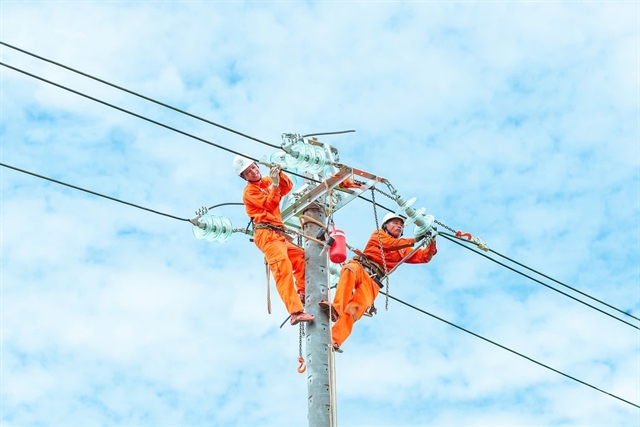 |
| Vietnam Electricity workers checking a transmission system. — VNA/VNS Photo |
HÀ NỘI — Deputy Prime Minister Phạm Gia Túc has ordered the acceleration of major power and energy projects to ensure they meet energy security and economic growth targets.
Speaking at a meeting on Tuesday, Túc said rapid expansion of the power supply is crucial to support the Government’s goal of achieving double-digit economic growth, particularly as electricity demand rises from technology development, data centres and the transition to cleaner energy.
However, some major energy and electricity projects have fallen behind schedule and failed to meet targets outlined in the revised National Power Development Plan VIII (PDP8), creating risks for future power supply.
Minister of Industry and Trade Lê Mạnh Hùng said energy security requires not only adequate electricity generation capacity, but also safe and stable system operations under extreme conditions, while ensuring energy prices remain affordable for businesses and households.
He said that several power generation and transmission projects are unlikely to become operational on schedule before 2030, which might affect electricity supply and national energy security in the years to come.
The ministry estimated that delays may affect around 44,900MW of planned power capacity, excluding renewable energy projects, by 2030.
“Ensuring electricity supply in the next few years will be challenging, particularly in northern Việt Nam, due to rising peak demand and delays in generation and transmission projects,” he said.
This year, the country is expected to have sufficient electricity output overall, but may still face shortages in peak generation capacity during prolonged heatwaves and dry-season evening peaks between 6pm and 9pm from May to August. Northern Việt Nam alone could face a shortfall of nearly 2,000MW during those periods.
From 2027 to 2030, the system could face more significant shortages, which would depend on the pace of renewable energy projects coming online.
“The system will face capacity shortages from 2027 onward,” the ministry said, adding that electricity supply would also depend on uncertain factors, such as hydrological conditions, geopolitical disruptions and the progress of transmission projects.
The ministry noted that the Law on Electricity allows all economic sectors to invest in and operate self-built transmission grids, but attracting private investment into transmission infrastructure, especially in remote areas or projects serving energy security objectives, has remained difficult.
To accelerate these energy projects, the ministry proposed special mechanisms aimed at streamlining investment procedures and ensuring just one task and one lead agency throughout project implementation.
The ministry also proposed exempting projects already included in the PDP8 from separate investment policy approvals, while renewable energy investors that have already completed project surveys and whose projects are included in the national power plan could be permitted to proceed without competitive bidding.
These projects would be constructed in Quảng Trị, Hà Tĩnh, Điện Biên, Sơn La and Lai Châu provinces.
The ministry also called for recognising hybrid renewable energy systems, which combine wind or solar power with battery energy storage systems, as complete power sources connected directly to the national grid.
A further proposal from the ministry would see a list of urgent power projects issued for immediate construction, to offset expected shortages in northern Việt Nam.
At the meeting, officials from other ministries called for stricter oversight and sanctions against investors and local authorities failing to implement projects on schedule.
Túc called for greater efforts to accelerate key national energy projects, strengthen coordination with local authorities and remove bottlenecks affecting project execution.
“We cannot allow delays,” he said. “If necessary, special mechanisms and simplified administrative procedures must be introduced so strategic energy projects can be implemented earlier and faster than planned.”
“No energy shortage is allowed in any circumstances,” he added. — VNS
Economy
 Economy
 Economy
 Economy
 Economy
 Economy
 Economy
 Economy
 Economy
 Economy
 Economy
 Economy
 Economy
.jpg) Economy
Economy
 Economy