 Economy


Tighter controls on livestream sales
1.
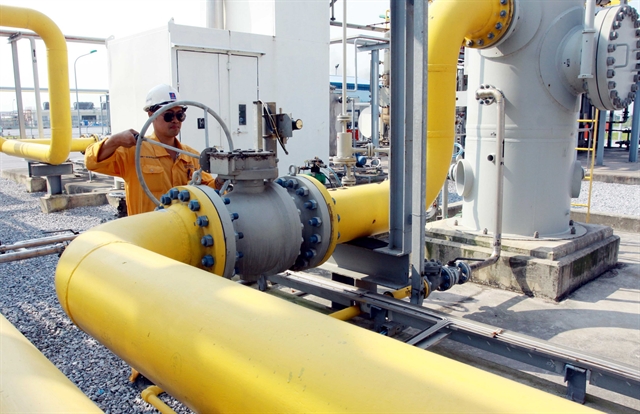 |
| A worker operates a low-pressure gas distribution system at Tiền Hải Industrial Park, part of the proposed Hưng Yên Free Economic Zone. — VNA/VNS Photo Thế Duyệt |
HÀ NỘI — A proposed free economic zone in Hưng Yên Province is shaping up as a test case for a new growth model as Việt Nam seeks faster, more sustainable expansion in the decades ahead.
The proposal moved forward on March 13 after the provincial Committee of the Communist Party of Việt Nam approved plans for the Hưng Yên Free Economic Zone, paving the way for submission to higher authorities.
The initiative reflects a strategic shift in development thinking, Lê Quang Hoà, deputy chairman of the provincial People’s Committee, said.
The aim is to move beyond traditional growth drivers by introducing internationally benchmarked policies designed to attract global investors and deepen integration into global supply chains.
Under the proposal, the free economic zone would be developed on the foundation of the existing Thái Bình Economic Zone, established in 2017.
The area spans more than 30,000ha across coastal districts formerly belonging to Thái Bình, now part of enlarged Hưng Yên, with plans to expand westward by about 13,000ha and reclaim roughly 17,000ha from the sea.
The zone would be divided into three functional areas and developed into a multi-sector hub focusing on high-tech manufacturing, new energy, logistics services, seaports, airports and resort urban areas.
The project is projected to require a total investment of around VNĐ463 trillion (US$18 billion) between 2025 and 2050, with the private sector expected to play a leading role.
It is expected to create more than 300,000 jobs by 2030, rising to 870,000 by 2040 and over 1.2 million by 2050, while also increasing state budget revenues.
Policy shift
To support the plan, Hưng Yên has proposed 31 special policy mechanisms, including a mix of Việt Nam’s most competitive existing policies and 13 new measures aligned with international standards.
“Rather than relying heavily on tax incentives, the model emphasises improving the overall investment environment, including transparency, efficiency and regulatory certainty, to enhance long-term competitiveness,” Hoà said, adding that the framework is built around four pillars: freedom of business, capital mobility, talent attraction and modern governance.
On March 20, Hưng Yên signed a memorandum of understanding with UK investor Lotus Vietnam Hospitality to study projects with a combined estimated value of about $5 billion, signalling early international interest ahead of any formal approval of the zone.
Testing ground
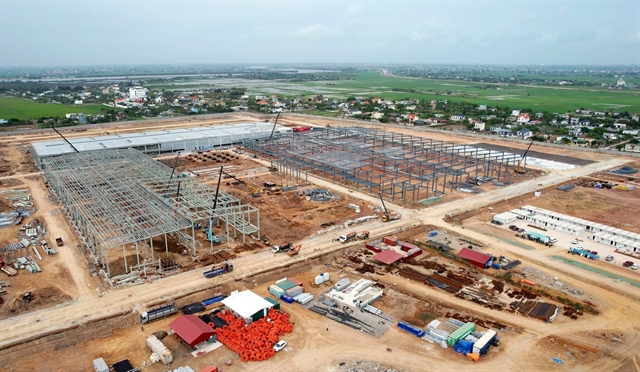 |
| An automobile plant under construction at Hưng Phú Industrial Park, part of the proposed Hưng Yên Free Economic Zone. — VNA/VNS Photo Thế Duyệt |
Nguyễn Hữu Nghĩa, secretary of the Hưng Yên Provincial Communist Party Committee, said achieving double-digit growth would require moving beyond traditional drivers such as labour and natural resources, which are inherently limited.
Hưng Yên was seeking to unlock new engines of growth through innovative economic models, he said, adding that such breakthroughs would help leverage production capacity not only for Hưng Yên but also for Việt Nam as a whole.
Addressing concerns about the role of residents in the proposed free economic zone, Nghĩa stressed that people would remain at the centre of the project.
“The economic zone is established to serve the people,” he said, adding that there are no plans for large-scale resettlement. “Residents will continue to live and work in the area.”
According to Đỗ Văn Vẻ, chairman of the Hưng Yên Business Association, expectations for the proposed free economic zone centre on its potential to deliver a breakthrough in productivity and value-added growth.
The economic zone, once operational, will serve as a testing ground for special high-impact policy mechanisms designed to optimise the investment environment.
Beyond its direct impact, the Hưng Yên Free Economic Zone is also seen as a potential growth engine for the wider region through the establishment of supply chains and production linkages.
Lê Đình Đáp, deputy general director of Green I-Park, the developer of Liên Hà Thái Industrial Park within the Thái Bình Economic Zone, said the proposed free economic zone could help establish an investment environment aligned with international standards.
He expressed the expectation that the model would attract high-quality foreign direct investment and leading global corporations while enabling domestic enterprises to access advanced technologies, integrate more deeply into global supply chains and move up the value chain.
New model
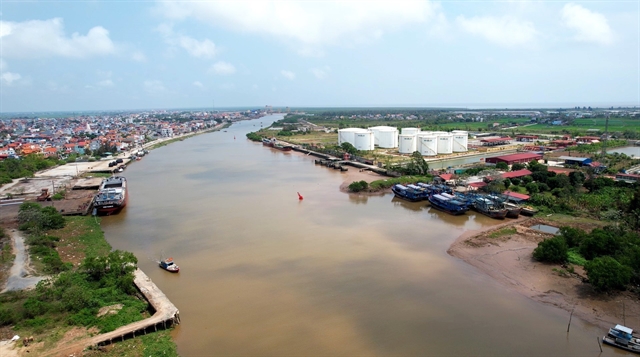 |
| The proposed Hưng Yên Free Economic Zone is an unprecedented model requiring tailored mechanisms beyond current legal frameworks. — VNA/VNS Photo Thế Duyệt |
Phan Đức Hiếu, permanent member of the National Assembly's Committee for Economic and Financial Affairs, welcomed the proposal, saying the Hưng Yên Free Economic Zone reflects a more comprehensive and assertive approach than previous models.
The project does not prioritise traditional financial incentives such as tax breaks or land concessions but instead focuses on building a transparent, competitive investment environment aligned with regional and international standards.
“A fair and transparent legal framework, along with strong protection of investors’ rights and interests, is fundamental,” Hiếu said.
However, he stressed that execution would be critical.
“The policies are new and bold, so implementation capacity must match ambition,” he said, adding that continuous consultation with businesses would be essential to refine the model.
Nguyễn Đức Hiển, deputy head of the Communist Party of Việt Nam Central Committee's Commission for Policies and Strategies, described the free economic zone as a major and unprecedented model requiring tailored mechanisms beyond current legal frameworks.
He said the initiative could contribute to Việt Nam’s ambition of achieving double-digit growth between 2026 and 2030 while also serving as a platform to test new policy approaches.
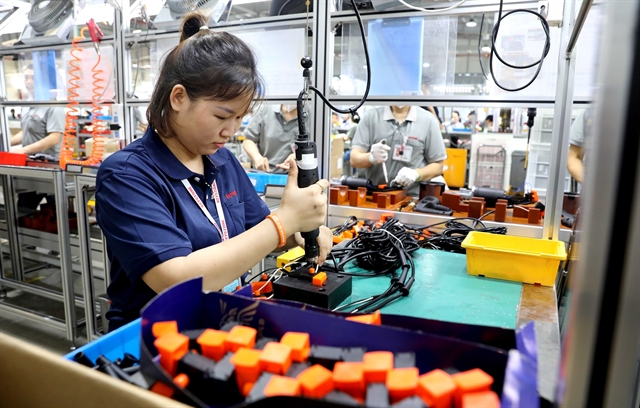 |
| Workers at Liên Hà Thái Industrial Park, a key manufacturing hub in the Thái Bình Economic Zone.. — VNA/VNS Photo Thế Duyệt |
Globally, there are more than 7,000 special economic zones and free trade zones.
In Việt Nam, these concepts remain at an early stage of development.
A free economic zone is generally defined as a designated area where the State applies special mechanisms and policies to attract investment, trade and international services, while a free trade zone refers to a more narrowly defined area where customs, tax and trade regulations are applied with greater flexibility than in the rest of the territory.
The country has begun piloting free trade zones in Đà Nẵng and Hải Phòng, while the legal framework governing their development continues to be refined.
Việt Nam targets to develop about 8–10 free trade zones by 2030 that can compete internationally and contribute up to 15–20 per cent of GDP by 2045.
As for free economic zones, the Hưng Yên Free Economic Zone is seen as the first of its kind in Việt Nam and represents a strategic step towards creating a new growth space.
Hưng Yên, following its merger with the former Thái Bình Province, now covers a total area of about 2,515 sq.km, making it the smallest province in Việt Nam.
Despite its modest size, the province has recorded strong economic momentum. In 2025, its gross regional domestic product was estimated at VNĐ166.1 trillion, up 8.78 per cent year on year, placing Hưng Yên among the country’s ten fastest-growing localities.
The northern province has set a target for GRDP growth of 10–10.5 per cent in 2026. If approved and effectively implemented, the Hưng Yên Free Economic Zone could serve as a blueprint for Việt Nam’s next generation of growth models, reshaping how the country attracts investment and integrates into global value chains. — VNS
Economy
 Economy
 Economy
 Economy
 Economy
 Economy
 Economy
 Economy
 Economy
 Economy
 Economy
 Economy
 Economy
 Economy
 Economy