 Economy


Tighter controls on livestream sales
1.
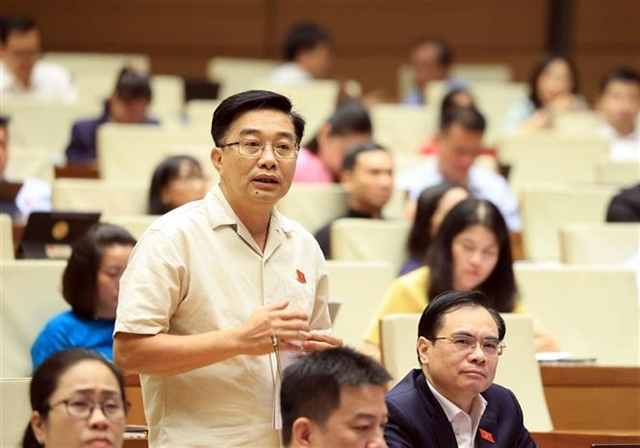 |
| Nguyễn Minh Sơn, a deputy from Đồng Tháp, speaks during the discussion. — VNA/VNS Photo |
HÀ NỘI — Lawmakers have voiced strong support for a draft resolution to cut taxes on petrol, oil and aviation fuel to zero, describing the move as urgent amid volatile global energy prices.
Under the proposal, environmental protection tax on petrol (excluding ethanol), diesel, aviation fuel, kerosene and mazut would be reduced to zero. These fuels would also be exempt from value-added tax (VAT) declaration and payment, while still entitled to input VAT deduction. Excise tax on petrol would be set at zero per cent.
During a plenary session on April 10, National Assembly deputies said the measure would help stabilise domestic fuel prices, ease cost pressures on businesses and households, and support macroeconomic stability.
Many delegates agreed the policy should be applied from April 16 to June 30.
Tạ Văn Hạ, a deputy from Đà Nẵng, described it as a short-term and responsive solution, while supporting greater flexibility for the Government to adjust the timeline if necessary.
However, views differed on the duration. Trần Hoàng Ngân, deputy from HCM City, proposed extending the policy until the end of 2026 or at least September 30 to provide more certainty for businesses.
In contrast, deputy Nguyễn Minh Sơn from Đồng Tháp warned that prolonging the tax cuts could put pressure on the state budget, estimating revenue losses of about VNĐ7.3 trillion ($278 million) per month.
Beyond tax measures, lawmakers also highlighted longer-term solutions to strengthen energy security.
Tạ Văn Hạ called for maximising domestic refining capacity, particularly at Nghi Sơn and Bình Sơn plants, which could meet up to 70–80 per cent of domestic demand. He also proposed building strategic fuel reserves equivalent to around 90 days of consumption and accelerating the shift towards renewable and alternative energy.
Flexibility in policy design was also highlighted. Some deputies suggested allowing the Prime Minister to adjust individual taxes separately, rather than applying all three tax changes simultaneously.
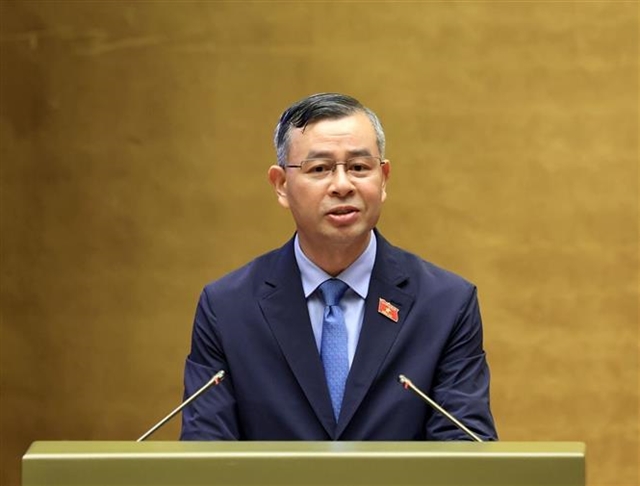 |
| Minister of Finance Ngô Văn Tuấn speaks at the session. — VNA/VNS Photo |
Minister of Finance Ngô Văn Tuấn said the Government would incorporate feedback to refine the draft, including issues related to policy duration, fiscal balance, and long-term energy strategy.
Concluding the session, Vice Chairwoman of the National Assembly Nguyễn Thị Hồng said there was broad consensus on the need for the resolution and called for its early approval to ensure timely implementation.
The measure is expected to help reduce costs, support economic recovery, and maintain macroeconomic stability amid ongoing global uncertainties. — VNS
Economy
 Economy
 Economy
 Economy
 Economy
 Economy
 Economy
 Economy
 Economy
 Economy
 Economy
 Economy
 Economy
 Economy
 Economy