 Economy


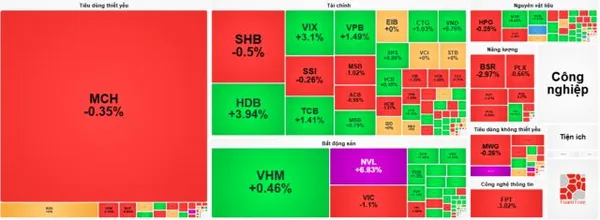
VN-Index ends lower despite liquidity hit over $1 billion
1.
.jpg)
|
| Consumers shop at the WinMart Thăng Long supermarket in Hà Nội. — VA/VNS Photo |
HÀ NỘI — Viêt Nam’s consumer prices index (CPI) in March edged up 1.23 per cent from the previous month as surging global fuel costs and higher construction material expenses fed through to domestic prices, the Finance Ministry’s National Statistics Office reported on April 4.
The March index gained 2.44 per cent from December 2025 and posted a 4.65 per cent year-on-year hike, the highest March reading in five years.
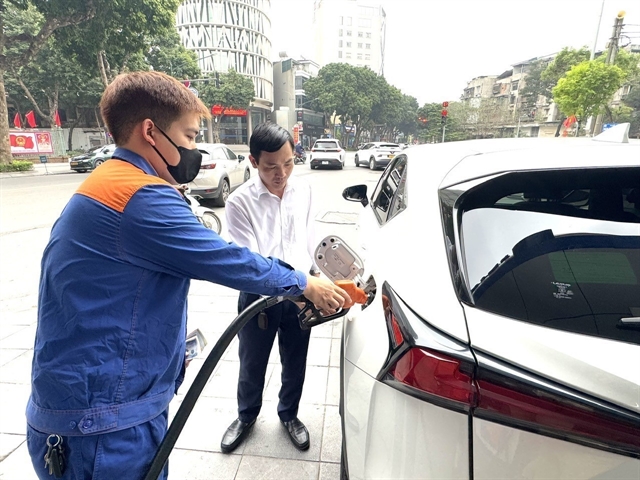
Price pressures broadened, with nine out of 11 major categories recording gains in March. Transport led the surge, skyrocketing 12.85 per cent and contributing 1.28 percentage points to headline CPI as petrol prices exploded 29.72 per cent, diesel jumped 57.03 per cent amid the Middle East conflict-triggered supply disruptions, and air passenger fares soared 23.19 per cent while rail transport rose nearly 14 per cent. Spare parts added 0.65 per cent on higher input and import costs.
Housing, utilities, fuel and construction materials advanced 0.77 per cent, adding 0.17 points, driven by input costs. In particular, kerosene surged more than 62.3 per cent, gas climbed 5.56 per cent, and repair/construction services moved up, though electricity and water prices eased slightly on lower usage.
Other categories, including healthcare, beverages & tobacco, household equipment, communications, education and miscellaneous goods and services, posted modest gains, reflecting higher production costs, exchange rate pressures and public services' price adjustments. Pharmaceutical prices rose 0.49 per cent month-on-month on costlier imported raw materials, production and distribution expenses.
Meanwhile, two categories saw price declines last month. Food and catering services fell 0.59 per cent, shaving 0.21 percentage points off CPI as food prices dropped 1.41 per cent. Culture, entertainment and tourism slipped 0.05 per cent on post-Lunar New Year demand weakness.
For the first quarter as a whole, the CPI climbed 3.51 per cent. Particularly, housing and construction materials jumped 5.69 per cent while food and catering services rose 4.55 per cent, together driving most of the CPI increase.
Education prices climbed 3.21 per cent on tuition adjustments for the 2025–26 academic year at some private and vocational schools. Transport rebounded 1.07 per cent in Q1 after earlier weakness as March’s fuel spike offset prior declines.
Communications prices fell 0.20 per cent year-on-year on abundant supply of some technological devices and fierce distributor competition during the first three months.
Core inflation, stripping out fresh food, energy and State-controlled items like healthcare and education services, rose 0.47 per cent month-on-month and 3.96 per cent year-on-year in March. It rose 3.63 per cent year-on-year in the first quarter, slightly above headline CPI, as falling food prices partly eased pressures.
Speaking at the press conference, Director of the NSO Nguyễn Thị Hương warned that Việt Nam must maintain macro-economic stability, ensure major economic balances and secure supply adequacy while keeping prices and markets under control to avoid inflationary pressure.
Authorities should closely monitor the Middle East military conflicts, global oil and shipping costs, and exchange rate movements to update growth and inflation scenarios in a timely manner, she said.
She also called for flexible fuel price governance via taxes, fees and the price stabilisation fund to cushion domestic price hikes, while urging careful sequencing of adjustments to electricity, healthcare, education and other State-managed prices to avoid compounding inflationary risks. — VNA/VNS
Economy
 Economy
 Economy
 Economy
 Economy
 Economy
 Economy
 Economy
 Economy
 Economy
.jpg) Economy
Economy
 Economy
 Economy
 Economy
 Economy