 Economy



LOAN Foundation awards scholarships to disadvantaged students on 10th anniversary
1.
|
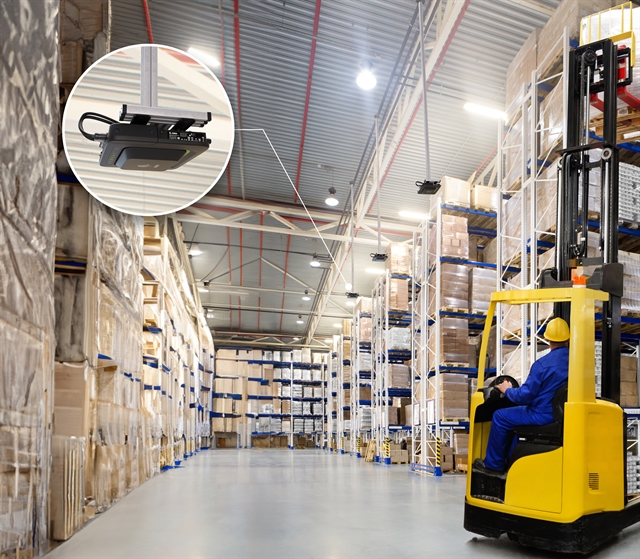
| RFID is emerging as a highly effective technology for the retail sector, with 59 per cent of retail decision-makers planning to implement item-level RFID in their operations. — Photos courtesy of Zebra Technologies |
HÀ NỘI — A pair of jeans, and almost all other products made in Việt Nam and sold in the European Union (EU), will soon need their own travel document, as Brussels tightens sustainability rules under the EU Green Deal. Known as a Digital Product Passport (DPP), it will carry detailed information on a product’s origin, materials, environmental impact and disposal recommendations, fundamentally changing how goods enter the bloc.
Under the EU Green Deal, textiles are among 30 sectors expected to require DPPs by 2030. To prepare for these changes, retailers and manufacturers are increasingly exploring innovative technologies that enable asset visibility, support circular economy models and help meet sustainability objectives, according to Trần Thị Bảo Trân, Vietnam Country Manager at Zebra Technologies.

|
| Trần Thị Bảo Trân, Vietnam Country Manager, Zebra Technologies. |
These developments were echoed at the Digital Future Forum 2025, held in Hà Nội last month, where government leaders, policymakers and technology experts reaffirmed that traceability is becoming a core requirement for Việt Nam’s export-driven industries. As global markets tighten sustainability and compliance standards, the EU’s forthcoming Digital Product Passport framework is accelerating interest in practical technologies such as radio-frequency identification (RFID) among Vietnamese manufacturers.
RFID is emerging as a highly effective technology for the retail sector, with 59 per cent of retail decision-makers planning to implement item-level RFID across their operations.
While RFID labels are often associated with loss prevention for products such as cosmetics, the same technology can be embedded far more discreetly. In the case of jeans, an RFID tracker can be sewn into the garment as a thin wire thread just five centimetres long. Hidden from view, it is activated by an RFID reader, whether handheld, fixed or integrated into a point-of-sale mat, a kiosk or a mobile computer.
By connecting the RFID thread to the appropriate frequency, manufacturers can transmit critical intelligence about garments to retailers. This form of intelligent automation streamlines stock management, supports circularity and recycling at scale and reduces fraud, a major advantage in high-volume retail environments.
Consider a shipment of made-in-Việt Nam jeans arriving at a store in the EU. Using an RFID reader, the retailer can scan the entire box without opening it, as radio waves pass through the packaging. The scan returns a URL link or identification number, the garment’s unique identifier, which serves as the master key connecting it to its digital passport.
This identifier enables systems to access key data points from the passport, ensuring asset visibility at every stage of the supply chain. In effect, the RFID reader conducts an instant stocktake while date-stamping garments against their passports, much like an official stamping travel documents at customs.
Once the jeans reach the shop floor, shoppers can use their smartphones or in-store kiosks to access the passport. They can see where the jeans were made, what materials were used and detailed environmental metrics such as carbon emissions and water consumption.
RFID-enabled digital product passports also simplify returns, as receipts are no longer required. Authenticity is guaranteed by the passport itself. When garments reach the end of their life cycle, consumers can return them for recycling, where a quick scan ensures proper sorting by material and colour, enabling efficient recycling. This seamless RFID–DPP integration brings circularity into motion.
By integrating RFID into digital product passports, retailers connect frontline workers with real-time insights into product origin, materials and sustainability data. This connectivity benefits manufacturers, logistics providers, retailers, consumers, recyclers and regulatory auditors alike. Data flows back to Việt Nam’s data centres, where carbon footprints are aggregated into broader sustainability reporting frameworks.
In stores, RFID-powered passports are set to transform the shopping experience. Consumers can instantly verify where products come from, what they are made of and whether purchases align with their values, strengthening trust while ensuring compliance with EU regulations.
To meet these evolving export requirements, Vietnamese enterprises are actively seeking solutions that enable intelligent automation and asset visibility. Under the amended Law on Product and Goods Quality, products are classified by risk level, with high-risk goods requiring detailed traceability.
Clause 8, Article 3 of the law formally defines digital product passports, allowing product data to be presented via barcodes, QR codes or other digital formats. This legal framework supports the adoption of RFID, a critical technology linking physical goods to their digital records and enabling secure, automated and real-time tracking across global supply chains. — VNS
Economy
 Economy
 Economy
 Economy
 Economy
 Economy
 Economy
 Economy
 Economy
 Economy
.jpg) Economy
Economy
 Economy
 Economy
.jpg) Economy
Economy
 Economy

.jpg)