 Brandinfo

Data centre market faces energy challenges
1.
TÂY NINH — Rising prominently above the surrounding lowlands, with clouds crowning its summit and generations of worshippers regarding it as sacred, Bà Đen Mountain in the southern province of Tây Ninh evokes the image of Mount Fuji. Here, visitors can ride a cable car up the mountain, watch clouds drift past monumental statues and discover a centuries-old pilgrimage tradition.
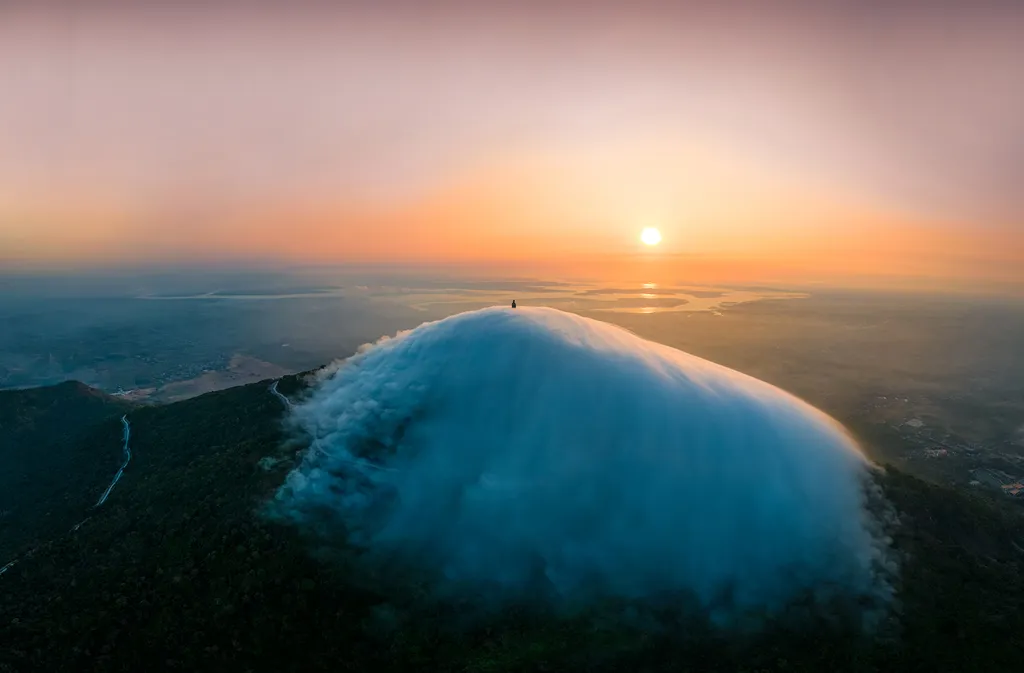 |
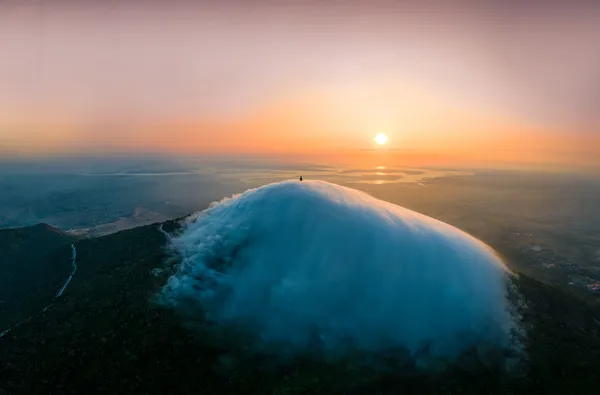
| The distinctive cloud cap envelops the summit of Bà Đen Mountain at sunrise, creating a spectacular scene reminiscent of Mount Fuji. |
For the Japanese, Mount Fuji has never been just a mountain to admire from afar. It has inspired generations of artists and poets, while drawing travellers on journeys with a deeper spiritual meaning. Part of its enduring appeal lies in its striking silhouette: an almost perfectly symmetrical cone rising against the horizon, recognisable from a great distance.
In Việt Nam, Bà Đen Mountain makes its presence felt long before visitors reach its foothills. Rising above the rice fields of Tây Ninh, its slopes stand out distinctly from the otherwise flat landscape. When clouds gather around its summit, the mountain’s silhouette calls Mount Fuji to mind.
Much like Japan’s iconic peak, Bà Đen is more than a striking natural landmark. It is a sacred destination where people come to pray for peace, sustaining a pilgrimage tradition passed down through generations.
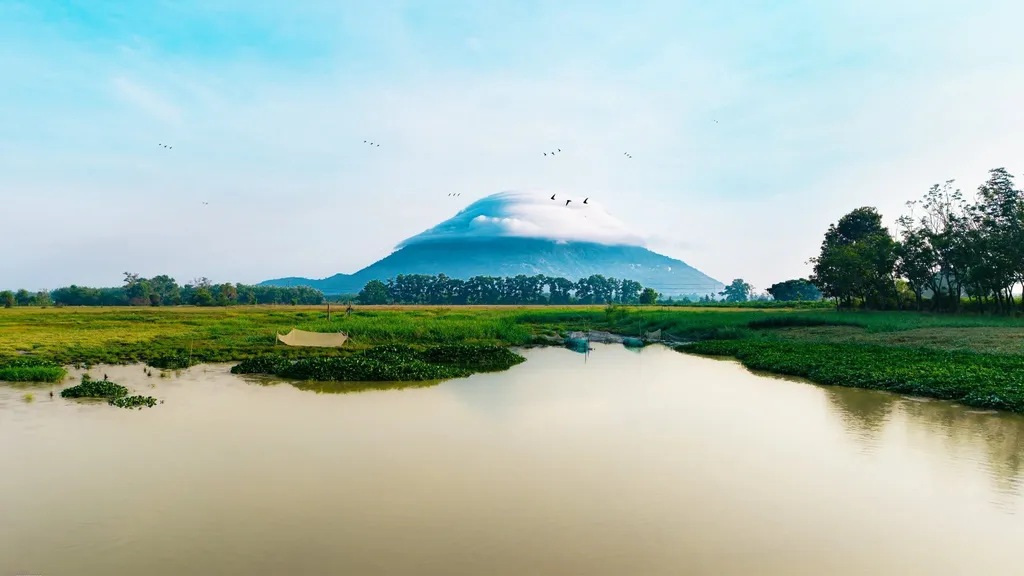 |
| Bà Đen Mountain rises in solitary prominence above the green plains of Tây Ninh, its summit encircled by a ring of white cloud. — Photo: Trương Anh Tuấn |
Yet what awaits visitors at Bà Đen has a character all its own. Tropical lowlands stretch out at the foot of the mountain, ancient pagodas dot its slopes and, at the summit, clouds drift past monumental statues before parting to reveal sweeping views of the fields below. This ever-changing landscape makes the journey up the mountain about more than capturing a beautiful photograph.
Cloud cap and other natural wonders
On certain days, Bà Đen Mountain seems to take on an entirely different appearance. From a distance, a layer of white cloud wraps around its summit, forming a near-perfect ring like an enormous hat resting on the peak.
Sometimes the cloud band is sharply defined, leaving the mountain’s silhouette clearly visible beneath it. At other times, the clouds spread outwards, swirling around the slopes before gradually dissolving in the sunlight. Locals and photographers have dubbed these the days when the mountain “wears a hat”.
Travellers who have seen photographs of Mount Fuji crowned by a white ring of cloud may notice the resemblance. At Bà Đen, however, the cloud cap appears above the green fields and villages of Tây Ninh, creating a scene that feels familiar yet entirely distinct when experienced in person.
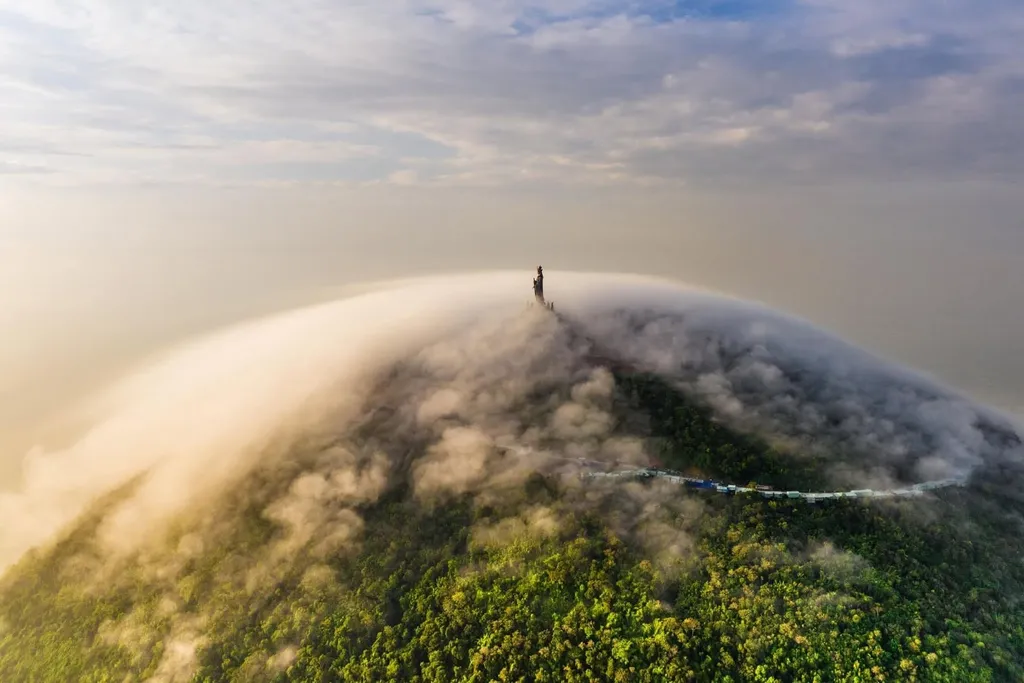 |
| The Tây Bổ Đà Sơn Bodhisattva statue emerges from a sea of clouds, creating a deeply spiritual atmosphere. |
The cloud cap is just one of the natural spectacles visitors may encounter. On clear mornings with favourable conditions, a sea of white cloud spreads beneath the 986-metre summit. Looking down from above, visitors watch fields and roads gradually disappear until layer upon layer of cloud stretches to the horizon. As the sun rises or the wind shifts, glimpses of the lowlands emerge through the white veil, transforming the landscape before their eyes.
The cable car carries visitors from the foot of the mountain into this elevated world without the need for a lengthy hike. Through the cabin windows, roads shrink into fine lines, fields spread out below and the mountainside gradually draws closer. On cloudy days, the cabin may pass into a blanket of white, building anticipation for the scenery waiting above.
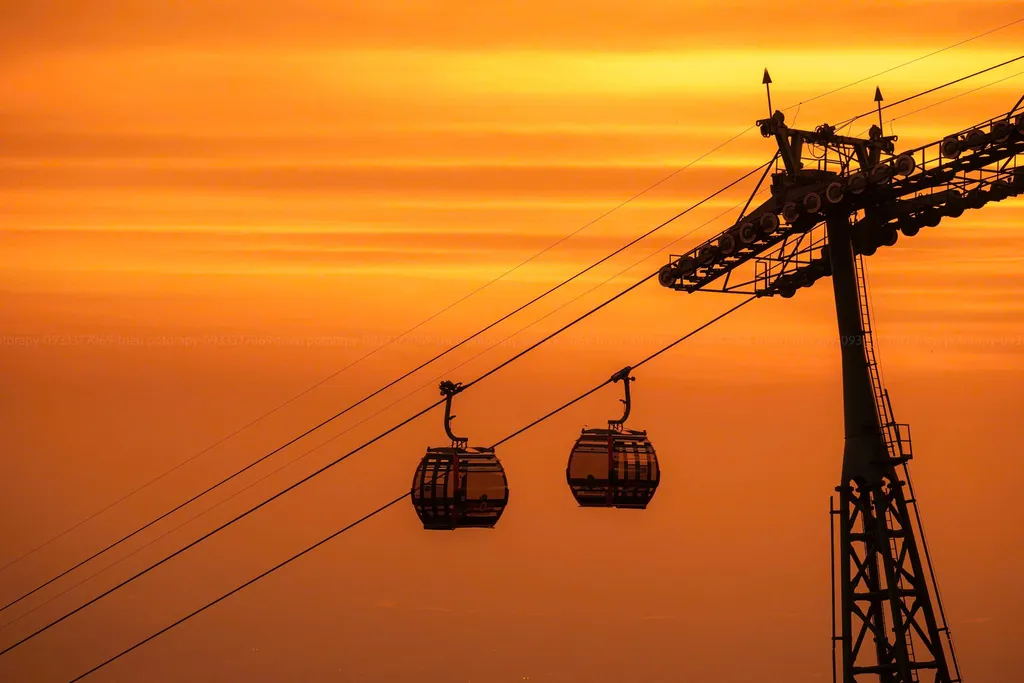 |
| A cable car glides through the clouds, offering sweeping aerial views of Tây Ninh’s natural landscape. |
What makes the experience at the summit especially memorable is the way clouds drift through its sacred landmarks. On some mornings, clouds float past the feet of the Tây Bổ Đà Sơn Bodhisattva statue, sweep across the plaza and dissolve along the tree-covered slopes. Elsewhere, the sandstone statue of Maitreya Bodhisattva appears and disappears in the shifting mist. Visitors may raise their cameras to capture the scene, only for a passing cloud to obscure the view, then watch as the light reveals every detail minutes later.
These moments cannot be scheduled. Whether visitors see a cloud cap, a sea of clouds or a clear morning depends entirely on the weather. That unpredictability is part of the mountain’s appeal: some visitors return hoping to witness a spectacle they missed, while others chance upon a sea of clouds on their very first visit.
On clear days, the summit offers sweeping views across the plains, revealing how prominently the mountain rises above the surrounding lowlands.
A sacred mountain beyond the clouds
The resemblance to Mount Fuji extends beyond the landscape to the mountain’s place in spiritual life. For many people in southern Việt Nam, Bà Đen is first and foremost known as Núi Bà, a sacred mountain associated with legends of Linh Sơn Thánh Mẫu, a revered local deity.
Long before it became a popular tourist destination, the mountain was a place where people came to offer incense, pray for peace and entrust their hopes for their families to the divine.
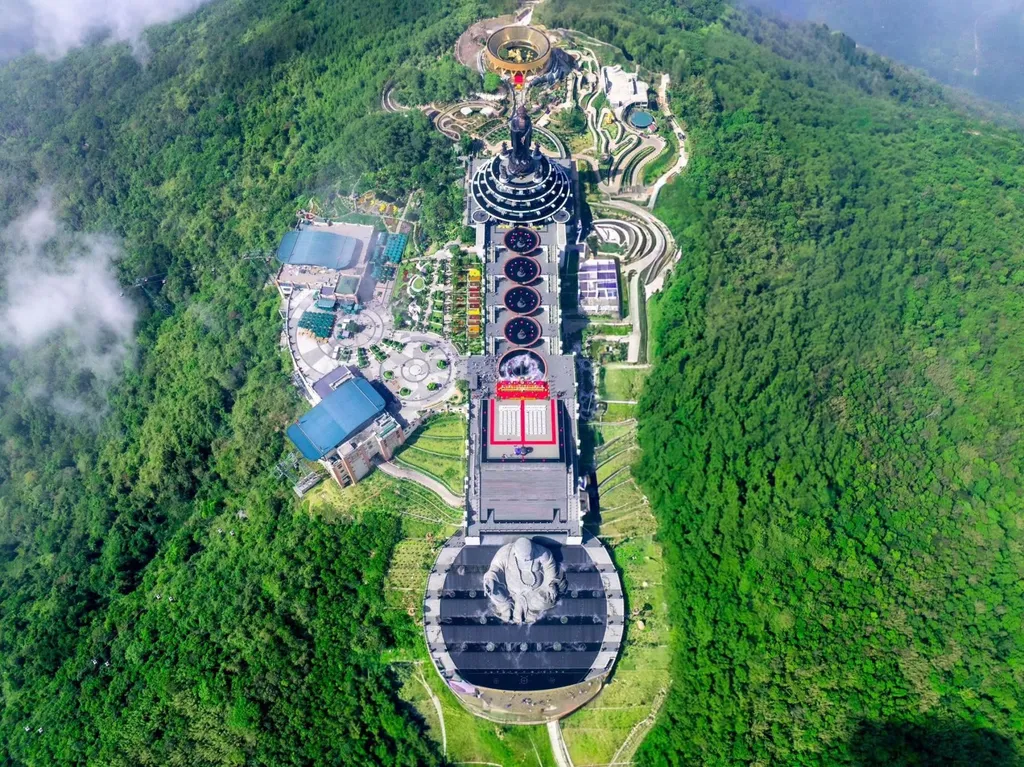 |
| A complex of modern spiritual landmarks crowns the summit, offering a new stop on the journey to discover Bà Đen Mountain. |
Midway up the mountain, a complex of pagodas and temples with histories spanning hundreds of years includes Linh Sơn Tiên Thạch Pagoda, best known as Bà Pagoda, and Điện Bà, a shrine dedicated to Linh Sơn Thánh Mẫu.
At the beginning of the year, the Bà Đen Mountain Spring Festival draws pilgrims from across the country. In the fifth lunar month, the annual festival honouring Linh Sơn Thánh Mẫu is another important occasion for those who carry on this spiritual tradition to make their pilgrimage.
For international visitors, the mountain’s appeal goes beyond its temple architecture and the legends passed down through generations. It is also an opportunity to encounter a living tradition that remains part of everyday life.
Families often make the journey together, with grandparents, parents and children travelling side by side. Some come to pray for a prosperous year ahead, others return to give thanks, while many simply continue a custom they have known since childhood. For them, a visit to Bà Đen is about far more than sightseeing.
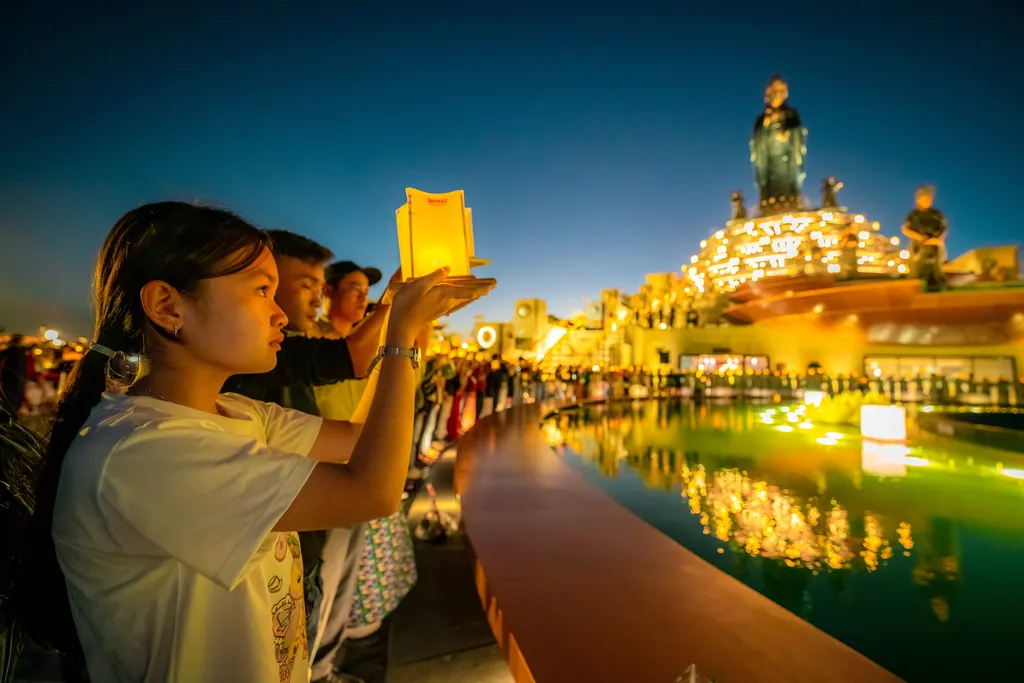 |
| Locals and visitors take part in a floating lantern ceremony to pray for peace, carrying on the mountain’s long-standing pilgrimage tradition. |
A visit can combine exploring the pagoda complex on the mountainside with taking in the scenery and discovering the spiritual and cultural landmarks at the summit. The Tây Bổ Đà Sơn Bodhisattva statue, the Maitreya Bodhisattva statue, a Buddhist exhibition centre, plazas and flower gardens offer further stops along the way, while Bà Pagoda retains its special place in the pilgrim’s journey.
Each site offers a different way to experience the mountain, from its age-old legends to the sweeping views from above.
A traveller might come to Bà Đen for a photograph of its cloud cap, only to spend more time exploring a pagoda on the mountainside or waiting for a sacred statue to emerge from the mist. The skies may also remain clear that day, with no clouds in sight, but in their place lies an expansive panorama of the plains below and a chance to witness a pilgrimage tradition that continues to this day.
Mount Fuji may offer a distant point of reference for imagining Bà Đen, but the journey up the mountain reveals experiences found nowhere else.
Brandinfo
 Brandinfo
 Brandinfo
 Brandinfo
 Brandinfo
 Brandinfo
 Brandinfo
 Brandinfo
 Brandinfo
 Brandinfo
 Brandinfo
 Brandinfo
 Brandinfo
 Brandinfo
 Brandinfo