 Sci-Tech

OPPO Find X10 Pro Max to Debut Globally with MediaTek’s 2nm Flagship Dimensity 9600 Pro
1.
 |
| Delegates cut the ribbon to inaugurate the early warning radiation monitoring network. — Photo baochinhphu.vn |
HÀ NỘI — The Việt Nam Atomic Energy Institute under the Ministry of Science and Technology, in coordination with the Delegation of the European Union to Việt Nam, on Tuesday inaugurated and handed over the Vietnamese component of the EU-funded project on establishing an early warning radiation monitoring network and ASEAN regional data exchange platform (EU–ASEANTOM).
The event marks an important step in strengthening Việt Nam’s radiation and nuclear safety capabilities while reaffirming the country’s commitment to regional nuclear security cooperation.
The EU–ASEANTOM project, funded through non-refundable aid from the EU, aims to establish an Early Warning Radiation Monitoring Network (EWRMN) and the ASEAN Regional Data Exchange Platform (ASEAN–RDEP) for seven ASEAN member states.
The system is designed to promptly detect abnormal increases in environmental radiation levels, enabling countries to take proactive measures to protect communities and the environment.
In Việt Nam, the project was assigned by the Ministry of Science and Technology to the Việt Nam Atomic Energy Institute, with direct implementation carried out by the Institute for Nuclear Science and Technology in Hà Nội.
Despite challenges related to terrain and weather conditions, Việt Nam completed all project targets.
The network now consists of 41 online monitoring stations, including 40 MIRA devices measuring ground-level environmental gamma dose rates and one SARA underwater gamma spectrometry device installed at the Hòn Dấu Oceanographic Station in northern Việt Nam.
The stations have been strategically deployed at key locations nationwide.
An operations centre based in Hà Nội at the Institute for Nuclear Science and Technology is capable of receiving, storing, processing and displaying real-time data around the clock from all monitoring stations across the country.
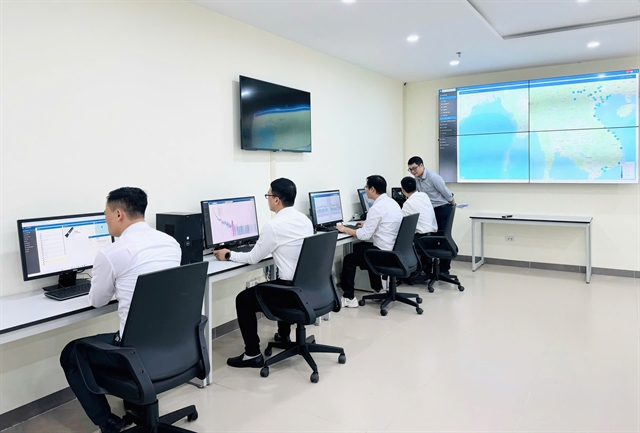 |
| The operations centre is located at the Institute for Nuclear Science and Technology. — Photo: baochinhphu.vn |
Notably, all of Việt Nam’s monitoring data has been fully connected and seamlessly shared with the ASEAN-RDEP regional data exchange platform hosted in Thailand, while also being ready for transmission to the International Radiation Monitoring Information System (IRMIS) of the International Atomic Energy Agency.
Beyond technical infrastructure, the project has also helped train a team of Vietnamese experts capable of independently and sustainably operating, maintaining and managing the system.
Speaking at the ceremony, Deputy Minister of Science and Technology Lê Xuân Định said radiation and nuclear safety have always been top priorities for the Vietnamese Government in the development and peaceful application of atomic energy.
According to the deputy minister, the EU-funded project not only strengthens Việt Nam’s technical capacity but also contributes to building a robust regional nuclear safety and security network across Southeast Asia.
“The official operation of this network will enable authorities to rapidly assess situations and respond effectively in the event of incidents, thereby ensuring the safety of people and the environment,” he said.
Định also praised the cooperation of the Hydro-Meteorological Authority and related agencies for supporting station infrastructure, while recognising the efforts of units under the Việt Nam Atomic Energy Institute during the implementation process.
He called on the institute to continue coordinating with relevant agencies to ensure the stable operation of the system and study the integration of data into the national environmental radiation monitoring and warning network.
EU Ambassador to Việt Nam Julien Guerrier said the project reflected the importance the EU places on Việt Nam as a trusted and long-term ASEAN partner in ensuring optimal protection against chemical, biological, radiological and nuclear (CBRN) risks.
According to Guerrier, the programme has contributed to building a national network for environmental radiation monitoring and early warning, helping authorities continuously monitor and promptly detect abnormal radioactive incidents both domestically and across ASEAN borders.
The system is expected to provide critical information and data to improve responses to potential radiation and nuclear incidents, thereby strengthening civil protection and nuclear safety capabilities.
Guerrier noted that the event comes as Việt Nam–EU relations have recently been upgraded to a Comprehensive Strategic Partnership, opening new opportunities for cooperation in science, technology and the sharing of international standards.
He added that both sides are advancing cooperation in skills development, technology transfer and the application of European quality standards in sectors such as nuclear energy, energy and transport, areas where Việt Nam is currently implementing major public investment programmes.
The EU also reaffirmed its commitment to supporting Việt Nam in its energy transition, improving energy efficiency, developing renewable energy, ensuring nuclear safety and mitigating CBRN risks.
The launch of the EU-ASEANTOM monitoring network is expected not only to strengthen Việt Nam’s capacity to detect cross-border radiation incidents at an early stage but also to establish an important data foundation for State management of atomic energy, with the aim of future integration into the national environmental radiation monitoring and warning network. — VNS
Sci-Tech
 Sci-Tech
 Sci-Tech
 Sci-Tech
 Sci-Tech
 Sci-Tech
 Sci-Tech
 Sci-Tech
 Sci-Tech
 Sci-Tech
 Sci-Tech
 Sci-Tech
 Sci-Tech
 Sci-Tech
 Sci-Tech