 World
World
Bridge takes shape
1.
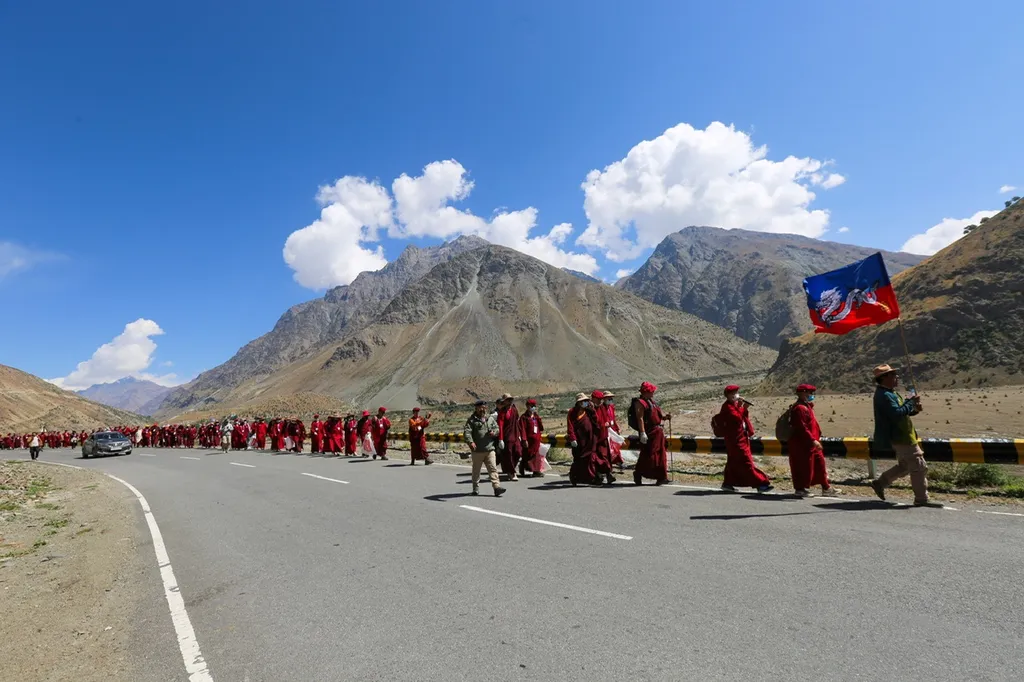 |
| The Garsha Eco Pad Yatra's six-day walk was dedicated to drawing attention to the climate crisis unfolding across the Himalayas, and call for urgent global action against climate change. PHOTO COURTESY OF KUENSEL |
Covering more than 100 kilometres and passing through seven villages in the Garsha region of Himachal Pradesh, India, the former Bhutan Broadcasting Service (BBS) journalist encountered communities struggling with the growing impacts of climate change.
Rivers were becoming unpredictable, mountain slopes were giving way and familiar seasons were disappearing.
"Everywhere, people spoke of a climate that no longer behaves as it once did," Dechen said after returning to Bhutan on September 30.
She was among nearly 1,000 participants from Singapore, Malaysia, Vietnam, Bhutan, India and Nepal who joined the Garsha Eco Pad Yatra from September 20 to 26.
For the participants from Southeast Asia, the journey offered an opportunity to witness a climate crisis unfolding far from their homes but with implications for the entire region.
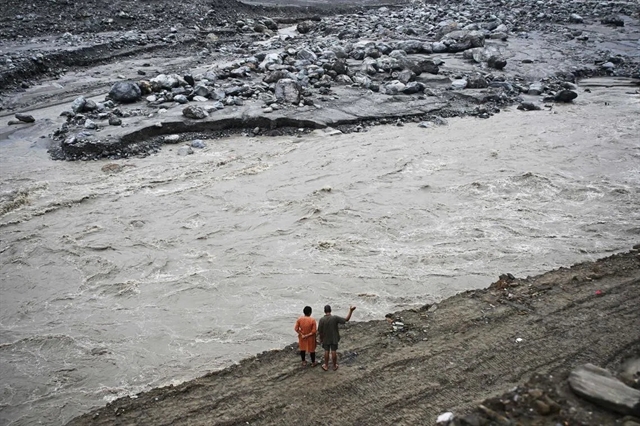
In Jhalman, a sudden flood in June washed away a bridge and sections of a road. In Lindoor, the ground beneath the village is slowly giving way, threatening homes and livelihoods. In Sissu, residents are increasingly worried about the expanding Ghepan Lake and the possibility of a glacial lake outburst flood.
Even the weather was unusual.
September, traditionally a cooler month in the mountains, was exceptionally hot.
"People told us simply that there are no longer seasons in Garsha. We felt what they meant," Dechen said.
For her, the journey transformed climate change from an environmental issue discussed in reports into a human experience. She saw how rising temperatures and changing weather patterns are affecting people who have lived in these mountains for generations.
But the significance of what she witnessed extends far beyond Garsha.
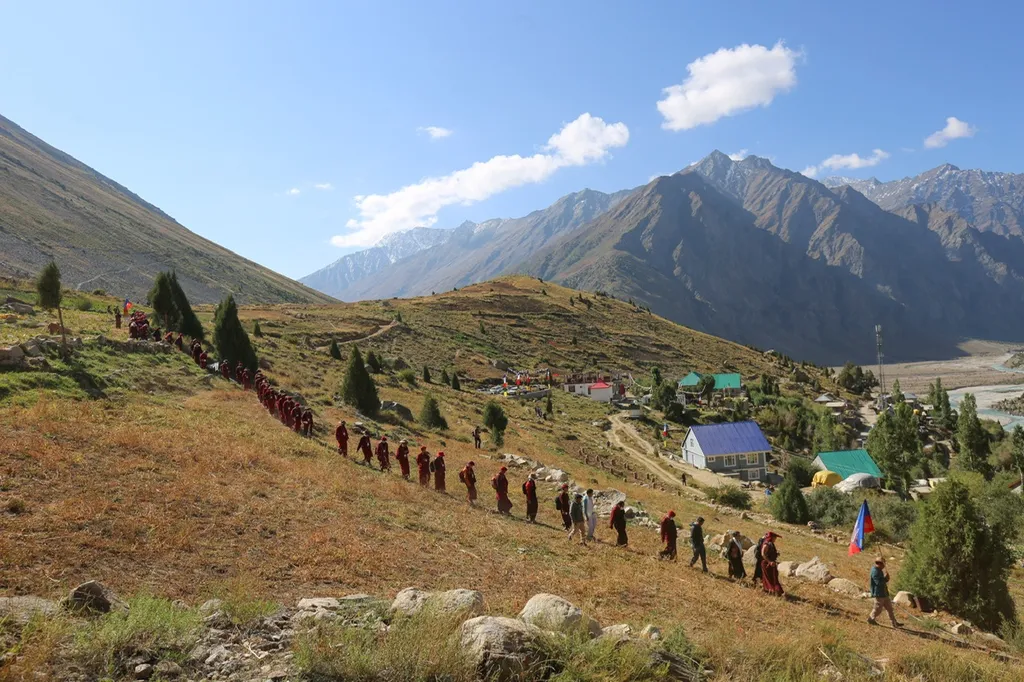 |
| The changes are happening at a pace that scientists say is accelerating. |
The region is home to more than 270 million people, while its rivers provide water and other ecosystem services to nearly two billion people downstream.
Although the effects of melting glaciers are most immediately visible in mountain communities, the consequences extend far beyond them.
For countries such as Singapore, Malaysia and Vietnam, the changing Himalayan climate is part of a wider regional conversation about environmental security, water resources and the growing risks of climate change.
A 2026 assessment by the International Centre for Integrated Mountain Development (ICIMOD) found that glaciers across the Hindu Kush Himalayas are losing ice at twice the rate recorded since 2000. Some glaciers have lost up to 27 metres of ice thickness since 1975.
The retreat of glaciers, changing snowfall and degradation of permafrost are increasing the risks of floods, landslides and glacial lake outburst floods.
For communities in the mountains, these changes threaten homes, roads, agriculture and livelihoods. Further downstream, changing river flows can affect water availability, food production and energy security.
The Himalayas may seem geographically distant from Southeast Asian cities and communities, but their environmental changes are part of a climate system that connects countries across Asia.
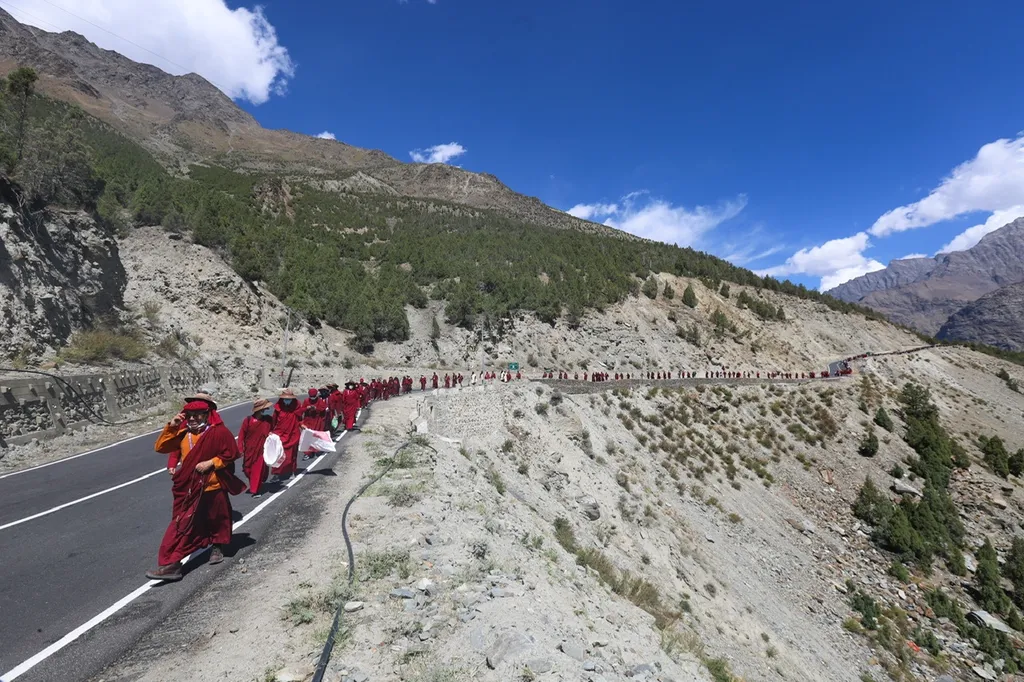 |
| That reality is increasingly shared across the Hindu Kush Himalayas. |
In Jhalman, the June flood demonstrated how quickly a mountain river can become destructive. The sudden surge, linked to glacial melt upstream, destroyed a bridge and damaged sections of the road.
In Lindoor, the danger comes from beneath the ground. The village is slowly sliding downhill as the terrain becomes unstable. Buried glacial ice is believed to contribute to the instability, which is being exacerbated by rising temperatures.
In Sissu, the expanding Ghepan Lake poses another potential danger. A glacial lake outburst flood could release enormous volumes of water downstream, threatening communities and infrastructure.
These are not merely scientific projections. They are risks that local people are already confronting.
During the walk, participants also heard residents describe hotter temperatures, erratic snowfall and seasons that no longer follow familiar patterns.
For Dechen, these encounters were among the most powerful moments of the journey.
The beauty of the Himalayas remained undeniable, but so did the vulnerability of the people living there.
A journey beyond borders
The Garsha Eco Pad Yatra was led by Buddhist teacher Gyalwa Dokhampa and the Drukpa Kung Fu nuns under the theme "Walking for Climate and Heritage".
Unlike an ordinary trek, the journey was not simply about reaching a destination. It was about listening to communities, witnessing environmental changes and bringing people from different countries together around a shared concern.
Rooted in Buddhist teachings of compassion and interdependence, the Pad Yatra promotes environmental conservation and harmony with nature.
Along the route, participants collected waste, planted more than 200 trees and raised awareness about protecting the environment.
For the international participants, the experience also offered an opportunity to understand how climate change affects communities differently, depending on their geography and livelihoods.
While the people of Garsha face immediate threats from floods, landslides and melting glaciers, other parts of Asia face their own climate-related challenges.
The underlying message, however, is shared: environmental changes do not respect national borders, and addressing them requires cooperation.
A warning for the region
For Bhutanese participants, the changing conditions in Garsha have particular significance because of the country's dependence on mountain ecosystems.
But the message is equally relevant to participants from Singapore, Malaysia and Vietnam.
"This matters to Bhutan as much as it does to communities in northern India or Nepal. The mountains may be divided by national borders, but the climate system is not," said a Bhutanese participant.
The same principle applies to the wider Asian region. Countries may have different landscapes, economies and vulnerabilities, but climate change connects their futures.
The Himalayas are a critical part of Asia's environmental system. Changes in their glaciers, rivers and ecosystems have implications for communities far beyond the mountains.
For the participants, walking through Garsha made this connection tangible. They saw the damage caused by floods, experienced the unusual September heat and listened to people describe changes in their environment.
The journey also highlighted the importance of preparing vulnerable communities, strengthening disaster resilience and encouraging greater regional cooperation on climate change.
Protecting the mountains, protecting lives
For Dechen, the six-day walk was more than an opportunity to experience the beauty of the Himalayas. It was a journey into the lives of people confronting an uncertain future.
The stories of Jhalman, Lindoor and Sissu revealed how climate change is reshaping mountain communities, threatening infrastructure and putting livelihoods at risk.
But their experiences also carry a message for the thousands of communities living beyond the Himalayas.
The Garsha Eco Pad Yatra may have ended, but the challenges it highlighted remain. As glaciers continue to retreat and mountain environments become increasingly unstable, the need for collective action is growing.
The journey brought together people from six countries, united by a shared concern for the environment. Its message was simple: protecting the Himalayas is not just the responsibility of the people who live there.
For the nearly two billion people who depend on the region's rivers and ecosystems, the future of the mountains is closely connected to their own.
As Dechen and the other participants discovered, what happens in the Himalayas does not stay in the Himalayas. Its consequences reach far beyond the mountains, making their protection a shared responsibility for Asia.
Contributed by Rinzin Wangchuk, Executive Director of the Journalists' Association of Bhutan
World
 World
World
 World
World
 World
World
 World
World
 World
World
 World
World
 World
World
 World
World
 World
World
 World
World
 World
World
 World
World
 World
World
 World
World
.jpeg)