 World
World

Businesses need to expand share of online export market
1.
BANGKOK Thailand’s Criminal Records Division has announced requirements that may affect foreign nationals undertaking official procedures in the country. Under the rules, criminal record checks for nine categories of applications must be conducted using fingerprints.
These categories include key Immigration Bureau procedures, such as applications for permanent residence and extensions of stay. They also cover applications for Thai nationality handled by the Department of Provincial Administration.
The division has clarified that these criminal record checks cannot be conducted using only an applicant’s full name. Applicants must instead provide fingerprints to confirm their identity and complete the screening process.
The fingerprint-only requirement also applies to all foreign nationals seeking criminal record checks in Thailand. Applicants must submit an official letter from the relevant government agency or organisation with their request.
The Criminal Records Division, which operates under the Royal Thai Police, explained that the notice was issued to ensure that criminal record checks comply with the relevant rules and official procedures.
The Criminal Records Division advised applicants to select the correct category and ensure that their requests meet all prescribed requirements.
If an applicant selects the wrong service category or submits an application that does not comply with the requirements, the authority reserves the right not to refund any fees or service charges.
Permits prolonged
Capt Patdarasm Thongsaluaykorn, a deputy government spokeswoman, yesterday outlined details of a Cabinet resolution approved on July 14 to extend the grace period allowing migrant workers from Myanmar, Laos and Việt Nam to remain temporarily in Thailand and continue working until December 11, 2027.
She said the measure was intended to support the economy and ease labour shortages in the industrial and service sectors.
Most migrant workers’ work permits were due to expire gradually towards the end of 2026.
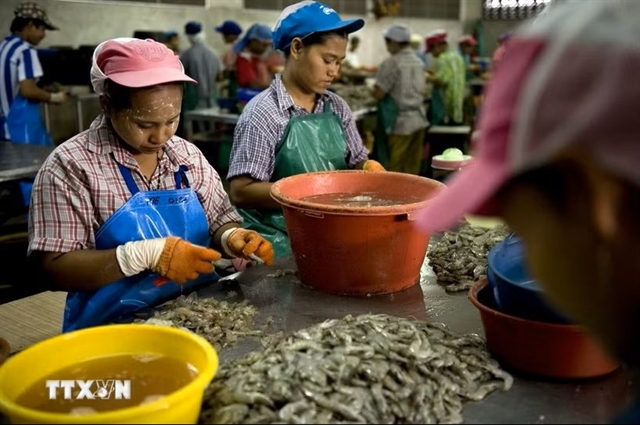
Without the extension, Thai businesses reliant on this workforce could be directly affected across manufacturing, construction, services and agriculture nationwide, particularly in industrial areas and major tourist provinces.
If these workers had to leave the system, this could affect the stability of the country’s economic activity at a time when labour demand remained high.
The deputy spokeswoman said the government had introduced the measure in advance, before a large number of migrant workers’ work permits expired, to prevent labour shortages and enable the private sector to maintain continuity in workforce planning without having to halt production lines or temporarily close businesses.
During the grace and extension period, relevant agencies will accelerate improvements to the migrant worker database and use digital technology to link systems across agencies, enabling them to monitor and verify that migrant workers remain in the system legally.
The measures will also help reduce illegal entry and illegal labour, while helping businesses avoid worker shortages and pressure arising from international labour standards.
She stressed that the government was not opening general registration for new migrant workers, but was extending the grace period only for the existing group whose information was already in the system, allowing them to continue working.
The Ministry of Labour will next issue detailed notifications and guidelines to streamline paperwork and make the process as convenient and swift as possible.
Employers and business establishments were therefore urged to follow official announcements through the Department of Employment website at www.doe.go.th or the Ministry of Labour hotline on 1506, pressing 2, to avoid scams involving false claims and demands for benefits. THE NATION/ANN
World
 World
World
 World
World
 World
World
 World
World
 World
World
 World
World
 World
World
 World
World
 World
World
 World
World
 World
World
 World
World
 World
World