 World
World
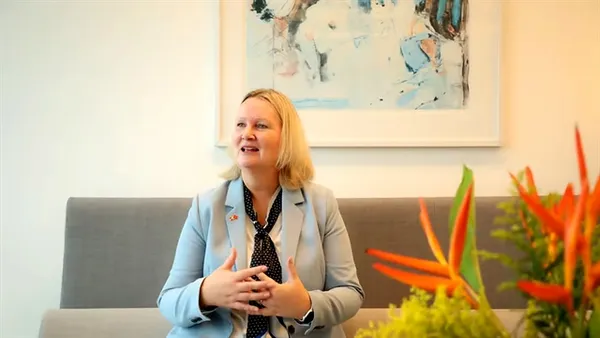
Top leader’s visit to open new chapter in Việt Nam–Denmark relations
1.
|
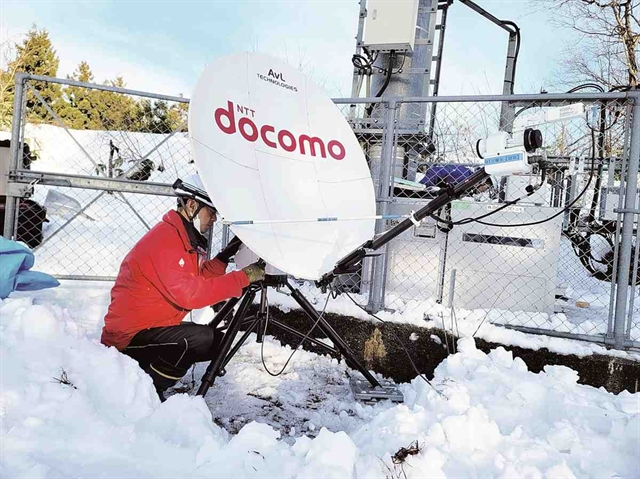
| Restoration work is underway at a base station in an area affected by the 2024 Noto Peninsula Earthquake. Photo courtesy of NTT Docomo Inc. |
Major mobile phone carriers will roll out a service on April 1 that allows users to connect to other carriers’ networks, ensuring that people can communicate in the event of a large-scale outage.
The Japan Roaming service is the cornerstone of efforts made by the mobile phone industry as a whole to manage large-scale outages following a major disruption at KDDI Corp. in 2022.
Japanese mobile carriers NTT Docomo, Inc., KDDI, SoftBank Corp. and Rakuten Mobile, Inc. are among those participating in the new service.
Roaming is a system in which participating companies can borrow each other’s communication networks, allowing users to connect and use their smartphones and other devices when a disaster, equipment failure or other event knocks out their service.
Japan Roaming will be provided in one of two modes depending on the severity of the emergency, including how damaged the network is. One of the modes will allow voice calls, text messages and low-speed data communication, while the other mode will allow only emergency calls to police and fire departments.
Subscribers to low-cost mobile virtual network operators that use major carriers’ networks will also be able to use the roaming service.
When the outage hit KDDI in July 2022, it took more than 60 hours to get its service up and running again. The outage caused huge impacts across society, with users even having difficulty making emergency calls.
Since then, carriers have been preparing for another large-scale outage. Free public Wi-Fi and a service called Dual SIM, which allows users to connect to two different companies’ networks on one device, have been provided as part of such efforts.
Roaming is expected to significantly advance the development of a system that secures communication services during emergencies.
Coordinating needed
However, Japan Roaming still lacks a specific definition of what constitutes a large-scale disaster or outage. It also assumes that the participating companies will consult with each other to decide which network and areas the service will cover in case of an emergency.
If a disruptive event occurs, the extent of the damage would need to be assessed, and the companies would need to coordinate. It would therefore likely take several hours to start the roaming service.
“The new service will make it possible for people to make emergency calls during outages, contributing to their peace of mind and safety and minimising any negative impacts on the economy,” said Shunichi Kita of Nomura Research Institute Corp., an expert on the mobile phone industry.
“But won’t be easy for the participating companies to smoothly coordinate their networks. They’ll need to cooperate closely and promote the service particularly among the elderly.” — THE JAPAN NEWS/ANN
World
 World
World
 World
World
 World
World
 World
World
 World
World
 World
World
 World
World
 World
World
 World
World
 World
World
 World
World
 World
World
 World
World
 World
World