 Society
Seven Vietnamese export product groups at risk of trade remedy investigations
1.
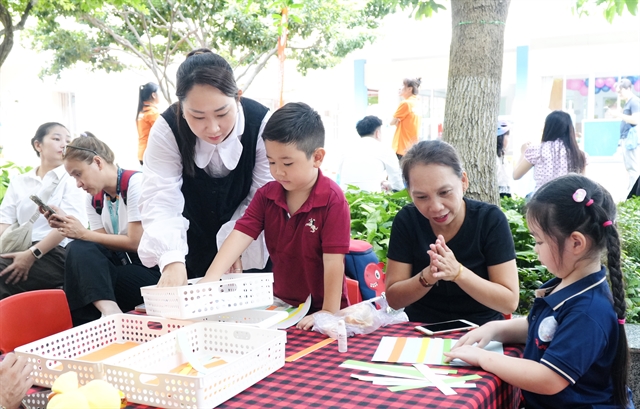 |
| Children and their parents participate in an activity at a kindergarten in HCM City. The city on October 22 held a workshop to discuss solutions on providing integrated child protection services for victims of violence and abuse. — Illustration Photos |
HCM CITY — Enhancing inter-agency coordination and improving referral mechanisms and support services is an urgent requirement to ensure women and children who are victims of violence and abuse receive timely and comprehensive protection, experts said.
This was the central focus of the workshop on providing integrated child protection services for victims of violence and abuse, jointly organised by the HCM City Department of Health and the United Nations Children's Fund (UNICEF) in Việt Nam on Thursday.
The event was held in a hybrid format, connecting the city’s departments, local authorities, and child protection service providers across the city.
Speaking at the workshop, Nguyễn Tăng Minh, deputy director of the city’s Department of Health, highlighted the critical role of the State and inter-agency coordination mechanisms in safeguarding women and children.
“Service delivery must be systematically synchronised to guarantee that victims receive immediate and uninterrupted access to appropriate medical, social work, psychological, educational, legal, and emergency protection assistance.”
Minh asked affiliated units to proactively collaborate with relevant sectors and local governments to review coordination mechanisms, as well as processes for reception, verification, needs assessment, intervention, and case monitoring.
“This proactive approach aims to promptly identify and address bottlenecks in the referral process between agencies, preventing delays or disruptions in assistance.”
He said the city should maximise the resources of its entire child protection network by strengthening connections among state management agencies, healthcare facilities, educational institutions, police forces, social organisations, and service providers.
"Coordination must be tied to the specific responsibilities of each agency to ensure that reception, assessment, intervention, and recovery support are implemented seamlessly.”
He expressed hope that UNICEF Việt Nam would continue to provide technical expertise, experience, and resources to enhance service quality in the coming time.
Lê Thị Hồng Loan, chief of Child Protection at UNICEF Việt Nam, said no single agency or organisation can fulfil all child protection duties alone.
“A systems-based approach to child protection must aim to address each case holistically, placing the child at the centre while ensuring an unbroken continuum of care.”
To achieve this, agencies need clear protocols ranging from information intake and risk assessment to coordinated intervention, alongside a capable service network supported by proper information-sharing and outcome-monitoring mechanisms.
"These are key factors in enhancing protection efficiency and minimising the shifting of responsibility or prolonged delays due to a lack of connectivity among units," Loan said.
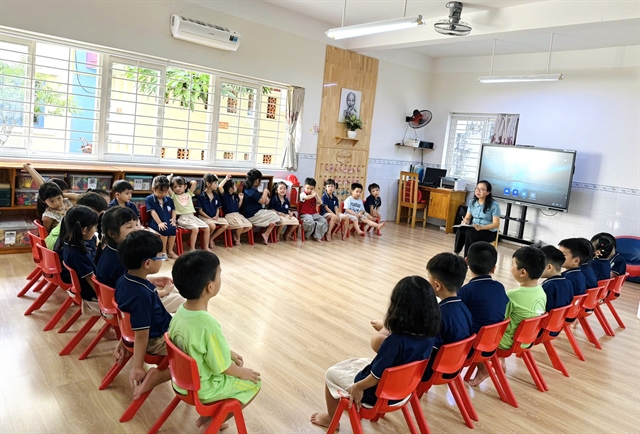 |
| Children participate in a classroom activity at a kindergarten in HCM City. |
She said the National Child Protection Helpline 111 served as a crucial hub connecting children and families with competent authorities and local service networks.
Clearly defining responsibilities for receiving, referring, and processing information between the helpline and relevant units would help victims access support more easily, preventing delays or disruptions.
UNICEF Việt Nam reaffirmed its commitment to providing technical support, sharing international best practices, and building local capacity to promote a child-centred approach.
Empowering schools and expanding network capacity
Nguyễn Kim Luyện, deputy head of the Student Affairs Office under the city Department of Education and Training, said schools serve as the frontline of the child protection system, helping to detect early signs of physical, psychological, or environmental risks.
“Preventive education must be tailored to different age groups.”
Preschoolers learn to distinguish between safe and unsafe touch, primary pupils are equipped with skills to avoid strangers and handle bullying, and older students focus on adolescent physiology, school violence prevention, online safety, and legal responsibilities.
Phạm Hoàng Anh from the city’s Department of Health said the city currently has 18 public and 95 non-public social assistance facilities providing care for children.
It has designated the Youth Social Work and Vocational Education Centre as the central point for receiving cases, offering counselling, and providing emergency intervention for complex cases.
For cases requiring specialised support, the centre coordinates referrals to the police, the State Legal Aid Centre, lawyers, and psychological experts, with all services provided free of charge.
At the workshop, delegates also discussed strategies for communication, early risk identification, and safeguarding the best interests of children during legal proceedings, aiming towards an integrated support network where every woman and child in need receives prompt and effective assistance. — VNS
Society
 Society
 Society
 Society
 Society
 Society
 Society
 Society
 Society
 Society
 Society
 Society
 Society
 Society
 Society