 Society
Project to build big-data legal database approved
1.
|
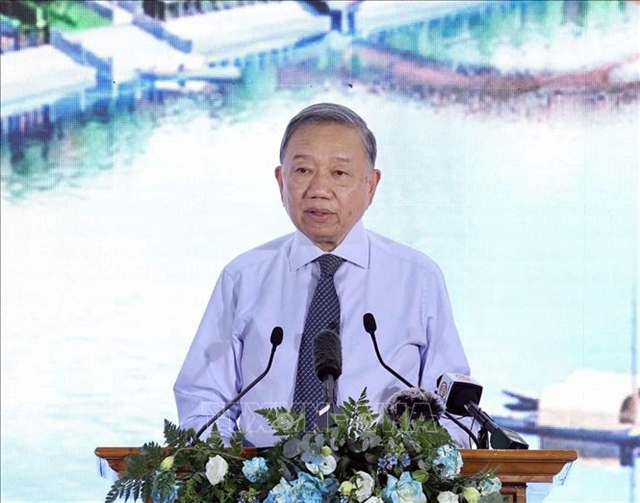
| General Secretary of the Communist Party of Việt Nam Central Committee and President Tô Lâm speaks at the groundbreaking ceremony for a project to upgrade the Bắc Hưng Hải irrigation system. — VNA/VNS Photos Thống Nhất |
HƯNG YÊN — General Secretary of the Communist Party of Việt Nam Central Committee and President Tô Lâm on Friday attended the groundbreaking ceremony for a project to upgrade the Bắc Hưng Hải irrigation system, calling for coordinated efforts to turn the area into a green, clean, civilised and modern development space.
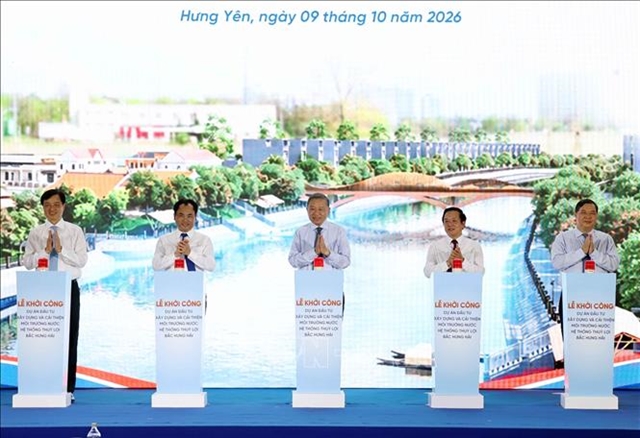
The project, launched in Như Quỳnh Commune, Hưng Yên Province, is the first component of a broader scheme to develop the irrigation system for multiple purposes while protecting the environment.
Speaking at the ceremony, Minister of Agriculture and Environment Trịnh Việt Hùng said the system, whose construction began in 1958, has supplied water for about 116,655 hectares of agricultural land and aquaculture areas, provided domestic water sources for around 3.3 million people, and supported drainage and flood prevention across nearly 198,995 hectares in Hà Nội, Hưng Yên, Bắc Ninh and Hải Phòng.
In response to growing demand for water supply and drainage, environmental protection and climate change adaptation, upgrading and modernising the system are essential to support production, improve people's livelihoods and promote sustainable development in the region, Hùng said.
Addressing the event, General Secretary and President Lâm praised the Government, ministries and local authorities for developing a comprehensive plan to improve infrastructure, modernise management and operations, control pollution and preserve the system’s cultural and historical values.
He stressed that the development of Bắc Hưng Hải must be integrated into broader efforts to ensure water security, protect the environment and promote sustainable development in the Red River Delta.
Protecting irrigation infrastructure and restoring water quality are shared responsibilities of the entire political system, businesses and society, he said.
The top leader called for stronger coordination among localities and sectors, urging authorities to align investment and management plans with urban, industrial, agricultural, transport and environmental infrastructure development. Water infrastructure must be developed ahead of other needs to support socio-economic growth while balancing the interests of localities, sectors and water users.
He described protecting water quality as an urgent strategic task, calling for pollution sources to be addressed at their roots, wastewater discharge to be strictly controlled, and wastewater collection and treatment improved in urban areas, industrial parks, production facilities, craft villages and residential areas.
|
| General Secretary and President Tô Lâm and other delegates take part in the groundbreaking ceremony for the project to upgrade, modernise and improve water quality in the Bắc Hưng Hải irrigation system. |
Pollution must not be allowed to persist or recur at the expense of people's health and living conditions, he said, stressing that economic growth must not come at the cost of the environment.
The top leader also called for greater application of science and technology, and digital transformation, and highlighted the need for automated monitoring, forecasting, smart operations and shared databases linking central and local authorities to improve water management, flood prevention and climate change adaptation.
He urged authorities to make better use of the system's economic, ecological, landscape and cultural potential by linking irrigation infrastructure with urban development, ecological agriculture, services and tourism, while safeguarding its water supply and drainage functions.
Emphasising implementation, he called for clear responsibilities, strict oversight, efficient use of public resources and firm action against corruption, waste and other negative practices. All project components must be connected and implemented in a coordinated manner to ensure their overall effectiveness.
The leader expressed confidence that, with close coordination among authorities and public support, the project would help strengthen water security, protect the environment and promote sustainable development in the Red River Delta. — VNA/VNS
Society
 Society
 Society
 Society
 Society
 Society
 Society
 Society
 Society
 Society
 Society
 Society
 Society
 Society
 Society