 Society

Tighter controls on livestream sales
1.
|
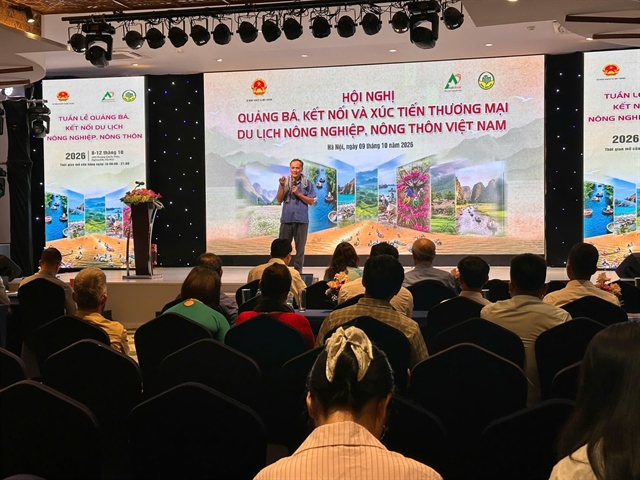
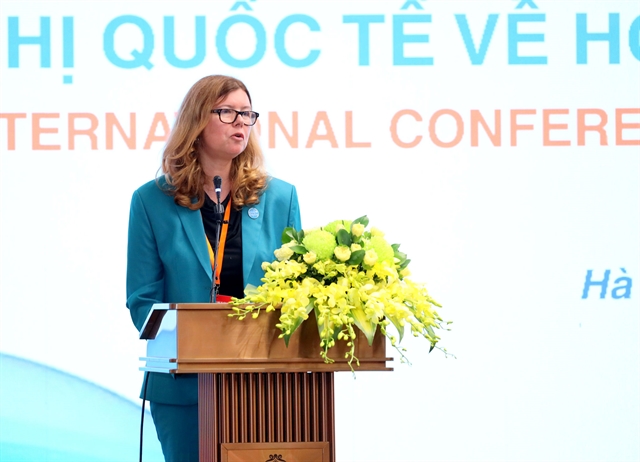
| A speaker addresses the conference on Friday. — VNS Photo Trần Như |
By Trần Như
HÀ NỘI — Việt Nam's push to turn farms, craft villages and local specialty goods into tourist draws will pay off only if it is designed around visitor demand and puts money in residents’ pockets, officials and experts said at a conference in Hà Nội on Friday.
Held alongside the 22nd Việt Nam Craft Village Fair, speakers said the countryside has no shortage of potential, but voiced concerns of how little of it is being turned into income.
They urged local governments to stop counting products and tourist sites and to track sales, jobs, and household earnings instead as better performance metrics.
Pieces that don’t fit together
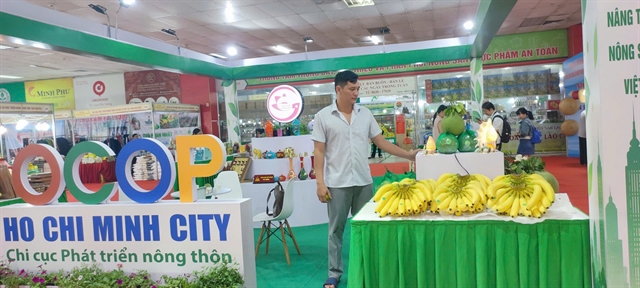
The scale of this task is considerable. By September, more than 21,000 products under the One Commune One Product (OCOP) programme, a national scheme to promote local specialties, had earned at least three stars.
These statistics come from more than 10,000 producers, over 600 rural tourism venture start-ups, with about 400 winning official recognition as destinations.
But the pieces are not fitting together, said Phương Đình Anh, deputy chief of the Central Coordination Office for the National Target Programmes.
Many OCOP goods never feature in tourist activities, while some destinations have nothing distinctive for visitors to buy.
Đình Anh said the answer is to treat places of work as attractions. Tea and coffee growers, fish sauce makers, potteries and farming cooperatives can draw visitors if they show how their goods are made and tell the stories behind them.
That means cleaner, safer and better-presented sites and trained staff, he said, with travel agencies involved from the start in surveying locations and designing tours instead of being handed a finished product.
Đoàn Trường Giang, deputy director of the Agricultural Trade Promotion Centre, said the starting point should be the customer, not whatever a locality happens to have.
Provinces and cities should decide whom they want to attract, how much those people can spend and what they want to experience, he said, then build something distinctive using local knowledge and digital marketing.
Bùi Thị Nhàn, director of consulting and investment firm EcoHost, said her work in Hải Hậu, a commune in the northern province of Ninh Bình, showed that a craft workshop can earn money from lessons and time with artisans, not just from selling goods.
Ngô Thị Thu Trang, director of the Institute of Social Sciences and Humanities Research, said natural and cultural assets do not guarantee success. What counts is the ability to organise visits, design experiences, keep quality consistent, and reach customers.
Support for OCOP producers should therefore go beyond handing out star ratings to helping them improve quality and packaging and find steady buyers, she said, and should be judged by sales, visitor satisfaction and producers’ incomes.
|
| An OCOP farm produce stall at the event. — VNS Photo Trần Như |
Guarding against growth at any cost
Several speakers cautioned against expansion for its own sake.
Mai Quang Vinh, general secretary of the Vietnam Green Transition Association, said villages, craft communities and farmland should be seen as living ecosystems in which the environment is bound up with people’s livelihoods and culture.
Tourism plans should reflect how much visitor pressure an area can take and how well residents can run things themselves, rather than focusing on construction or visitor numbers, he said.
Unchecked growth, he warned, can strain water supplies, waste disposal, landscapes and infrastructure. It can also lead to the commercialisation of local culture and squeeze out traditional ways of earning a living.
Vinh said residents should help manage and run tourism activities and share in the proceeds, with support on financing, skills, product development and access to markets.
Phạm Hải Quỳnh, head of the Asian Tourism Development Institute, made a similar case for tying the use of local culture to real livelihoods. Farming, crafts, food, lodging and cultural events should be packaged together, he said, so that many households can take part and traditions survive.
Hoàng Hoa Quân of the National Authority of Tourism said progress depends on coordination among the agencies responsible for the economy, transport, culture and education. Localities could also run educational programmes that let students and tourists learn traditional trades, he said.
The conference also looked at demand. Việt Nam received about 17 million international visitors in the first nine months of 2026. Speakers said those arrivals, along with domestic travelers, represent a market for rural tourism, but only if the spending stays in local communities as revenue, jobs and product sales.
Nguyễn Minh Tiến, director of the Agricultural Trade Promotion Centre, closed the event by saying rural tourism policy for 2026-2030 should be tied to wider economic and social programmes for agriculture, farmers and the countryside.
The goal, he said, is not simply more products, sites or visitors, but for tourism to drive rural economic growth, create jobs and raise incomes.
Most operators are small or tiny, Tiến said, so households, cooperatives and companies need easier access to the value chain. Profit-sharing arrangements should ensure that residents benefit from protecting local landscapes, culture and the environment.
He also called for removing policy obstacles and gaps in market access, and for green and digital upgrades scaled to what operators can manage.

|
| The MOU signing ceremony on the sidelines of the conference. — VNS Photo Trần Như |
Participating organisations signed an MOU at the conference to cooperate on developing agricultural and rural tourism. — VNS
Society
 Society
 Society
 Society
 Society
 Society
 Society
 Society
 Society
 Society
 Society
 Society
 Society
 Society
 Society