 Sci-Tech

Việt Nam, Russia step up cooperation in criminal sentence enforcement
1.
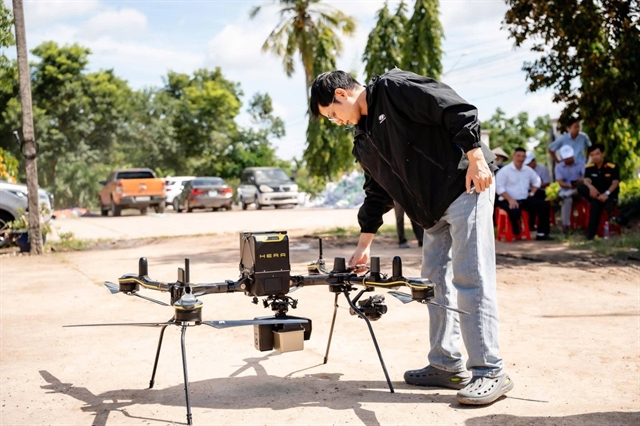 |
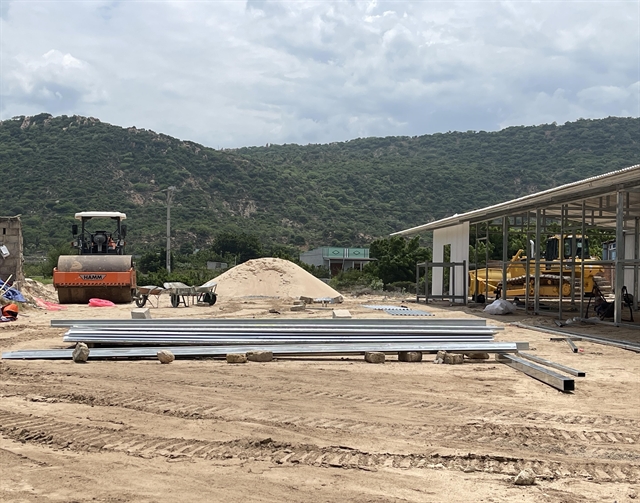
| Tây Ninh aims to become a national hub for testing, applications, training, operations and services involving unmanned vehicles. |
TÂY NINH — The southern province of Tây Ninh has approved a strategy to develop an unmanned vehicle ecosystem by 2030, with a vision to 2035, as part of efforts to promote technological innovation and create new drivers of economic growth.
Under Decision No. 15393/QĐ-UBND, the province will prioritise unmanned aerial vehicles (UAVs), while unmanned ground and waterborne vehicles will be introduced through phased pilot projects.
The strategy calls for shared testing infrastructure, with wider deployment planned for 2031–35 depending on the development of the legal framework and market demand.
Tây Ninh aims to become a national hub for testing, applications, training, operations and services involving unmanned vehicles. It also plans to serve as a real-world testing ground in regional cooperation with HCM City and major research and development centres.
The province said it would avoid spreading resources too thinly or competing directly in research and development, instead focusing on the midstream and downstream segments of the industry.
In 202627, Tây Ninh plans to establish an internationally accredited testing corridor and at least three controlled testing zones or flight corridors.
It also aims to put at least one testing, training and assessment centre for unmanned vehicles into operation, attract at least five companies to join the value chain and train around 300-400 workers.
From 2028 to 2030, the province plans to expand the system and upgrade the centre towards international standards, while training at least 1,000 workers annually.
It will also complete key components of an unmanned vehicle complex and an integrated cross-sector network.
The strategy is built around four pillars, including an internationally accredited testing, training and assessment zone; an industrial support and manufacturing ecosystem for producing, assembling and integrating unmanned vehicles; a research and pilot application zone covering tourism, agriculture, logistics, environmental and natural resource management, infrastructure monitoring, search and rescue, and border management; and a venue for sports events, exhibitions and competitions. — VNS
Sci-Tech
 Sci-Tech
 Sci-Tech
 Sci-Tech
 Sci-Tech
 Sci-Tech
 Sci-Tech
 Sci-Tech
 Sci-Tech
 Sci-Tech
 Sci-Tech
 Sci-Tech
 Sci-Tech
 Sci-Tech
 Sci-Tech