 Society
Philippines and Việt Nam mark 50 years of bilateral relations
1.
|
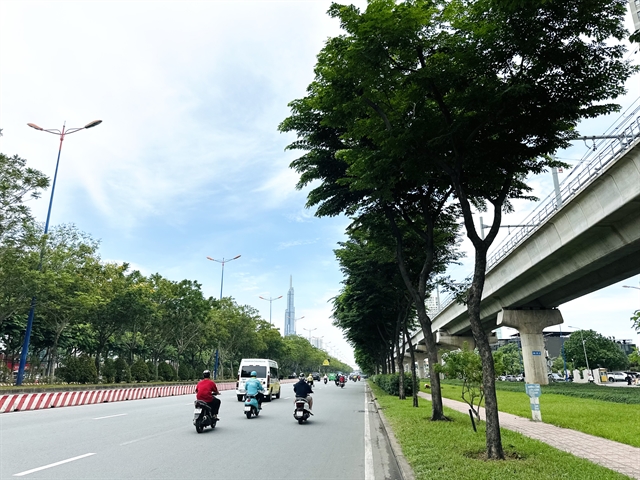
| A section of Mai Chí Thọ Street in HCM City. — VNS Photo Nguyễn Diệp |
HCM CITY — Clear legal frameworks and robust practical foundations are vital for HCM City to unlock major urban initiatives, ranging from underground infrastructure to the repurposing of industrial land, a city leader has said.
Speaking at an August 18 working session with the Economic Development Subcommittee under the city Research and Development Board, Võ Văn Minh, deputy secretary of the City Party Committee, chairman of the City People's Council, and deputy head of the board, outlined critical research priorities to drive the southern metropolis’s growth.
Commending the subcommittee’s proactive stance, Minh said its research closely aligns with the city’s strategic master plans and urgent practical demands.
The city Research and Development Board, established on June 30 by the Standing Committee of the Municipal Party Committee and chaired by Party Committee Secretary Trần Lưu Quang, functions as a high-level advisory body tasked with uncovering policy breakthroughs, resolving urban bottlenecks, and shaping key socio-economic development strategies across six specialised subcommittees.
With the city People's Council set to pass a significant volume of legal normative documents to translate special policies and overarching goals into action, Minh underlined the imperative for forward-looking policy advice.
“Policy research and advisory work must stay one step ahead, ensuring that all proposals are supported by practical evidence and high feasibility so they can be seamlessly incorporated into the city’s resolutions and regulatory frameworks,” Minh said.
To guarantee swift implementation, Minh requested the subcommittee hold regular meetings, potentially every one to two weeks from the third quarter onwards, to monitor progress, address emerging challenges, and strengthen interagency collaboration.
Unlocking industrial land and emerging economic models
The session addressed pressing economic and spatial planning hurdles.
Currently, vast swathes of land with strong potential for urban expansion remain fragmented among small businesses or tied up in existing industrial parks, industrial clusters, and export-processing zones.
The city is mapping out plans to convert portions of these sites into modern urban districts, public green spaces, and social housing to optimise land-use efficiency.
However, comprehensive mechanisms to incentivise and accelerate this structural transition are still lacking.
In response, Minh aked the Economic Development Subcommittee to conduct a dedicated study on support mechanisms for enterprises relocating or converting production facilities, working closely with municipal departments to ensure solutions are legally sound and practical.
|
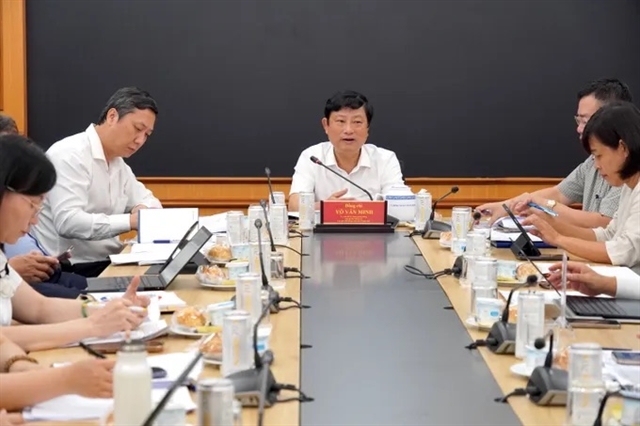
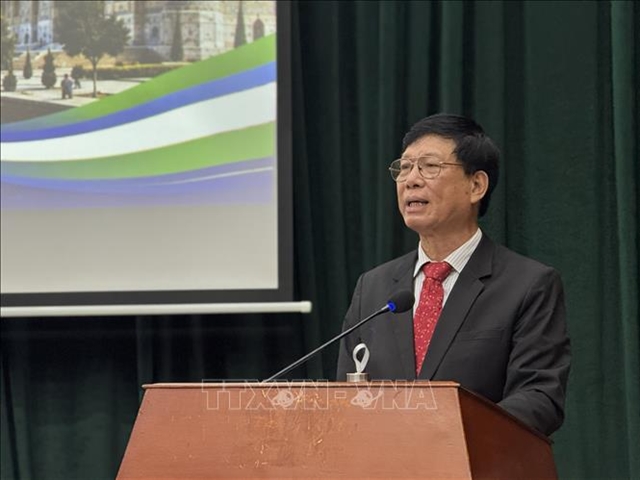
| Võ Văn Minh, deputy secretary of the HCM City Party Committee, chairman of the city People's Council, and deputy head of the HCM City Research and Development Board, speaks at the working session with the board's Economic Development Subcommittee on August 18 in HCM City. — Photo www.sggp.org.vn |
Furthermore, the subcommittee is tasked with establishing policy frameworks, conditions, and evaluation criteria for emerging economic concepts, including the digital, green, circular, sharing, and creative economies.
Resolving land constraints within industrial zones remains another priority.
“The subcommittee must advise on strategies to overcome urban planning bottlenecks, define clear transition schedules, and roll out infrastructure support to build a clean land bank for high-value modern investment projects,” Minh said.
Transit-Oriented Development and expert consultation
Minh urged the subcommittee to explore innovative avenues for mobilising financial resources from land funds tied directly to major transport projects, focusing particularly on land corridors along railway lines, ring roads, expressways, and designated Transit-Oriented Development (TOD) hubs.
“For major initiatives such as underground space development, new urban zones, or industrial land conversion, we must prepare a solid legal and practical foundation while coordinating closely with municipal departments in formulating policies.”
Regarding high-impact policy submissions, he highlighted the necessity of consulting experts, scholars, scientific institutions, and affected stakeholders to elevate policy quality.
The core mission of the Board and its subcommittees is to deliver rigorous research and evidence-based arguments to assist competent authorities in decision-making.
To fulfill this mandate, the subcommittee must actively collaborate with municipal bodies, share research findings, and participate in technical working groups convened by the People's Council.
For complex, large-scale issues, the subcommittee is expected to host thematic workshops with leading experts and expand consultations with central ministries and national research institutes to tailor international and national best practices to the city’s unique context. — VNS
Society
 Society
 Society
 Society
 Society
 Society
 Society
 Society
 Society
.jpg) Society
Society
 Society
 Society
 Society
 Society
 Society
.jpg)