 Society

Top leader’s visit to open new chapter in Việt Nam–Denmark relations
1.
|
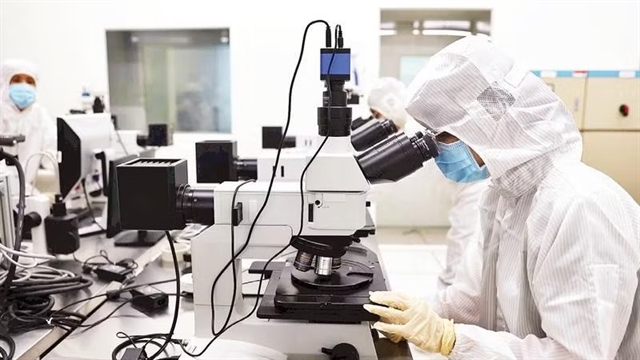
| A view of the Research and Development Centre at the Saigon Hi-Tech Park. — VNA/VNS Photos |
HCM CITY — HCM City is accelerating the development of the biotechnology industry, positioning it as the main driver of green growth and sustainable development.
This comes amid its quest to become a leading science, technology, and innovation hub in Southeast Asia.
Biotechnology is increasingly regarded as a foundational industry of the knowledge-based economy, playing a strategic role in healthcare, high-tech agriculture, environmental protection, and the green economy.
Globally, the bio-economy is forecast to contribute more than US$2.7 trillion annually in the coming years.
Under the Politburo's Resolution No. 36-NQ/TW on the development and application of biotechnology for the country’s sustainable development, Việt Nam aims to turn it into an important techno-economic sector.
For HCM City, science, technology, and innovation have been identified as key growth drivers in this new development phase. Biotechnology is therefore seen as a high-value sector capable of accelerating the shift towards a greener growth model.
Lâm Đình Thắng, director of the city Department of Science and Technology, said, as the country’s economic, scientific, and innovation hub, the city viewed green transition and the circular economy as essential to sustainable development.
“These orientations also provide opportunities for the city to restructure its growth model, improve competitiveness, and create new economic growth drivers.”
Since 2013, the city’s technology exchange platform has organised 24 specialised Techmart events in areas including high-tech agriculture, biotechnology, healthcare, digital transformation, and smart urban development.
More than 1,500 organisations have introduced over 6,000 technologies and devices through the events, gradually forming networks linking research institutes, universities, enterprises, and localities.
Robust and complete ecosystem
Associate Professor Dr Trương Hải Nhung, dean of the faculty of biology and biotechnology at the Vietnam National University, Ho Chi Minh City’s University of Science, said the southern metropolis now possesses the country’s largest biotechnology research and application ecosystem.
It includes VNU-HCM, the Biotechnology Centre, Saigon Hi-Tech Park, specialised hospital networks, technology enterprises, and a broad network of experts from the HCM City Biology-Biotechnology Association.
The close links between these institutions support a full chain covering research, testing, production, and the commercialisation of biotechnology products.
With its network of leading hospitals, research universities, technology firms, and innovation ecosystems, the city is well positioned to build a biotechnology industry capable of producing high-tech products under Vietnamese brands.
The city is also gradually developing the capacity to master advanced biotechnology and biomedical technologies aligned with national strategic priorities.
In addition to a large scientific workforce, the city already has a relatively complete research infrastructure supporting high-tech industries.
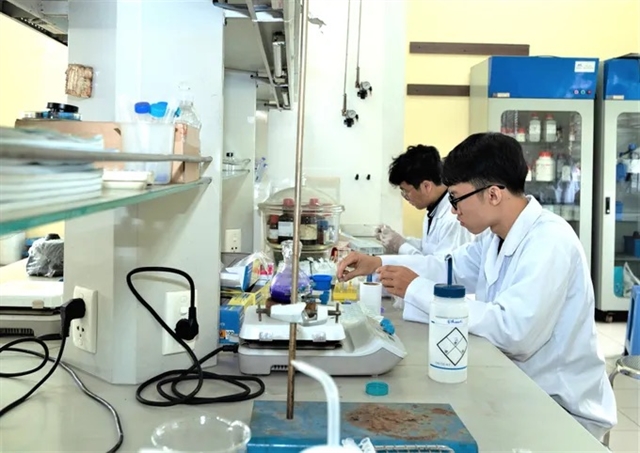
The Biotechnology Centre serves as a key applied research institution, implementing technologies in gene technology, microbiology, plant cell technology, enzyme-protein technology, and high-tech agriculture.
It also acts as the focal point for programmes supporting urban agriculture.
|
| Biotechnology students conduct research at a laboratory of the University of Science under the Việt Nam National University-HCM City. |
The Research and Development Centre (SHTP Labs) operates as an international-standard high-tech laboratory focusing on semiconductor microchips, nanotechnology, advanced materials, biotechnology, and systems integration.
According to experts, this infrastructure provides an important foundation for interdisciplinary research combining biology, advanced materials, microelectronics, and artificial intelligence, while supporting the development of commercially viable high-tech products.
Driving Net Zero and regional growth
Trương Hải Nhung said biotechnology plays a particularly important role in developing urban agriculture, circular agriculture, and post-harvest technologies in HCM City and the broader southeastern region.
Technologies such as gene editing, functional microorganisms, enzymes, alternative proteins, and digital biology are expected to create higher-value agricultural products, reduce emissions, and improve climate resilience.
“This orientation is highly consistent with the city’s Net Zero and circular economy strategies, as well as high-tech agricultural development programmes across southeastern localities.”
To unlock resources for the sector, experts suggested the city should pioneer controlled pilot mechanisms, or sandboxes, for emerging technologies, including gene and stem cell technologies, to reduce the time needed to bring products to market.
The city also needs to strengthen co-operation between the government, universities, and businesses through R&D alliances.
Under this “triple helix” model, the government will provide shared infrastructure and major research orders, universities will conduct research and verification, and businesses will invest from the initial R&D stage.
Specialists also proposed establishing a regional biotechnology research-testing-production hub integrating shared laboratories, biological data centres, pre-clinical testing systems, and startup acceleration spaces.
The model is expected to become a core infrastructure platform for the biotechnology ecosystem in southern Việt Nam. — VNS
Society
 Society
 Society
 Society
 Society
 Society
 Society
 Society
 Society
 Society
 Society
 Society
 Society
 Society
 Society