 Society
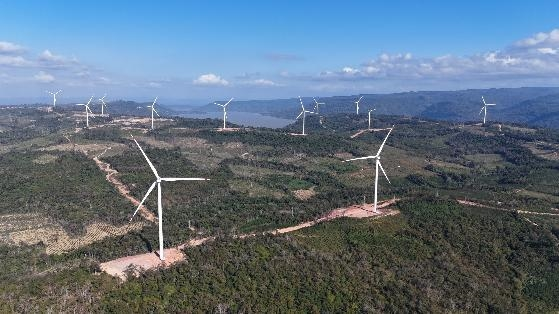
T&T Group to develop $768 million wind power project in Laos
1.
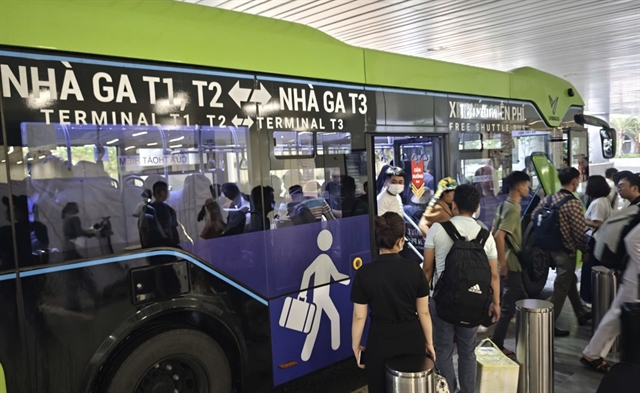 |
| A shutter bus from Terminal 1, Terminal 2 to Terminal 3 of Tân Sơn Nhất Airport. The HCM City is planning to roll out 13 new bus routes connecting directly to Long Thành International Airport. Photo: dantri.com.vn |
HCM CITY — HCM City is planning to roll out 13 new bus routes connecting directly to Long Thành International Airport, forming a high-quality airport bus network designed to prioritise speed, efficiency and passenger comfort.
According to the municipal Department of Construction, the proposed system will serve as a new public transport backbone linking the future airport – the country’s largest aviation infrastructure project – with key urban hubs, interprovincial bus stations and major tourism destinations.
Rather than focusing solely on the number of routes, the plan emphasises operational efficiency. The buses will run along major traffic corridors, limiting stops and reducing travel time, with service standards aimed at matching airport bus systems in major international cities.
The network will connect strategic points including Tân Sơn Nhất International Airport, large coach terminals such as Miền Đông New Bus Station and Miền Tây Bus Station, as well as urban areas and coastal tourism hotspots like Vũng Tàu and Hồ Tràm.
Compared to traditional bus services, the new routes will adopt an airport bus model with improved quality. Several lines will only stop at major transit points instead of picking up passengers along the way, helping shorten journey times. Vehicles will range from nine to 80 seats, and those operating on expressways will not allow standing passengers.
The proposed network includes routes such as Sài Gòn Bus Station – Long Thành, Tân Sơn Nhất – Long Thành, Bình Dương Bus Station – Long Thành, Miền Đông New Bus Station – Long Thành, and Tân Sơn Nhất – Thủ Thiêm – Bà Rịa–Vũng Tàu.
Additional routes will link Tân Sơn Nhất with Ba Son Bridge, Long Sơn and Long Hải; connect Chợ Lớn with Phú Mỹ, Đất Đỏ and Phước Hải; and extend services from Vũng Tàu, District 8 and Bàu Bàng to Long Thành. Other routes will serve corridors between Long Thành and coastal areas including Phước Hải, Long Hải and Hồ Tràm.
In parallel, four existing bus routes along National Highway 51 – numbered 60-3, 72-1, 72-2B and 172 – are expected to have their itineraries adjusted to improve connectivity to the airport.
The rollout will be implemented in three phases in line with passenger demand and the airport’s operational timeline. In the first phase, scheduled from the third quarter of this year, four existing routes will be connected and two airport express lines – Sài Gòn Bus Station – Long Thành and Tân Sơn Nhất – Long Thành – will be launched to facilitate direct travel and transfers between the two airports.
The second phase, beginning in 2027, will introduce five additional routes, including connections from Bình Dương and the Miền Đông New Bus Station, as well as links between Tân Sơn Nhất, Thủ Thiêm and Vũng Tàu.
By the final phase, expected in the fourth quarter of 2027, the remaining six routes will be completed once passenger volumes stabilise.
As the routes extend across provincial boundaries, the plan will require consultation with the Ministry of Construction and coordination between HCM City and Đồng Nai Province to finalise network design and operator selection criteria.
With railway and metro connections to Long Thành not expected to be completed until after 2030, the bus network is set to play a central role in transporting passengers during the airport’s early years of operation.
Beyond serving airport travellers, the system is also intended to function as a feeder network for future metro lines, laying the groundwork for a multi-modal public transport system.
The Long Thành International Airport project spans roughly 5,000 hectares with a total investment of nearly VNĐ337 trillion (approximately US$13.2 billion). Its first phase is scheduled to begin operations by the end of 2026. Currently, access to the site relies mainly on the HCM City – Long Thành – Dầu Giây Expressway and National Highways 1 and 51, while rail and metro projects remain in the preparation stage. — VNS
Society
 Society
 Society
 Society
 Society
 Society
 Society
 Society
 Society
 Society
 Society
 Society
 Society
 Society
 Society