 Society
Vietnamese scientist wins ASEAN-US Science Prize for Women
1.
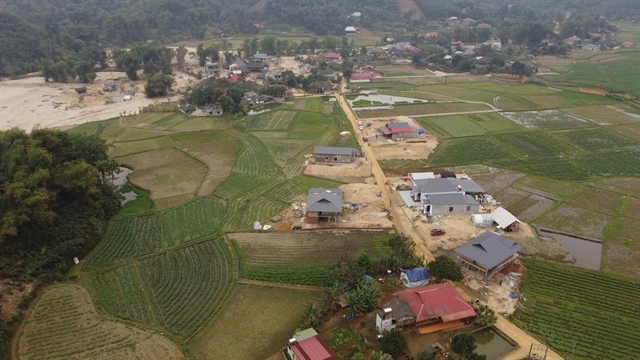 |
| Chút Village seen from above, where green has returned to the fields and new houses are steadily rising, February 10. — VNA/VNS Photo |
LÀO CAI — On the road into Chút Village, the scars of last year’s flood are still easy to spot. Sand clings to the banks of the stream, while debris lies caught beneath the floors of old wooden stilt houses.
But just beyond that, something else comes into view: fresh walls, newly poured foundations and winter crops stretching green across fields that were once buried in mud.
Four months after a historic flood tore through this small village in the northern province of Lào Cai, Chút is quietly rebuilding – not just its homes and fields, but its sense of certainty.
In October 2025, days of relentless rain from Typhoon Bualoi turned the normally calm Chút Stream into a raging torrent. Floodwaters surged through the village, sweeping away houses, smothering farmland in sand and leaving residents stunned by the speed and force of the destruction.
For many here, it was the first time they had seen water behave that way. Two homes were carried away completely. Others were buried under sand so deep that doors and windows vanished from sight.
In the days after the flood, families crowded into relatives’ houses, sleeping wherever there was dry floor space. Fields lay useless. Livestock was gone. With winter approaching, the uncertainty felt heavier than the mud.
Rebuilding began almost immediately. Local authorities organised work crews, while soldiers, police officers and volunteers helped clear debris, level land and move salvaged belongings.
The focus was simple: get people back under solid roofs before the Lunar New Year.
For families whose homes had stood too close to the stream, relocation was the only option. New plots were identified on safer ground, paperwork fast-tracked and fees waived. Each family received financial support and help with construction.
By early February, all 20 families who needed to relocate had moved into new homes.
Hoàng Văn On was still smoothing wet cement across his courtyard days before moving in. His family had lost nearly everything.
“To welcome Tết in a solid house, on safe land, after what we went through – that’s something I didn’t expect,” he said, pausing briefly before returning to his work.
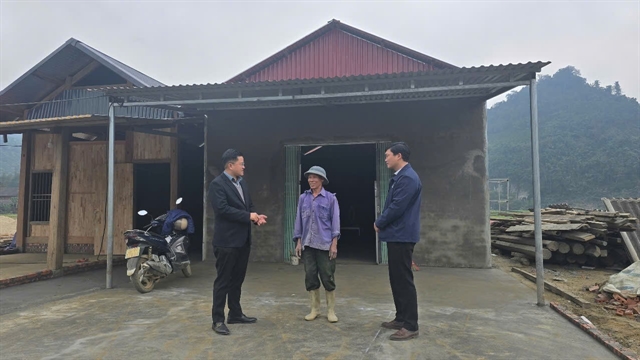 |
| Hoàng Văn On (centre) is filled with joy as he prepares to move into his new home. — VNA/VNS Photo |
Others, like Dương Văn Hiến, had no house left at all after the flood. His family spent weeks staying with relatives before rebuilding could begin.
“Now, when it rains, we don’t panic anymore,” he said. “That feeling alone is worth everything.”
Not everyone could move. Some families had no alternative land and chose to stay where they were. Their solution was to build upward rather than outward.
Homes were raised two to three metres above previous flood levels and foundations were reinforced to withstand future surges. The work was heavy and slow, but neighbours pitched in.
Nguyễn Thị Phượng, who leads the village’s local Fatherland Front committee, knows that effort firsthand. Her own stilt house was flooded by more than two metres, washing away animals and crops.
Instead of focusing solely on her own losses, she helped coordinate labour for families who had to move.
“Here, people don’t ask whose problem it is,” she said. “If someone needs help, everyone shows up.”
Her veranda is still being finished, she said, but it will be done in time for Tết.
Housing is only half the battle. The flood wiped out much of Chút’s farmland, cutting off the village’s main source of income just as winter set in.
More than VNĐ2.4 billion (US$92,000) was allocated to support recovery in the village, with a portion directed toward restoring agricultural production.
Local authorities and co-operatives encouraged farmers to plant winter crops – not only corn and vegetables, but also potatoes, a crop unfamiliar to many here.
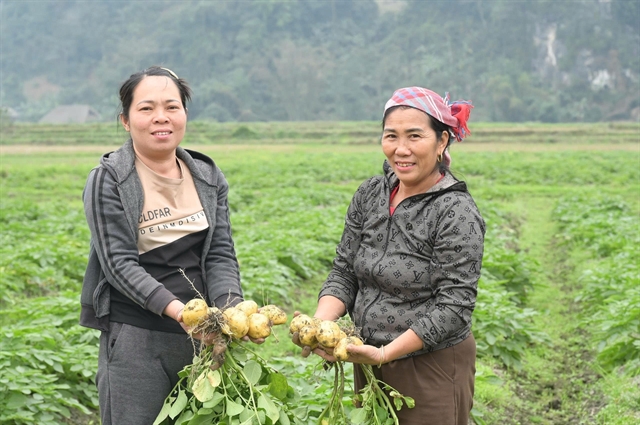 |
| Two women in Chút Village harvest winter potatoes. — VNA/VNS Photo |
At first, there was some hesitation. After the flood, people were wary of taking risks. Potatoes had never been widely grown in this soil. But seed and technical support were provided, along with guaranteed purchase contracts.
Gradually, confidence returned.
More than 16 hectares of potatoes were planted, alongside smaller plots of vegetables and legumes.
Today, the fields are thick with green leaves. Beneath them, potato tubers are forming evenly, promising yields far higher than rice or corn.
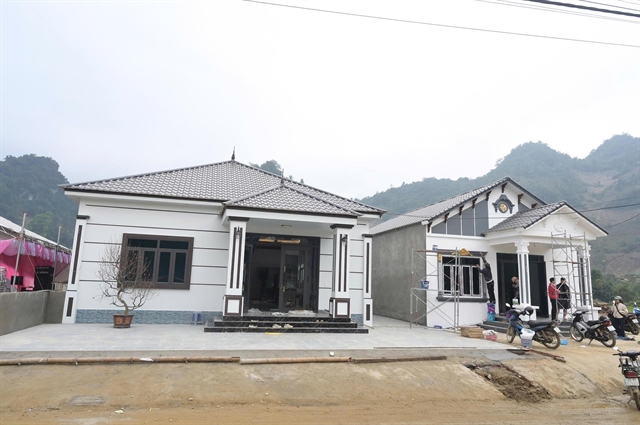 |
| Newly built houses in Chút Village. — VNA/VNS Photo |
But as Tết approaches, the village feels different from the weeks after the flood – calmer, steadier. New stilt houses rise where gaps once stood. Fields are alive again. Children run between houses instead of mud piles.
Along Chút Stream, the flood left its mark, but so did the recovery.
In Chút Village, that recovery is less about declarations than about small, practical victories – a dry floor, a stable harvest and the quiet confidence to plan for another year ahead. — VNS
Society
 Society
 Society
 Society
 Society
 Society
 Society
 Society
 Society
 Society
 Society
 Society
 Society
 Society
 Society