 Society
NA President’s visit expected to boost Việt Nam–China ties across multiple fields
1.
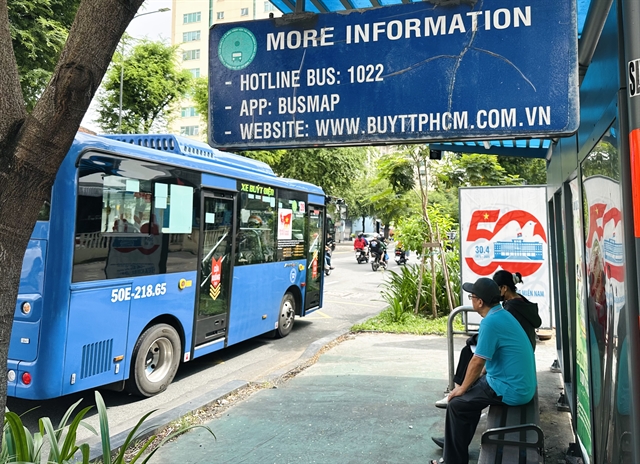 |
| An electric bus runs along Nguyễn Thị Minh Khai Street in downtown HCM City, part of the city’s ongoing efforts to promote green and sustainable urban transport. — VNS Photo Nguyễn Diệp |
HCM City — Deputy Minister of Construction Nguyễn Văn Sinh said the green transition in transport and construction is not only an inevitable global trend but also a strategic direction for Việt Nam’s economic restructuring toward green growth, low emissions and sustainable development.
Speaking at the opening of the 2025 Việt Nam Green Building and Green Transport Week in HCM City on October 29, Sinh stressed that green buildings and green transport are two key pillars of a sustainable economy.
“Green buildings play a crucial role in reducing energy, water and material consumption, cutting CO₂ emissions, and improving living environments through the use of recycled materials and efficient land use,” he said.
Meanwhile, green transport focuses on clean vehicles such as electric and biofuel-powered cars, alongside sustainable infrastructure including metro systems, BRT lines, electrified railways, charging stations, and smart traffic networks.
The Party and State have issued a series of major policies promoting green growth, such as Resolution No. 24-NQ/TW (2013) on climate change adaptation and green growth, and Resolution No. 06-NQ/TW (2022) on sustainable urban development encouraging green materials and infrastructure.
Over the past four years, the Ministry of Construction has organised the annual “Green Building Week” to promote sustainable design and energy-efficient practices.
This year’s programme expands to include green transport, reflecting the ministry’s broadened role in driving urban sustainability and energy transition.
By the end of the third quarter of 2025, Việt Nam had recorded more than 600 certified green buildings covering nearly 17 million square metres, 183,000 electric cars and 1,000 electric buses nationwide, with HCM City and Hà Nội leading the shift toward clean energy.
Bùi Xuân Cường, vice chairman of the municipal People’s Committee, said HCM City has been at the forefront of implementing energy transition programmes aligned with the country’s COP26 commitments to reduce carbon and methane emissions.
The city currently operates more than 600 electric buses (26.3 per cent of its fleet) and 451 buses using compressed natural gas (CNG) (17.9 per cent).
Among its 18,600 taxis, over 13,000 are electric, while around 25,000 electric motorbikes serve ride-hailing services. Electric vehicles account for 63 per cent of the city’s transport business fleet.
HCM City has also certified 268 green buildings, representing over 6.2 million square metres of floor area, and continues to encourage enterprises to adopt energy-saving and Net Zero construction standards.
Nguyễn Hữu Tiến, deputy director of the Department of Science, Technology, Environment and Construction Materials under the Ministry of Construction, said the country’s green transport energy transition plan, approved by the Prime Minister, sets a comprehensive roadmap across all five modes of transport — road, rail, inland waterway, maritime and aviation.
“The transition requires close coordination among ministries, localities and the private sector, along with technology transfer and skilled workforce development to achieve a smarter and more sustainable transport system,” he said.
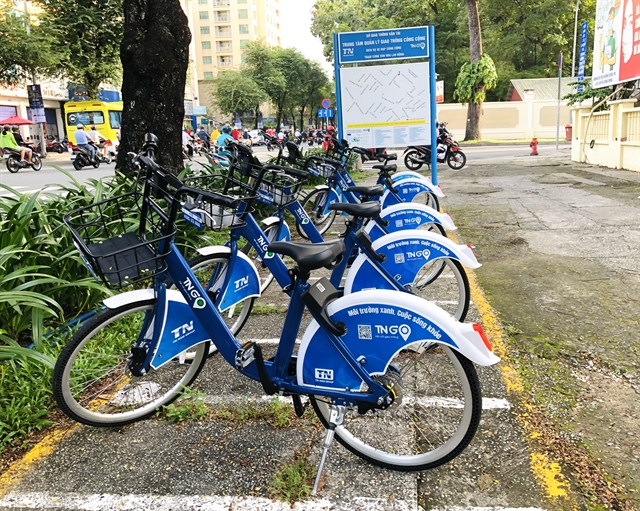 |
| Public bicycles are parked at bike station in downtown HCM City, offering residents and tourists a green and convenient transport option. — VNS Photo Nguyễn Diệp |
Global cooperation and trends
Trịnh Thị Bích Thủy, programme officer for UNDP’s Electric Mobility Initiative, said transportation accounts for around 13 per cent of global greenhouse gas emissions, and this figure could triple by 2030 without urgent action.
“Many countries are accelerating the electrification of vehicles, expanding charging infrastructure, and offering tax and fee incentives to encourage the shift toward green mobility,” she said.
At the same time, they are promoting public transport, cycling and walking to reduce energy use and urban congestion.
In Việt Nam, road transport currently accounts for 93 per cent of passenger volume and 63 per cent of freight.
Public transport meets only 15 per cent of urban demand, while private vehicle ownership continues to rise.
Transitioning to low-emission transport, therefore, will not only reduce greenhouse gases but also improve air quality, lower operating costs and drive technological innovation.
As Việt Nam moves toward its 2050 net-zero target, the country’s ongoing efforts in green construction and transport are expected to lay the foundation for a cleaner, smarter and more sustainable development path. — VNS
Society
 Society
 Society
 Society
 Society
 Society
 Society
 Society
 Society
 Society
 Society
 Society
 Society
 Society
 Society