 Society

Atlantis Studio's Two-Player Horror Game Beyond the Dark: Nightwatch to Be Published by Q-Games!
1.
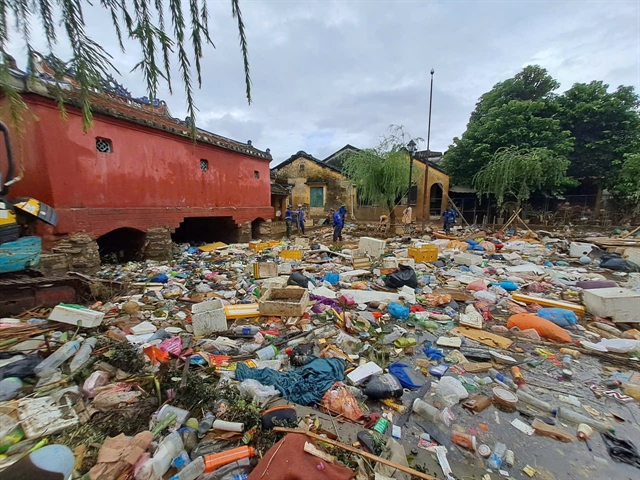 |
| Emvironment workers in Hội An clear piles of garbage that dock in the channel of the Japanese Bridge in Hội An ancient town. Historical flood had left a huge garbage, sludge and thousands of houses and shops in the town in floodwater for past days. VNS Photo Công Thành |
HỘI AN – As floodwater slowly receded from the Hoài River last night, residents in the Old Quarter of the ancient town rolled up their sleeves to clean their homes, shops and streets. Piles of garbage and sludge left behind by the flood were cleared from the narrow alleys, while people in suburban villages also joined the effort to restore order and cleanliness to their neighbourhoods.
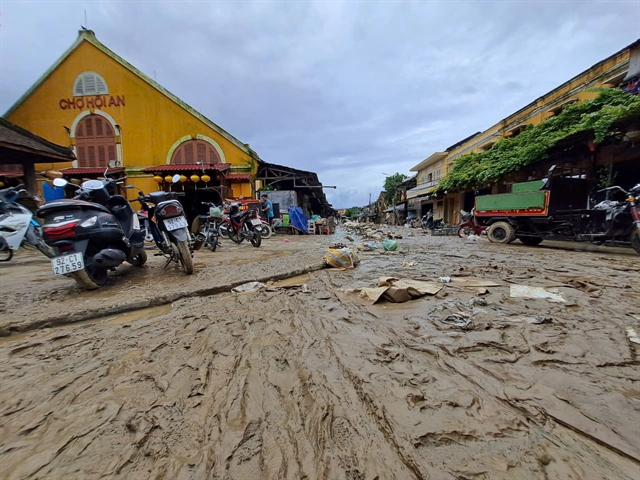 |
| Sludge covers on a road of Hội An Market. Thousands of local residents, rescue forces and volunteers joined cleaning streets, shops and pavilions in the town and public sites in the post flood cleaning activities. VNS Photo Công Thành |
The 2025 historic flood, which surpassed the highest peak of the 1964 flood, submerged thousands of houses in the Old Quarter, the town’s most visited destination, as well as surrounding eco-tourism sites and craft villages that remained underwater for three days.
It was the worst disaster in history that the ancient town, a UNESCO-recognised world heritage site, had witnessed in over four centuries since it emerged as a busy trading port in central Việt Nam.
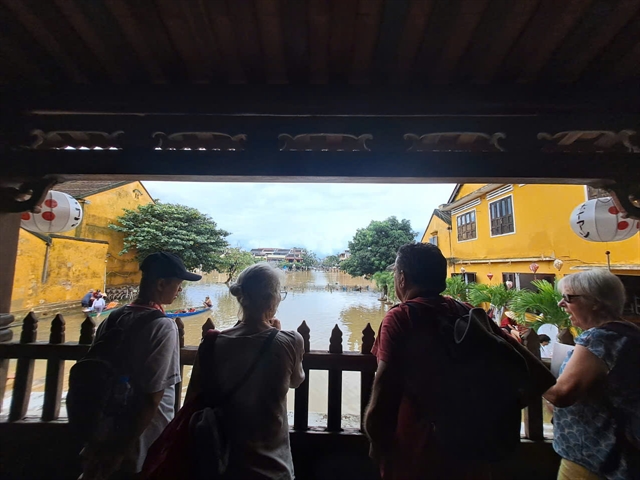 |
| Tourists stand on the Japanese Bridge in Hội An ancient town as floodwater has kept the other side of the Hoài River bank in water. Cleaning activities have been speeding up in the town for soon re-opening of tourism service. VNS Photo Công Thành |
More than 1,000 ancient houses, including 100 relics built between 100 and 200 years ago, along with shops, restaurants and tourist destinations, will require inspections and redecorating to welcome visitors in the coming days after the cleaning activities are completed.
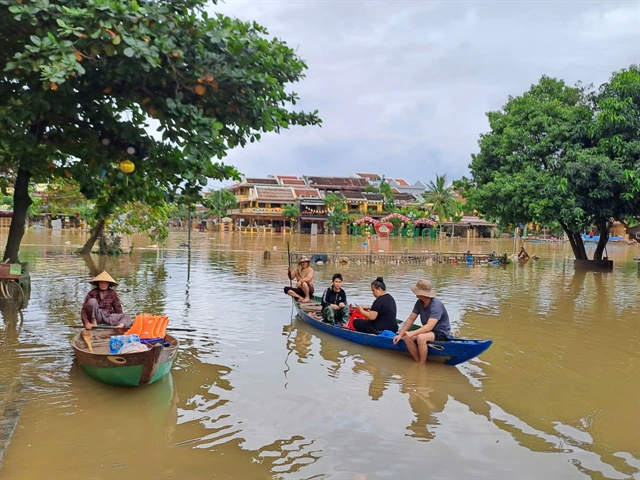 |
| Boat is used to travel from the Old Quarter of Hội An to the other side of the Hoài River bank. Floodwater has blocked traffic in suburban of Hội An town. VNS Photo Công Thành |
Shop owners at one of the most popular destinations, Hội An Market, where floodwater rose almost to the roof, spent hours cleaning tables and desks in preparation for reopening their pavilions.
Environmental workers toiled to clear large piles of garbage that had accumulated at the Japanese Bridge over recent days.
Floodwater has continued to block traffic in Triêm Tây Village and eco-tourism sites along the Hoài River banks, Nguyễn Phúc Chu Street, An Hội Sculpture Park, the night market, shopping centres and the Hoài River Square, while boats remain the main means of transport for commuters travelling between the Old Quarter and the opposite bank of the Hoài River.
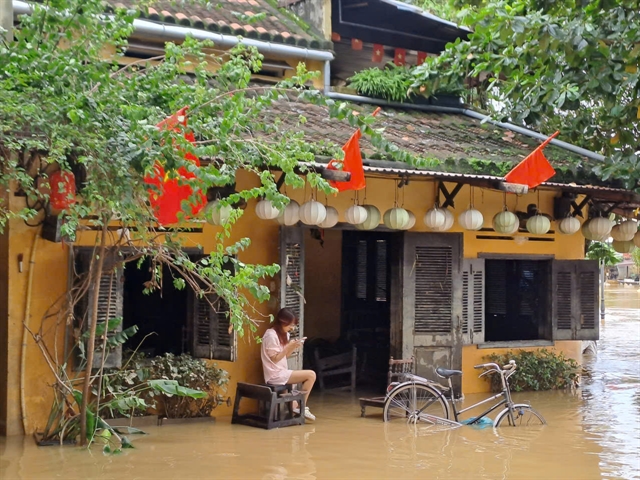 |
| A coffee shop in Bạch Đằng Street in Hội An opens, but floodwater still blocks traffic in the street. VNS Photo Công Thành |
Tanker trucks from the fire and rescue force delivered limited supplies of fresh water to residents in the Old Quarter, while Hội An Town’s power company has been working swiftly to restore electricity in flood-affected residential areas and villages.
Tourism and trading services are expected to resume in the coming days once preparations, furniture repairs and indoor electrical checks are completed.
Logistics, food and drinking water continue to be supplied to communities in the worst-affected areas of Điện Bàn, Đại Lộc, Gò Nổi and rural mountainous zones located 100 to 200km from downtown Đà Nẵng. VNS
Society
 Society
 Society
 Society
 Society
 Society
 Society
 Society
 Society
 Society
 Society
 Society
 Society
 Society
 Society