 Economy



Vincom Retail Partners with South Korean Premium Buffet Giant QooQoo
1.
By Ly Ly Cao
HÀ NỘI — As 2026 unfolds amid global geopolitical uncertainty and evolving domestic policy priorities, investors are closely watching the direction of capital flows and asset allocation trends. Việt Nam News reporter Ly Ly Cao talked to experts to learn more about macro drivers, investment channels and investor strategy.
|
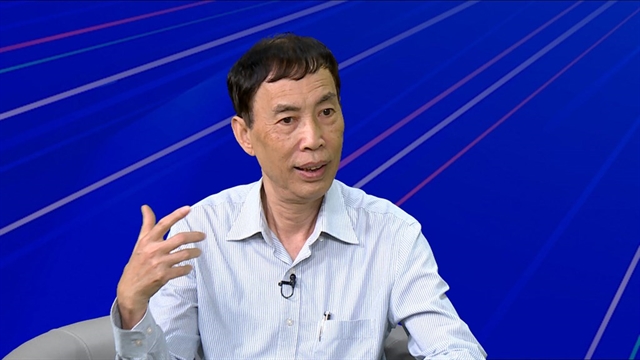
| Võ Trí Thành, PhD, member of the National Financial and Monetary Policy Advisory Council. — VNA/VNS Photo |
What macroeconomic context is shaping investment flows in 2026?
Võ Trí Thành, PhD, member of the National Financial and Monetary Policy Advisory Council: The most accurate word to describe the global economic context right now is uncertainty. That includes policy uncertainty and the recent US tariff developments. Behind uncertainty, there may even be instability.
Việt Nam, despite setting high growth targets, is still making strong efforts to maintain macroeconomic stability. That stability creates two very large capital flows this year. One is public investment — State budget funding for infrastructure and development projects. The second is credit.
However, credit this year is no longer as loose as before, and interest rates are higher. We have already seen that adjustment.
Nguyễn Minh Hoàng, head of Analysis Department at VietFirst Securities: The year begins in an environment of increasing global volatility. Geopolitical tensions and rapid changes in US trade and tariff policies have intensified capital movements worldwide.
In such conditions, international capital tends to seek markets with macroeconomic stability and solid growth prospects.
Domestically, interest rates, exchange rates and policy cycles are the three most important variables influencing asset pricing and capital allocation decisions. The 12-month deposit rate currently stands around 5-5.5 per cent, higher than last year, while exchange rate pressure remains a factor to monitor.
As monetary policy space narrows, fiscal policy and institutional reforms are becoming more prominent drivers of expectations.
.jpg)
|
| Nguyễn Minh Hoàng, head of Analysis Department at VietFirst Securities. — Photo courtesy of VietFirst Securities |
Which investment channels are likely to stand out this year?
Thành: When people talk about financial investment, there are usually three motivations behind it. First is to seek a safe haven and preserve value. Second is speculation. And third is that each individual and each organisation has a different risk appetite. That diversity creates the market.
Diversification should be understood in a broader sense. Investors should not put all their eggs in one basket, but not just in the narrow sense of spreading money across different asset types. Diversification also relates to short-term and long-term strategies.
Investors must consider three essential elements of any asset: value, price volatility and liquidity. In any asset they hold, they must think about how its value fluctuates and how liquid it is.
Hoàng: Investors are comparing returns and risks across deposits, bonds, equities, real estate, gold and digital assets. With interest rates adjusting to a new level, the cost of capital is higher, leading to greater differentiation among asset classes.
Bonds, especially high-quality corporate bonds and government bonds, are expected to gradually regain their role in asset allocation structures. As interest rates are higher and the bond market's legal framework becomes more complete following restructuring, this channel is becoming more attractive for investors prioritising stable income and risk control.
Gold remains supported by global uncertainties but faces increased volatility after strong gains. Real estate is in a rebalancing phase, while digital assets are experiencing cyclical corrections.
In this increasingly differentiated environment, the stock market stands out as a channel balancing earnings growth potential and manageable risk, benefiting simultaneously from macroeconomic stability and the corporate expansion cycle.
What should investors keep in mind to manage risks going forward?
Thành: In a context where the price of money is more expensive, meaning interest rates are higher, investors must be more cautious, especially with financial leverage.
Diversification must also incorporate liquidity considerations. In any situation, from a risk perspective, investors should maintain a portion of assets with high liquidity and strong capital preservation, even if returns are not high. Bank savings fit that description. Returns may not be outstanding, but the risk level is low and capital preservation is strong.
Some people accept more risk, some less. But whatever the case, risk management principles remain fundamental.
Hoàng: Opportunity and risk always go hand in hand. However, based on the current economic and policy cycle, 2026 should be viewed as a period of highly selective opportunities.
The focus should be on real earnings growth, the ability to benefit from policy implementation and disciplined portfolio management. Defining entry levels and risk thresholds in advance is essential to avoid emotional decision-making during volatile periods. — BIZHUB/VNS
Economy
 Economy
 Economy
 Economy
 Economy
 Economy
 Economy
 Economy
 Economy
 Economy
 Economy
 Economy
 Economy
 Economy
 Economy