 Society

Liechtenstein Prime Minister concludes official visit to Việt Nam
1.
|
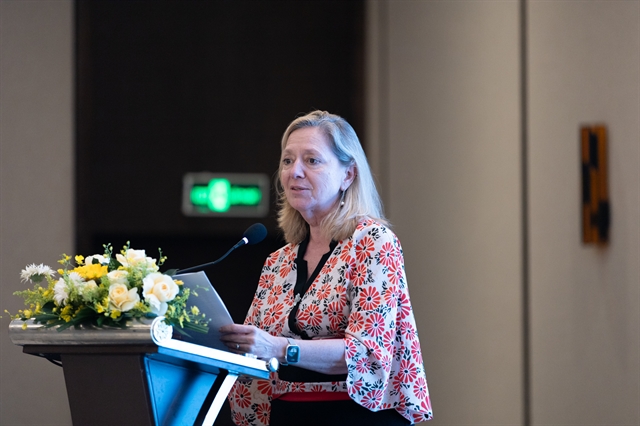
| Mariam Sherman, World Bank Division Director for Việt Nam, Cambodia and Lao PDR. — Photo courtesy of World Bank |
HÀ NỘI — The World Bank late Wednesday published a report titled 'Living or Leaving: Life in the Mekong Delta Region of Việt Nam', shining a spotlight on the region's urgent challenges related to poverty, climate risks, demographic change and the shifting landscape of economic opportunities.
The report finds that mounting environmental and economic pressures are reshaping the delta and calls for a people-centred strategy that invests in strengthened skills, advanced infrastructure and resilient, higher-value agriculture to protect livelihoods and sustain growth.
Grounded in updated household and labour market data, the report highlights how the Mekong Delta can adapt and sustain its role as the nation’s agricultural heartland while raising productivity, moving up the value chain and aligning with Việt Nam’s broader economic transformation.
Mariam Sherman, World Bank Division Director for Việt Nam, Cambodia and Lao PDR, said: "Public investment will need to strike a balance between safeguarding land and infrastructure that remain vital to local livelihoods, and building the skills, resilience and support that people need to pursue opportunities in an adaptive future.”
According to the report, since 2018, repeated droughts and saltwater intrusion, along with more frequent floods and extreme heat, have reduced farm incomes across the Mekong Delta.
This has prompted nearly 1.7 million residents to migrate over the past decade as households look for more secure livelihoods.
Yet the report finds that migration alone is often an insufficient buffer against economic shocks.
While around 14 per cent of households in the delta reported having a migrant member, only 58 per cent of these households receive remittances and nearly half of those transfers are less than VNĐ5 million (US$189, current rate) per year, an amount insufficient to lift families above the national poverty line.
To prepare communities for a more volatile future, the report argues that development policy should focus on people as much as places.
It proposes five key priorities, with a particular focus on expanding skills training so workers, especially young people, can move into higher value jobs; upgrading local infrastructure to attract investment, improve connectivity and lower costs for farmers; and building a more adaptive social protection system to assist people affected by shocks, particularly those unable or unwilling to migrate. — VNS
Society
 Society
 Society
 Society
 Society
 Society
 Society
 Society
 Society
 Society
 Society
 Society
 Society
 Society
 Society