 Society
Bridge takes shape
1.

|
| An overview of the new administrative centre of Phú Thọ Province following the recent merger. Photos courtesy of Phú Thọ Province |
Trần Như
PHÚ THỌ — After the recent administrative reorganisation, Phú Thọ Province is prioritising efforts to expand its socio-economic development potentials, with a focus on building well-rounded labour force as its most vital internal resource for fast and sustainable growth.
Recognising that no resource is more valuable than people, Phú Thọ has recently implemented a wide range of solutions to develop its human capacity. This remains a top priority and long-term strategy for the province.
Over the past five years, the province’s people-centred development approach has produced significant results.
In education and training, Phú Thọ has steadily nurtured a new generation of well-educated, compassionate young people with strong political grounding and the ability to adapt to a rapidly changing society.
Schools and classrooms have been upgraded, and curricula have increasingly focused on holistic capacity-building, life skills, civic responsibility, as well as the preservation of cultural identity.
As for labour and employment, Phú Thọ has accelerated vocational training aligned with market needs, placing workers at the centre of development. Vocational programmes and skills-upgrading initiatives have been tailored for different groups.
The province also encourages entrepreneurship and innovation, particularly among rural youth.
Industrial parks, craft villages and production clusters not only provide jobs, but also serve as practical environments for workers to upgrade their skills, access new technologies and modernise production mindsets.
Physical well-being is also a priority. The province's health system has recently been upgraded, while primary health care and treatment services have been implemented effectively. The sports movement continues to grow, helping promote healthy lifestyles and strengthen the long-term resilience of the workforce.

|
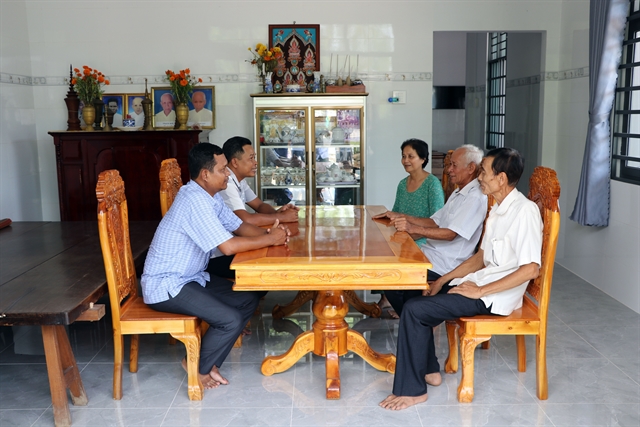
| A collective economy is a key pillar in building sustainable new-style rural areas in Phú Thọ Province. |
A defining feature of Phú Thọ’s people-centred development approach is the combination of preserving traditional values while embracing modern dynamism.
Residents retain a deep sense of cultural identity and national pride, while also demonstrating creativity, adaptability and readiness for international integration.
The province has also advanced its digital transformation in education, health care and social management, enabling residents to access modern technology, expand knowledge and strengthen their competitiveness in a globalised environment.
Social welfare has been secured, and both material and spiritual living standards have steadily improved, creating a foundation for comprehensive worker development.
Programmes on sustainable poverty reduction, new rural development and support for ethnic and mountain communities have delivered strong results.
The average monthly income is expected to reach VNĐ4.7 million (US$178.60) per person by the end of the year, up 37 per cent from 2020. Each year, the province creates around 58,000 new jobs, maintains a low unemployment rate of 1–1.6 per cent and reduces the proportion of agricultural workers to 22.5 per cent.
Phú Thọ also places a strong emphasis on ethnic and religious policies, safeguarding the freedom of belief and reinforcing national unity.
Since 2020, more than VNĐ2.6 trillion (around $100 million) has been mobilised to support ethnic communities and mountainous areas. Rural mountain communities have seen major improvements and poverty rates have fallen by an average of 1.4 per cent per year, while incomes have risen by about 1.8 times compared to 2020.
Collective economy
Within this broader development journey, the collective economy, led by co-operatives, has emerged as an important platform for advancing workforce development and building a sustainable countryside.
From 2020 to 2025, the province established 273 new co-operatives, raising the total to 752, with nearly 70 per cent operating effectively, reflecting clear gains in organisational quality and production models.
Co-operatives have provided farmers with knowledge, market access, technology and opportunities to increase their income. Many co-operatives have embraced technological innovation and digital transformation in management, production and distribution, contributing to a new generation of skilled, market-oriented farmers.
One notable example is the Đại Lải Agricultural Co-operative, which has expanded from a small operation into a larger green agricultural production model combined with eco-tourism, supplying VietGAP-certified products to schools, businesses and local markets.
However, challenges remain, including the small scale of co-operatives, limited capital, a shortage of skilled workers, and uneven management capacity.
To address these issues, Phú Thọ Province identifies continued people-centred development as a fundamental and long-term solution, expanding training for co-operative managers, attracting young people back to rural areas to start businesses and creating an environment that allows residents to take ownership of socio-economic development.
The provincial Department of Culture, Sports, and Tourism has advised the People's Committee to issue a comprehensive project on cultural and worker development over the next 10 years.
Dương Hoàng Hương, a member of the provincial Party Standing Committee and director of the department, said the plan is essential to evaluating the province’s cultural and development potential, along with its achievements and limitations.
The plan will define appropriate goals and solutions to ensure culture becomes a true spiritual foundation and sustainable resource for socio-economic development.
In this period of deep integration, building well-rounded workers is a strategic lever to restructure the economy, advance high-level rural development and strengthen the province’s overall competitiveness, he said. — VNS
Society
 Society
Society
Society
 Society
 Society
 Society
 Society
 Society
 Society
 Society
 Society
 Society
 Society
 Society
 Society
.jpeg)