 Society

Chinese Amateur Music Program Goes Global: Adapted Song Tops 2 Billion Streams, Chinese-Language Melodies Reach the World
1.
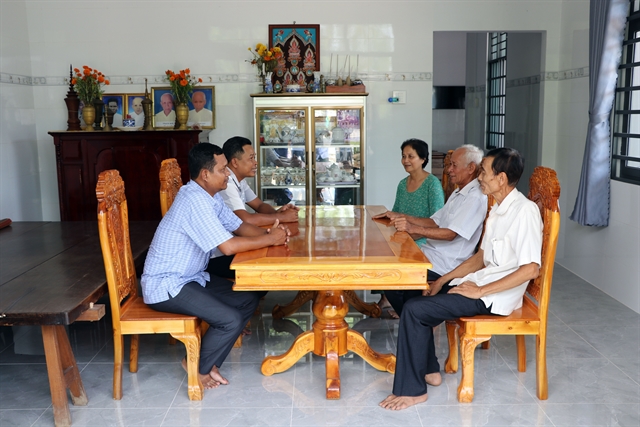 |
| Officials of local socio-political organisations in Vĩnh Long Province’s Tiểu Cần Commune regularly meet ethnic Khmer people to understand their concerns and aspirations. — VNA/VNS Photo Phạm Minh Tuấn |
VĨNH LONG — Ethnic Khmer households in Vĩnh Long Province are benefiting from the Government’s policies, livelihood support and targeted investments, which are improving living conditions and creating visible change in rural areas.
The province has more than 353,000 Khmers, or 10.4 per cent of its population, which is one of the largest Khmer communities in the Cửu Long (Mekong) Delta.
In recent years, ethnic policies and emulation movements linked to socio-economic development in minority areas have yielded excellent results.
In Hàm Giang Commune, where almost 90 per cent of residents are Khmer, supports for housing, land, production, and investment have been delivered fully and in a timely fashion, and as a result many families have seen their living conditions improved.
Trì Thị Sa Ri, a local, said authorities provided her family with 500 square metres of land, VNĐ50 million (US$1,900) to build a house and a soft loan for raising cattle, helping improve their lives.
Nguyễn Quốc Thanh, deputy chairman of the Hàm Giang People’s Committee, said the commune supported 113 disadvantaged Khmer households this year with more than VNĐ3 billion ($114,000), to buy farming land, build houses, and gaining access to tap water.
The commune has 129 Khmer people now working overseas under fixed-term contracts, contributing to higher incomes and improved living standards, he added.
It focuses on assisting disadvantaged households, expanding vocational training linked to labour market needs, improving job-transition skills and creating sustainable livelihoods for them, he added.
The lives of Khmer people in Tiểu Cần Commune have seen even clearer change.
Nguyễn Văn Tám, secretary of the Tiểu Cần Party Committee, said in the 2021-25 period, the province and the commune provided health insurance to 2,162 ethnic minority people, supplied clean water to 40 households, allocated housing land to 17 families, and implemented livelihood diversification projects under the national target programme for sustainable poverty reduction.
The commune also supported the construction and restoration of shrines and dining halls at religious establishments by providing more than VNĐ2 billion ($76,000), he said.
These measures have improved both the material and spiritual lives of local people.
Localities across the province have mobilised resources and implemented various programmes and projects to support Khmer people, including the provision of concessional loans.
With this support, many Khmer households have been able to invest in agriculture and business, and have used the loans effectively.
The assistance has also encouraged investment in machinery, improved production and steadily increased job creation, raising incomes and motivating the Khmer people to take part in building new-style rural areas.
An example of effective use of soft loans is Thạch Thị Chal Thi, founder of Sok Farm Co. Limited (Sokfarm) in Tiểu Cần Commune.
She established Sokfarm with the aim of helping local people improve their lives by maximising the value of native coconut trees.
She said the company received a VNĐ800 million ($30,400) concessional loan from a bank, enabling it to buy equipment and pay workers’ salaries in the early stages.
Thanks to its effective operation, Sokfarm repaid the loan and became a pioneer in producing organic coconut flower nectar products in Việt Nam.
Its products meet international quality standards and are exported to the US, the EU, Japan, and other markets.
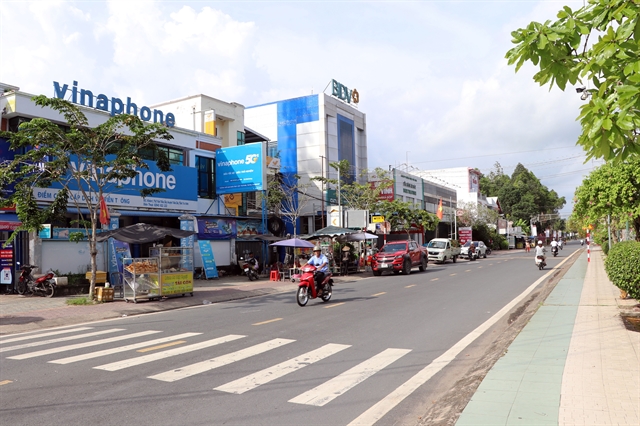 |
| With improved planning and upgrading, Vĩnh Long Province’s Tiểu Cần Commune, which has a large Khmer population, is becoming increasingly developed. — VNA/VNS Photo Phạm Minh Tuấn |
Consistent improvements in policy, infrastructure and awareness have created a new image for Khmer areas in Vĩnh Long.
Practical support has strengthened community solidarity, improved livelihoods and contributed to the province’s development.
Thạch Thị Thu Hà, director of the Department of Ethnic and Religious Affairs, said the province has introduced policies tailored to local conditions, focusing on improving living standards in ethnic minority areas and ensuring social welfare.
“Recognising the importance of ethnic and religious work, authorities at all levels have implemented measures to disseminate Party policies and State laws and encourage the Khmer people to comply with them.”
Grassroots communication is also emphasised through diverse methods.
Nguyễn Quốc Thanh, deputy chairman of the Hàm Giang Commune People’s Committee, said: “The commune applies communication methods suited to ethnic minority areas, helping people better understand Party and State policies.”
Võ Thị Bé Thảo, permanent deputy chairwoman of the Tiểu Cần Commune Fatherland Front Committee, said: “We work closely with religious dignitaries, pagoda management boards and Khmer community leaders to convey Party policies and State laws.”
Venerable Thạch Thưa, abbot of Đại Trường Pagoda in Tiểu Cần Commune, said the lives of Khmer Buddhist followers continue to improve and most people work hard.
Along with teaching Dharma, he also shares information about ethnic and religious policies, security regulations and socio-economic issues. — VNS
Society
 Society
 Society
 Society
 Society
 Society
 Society
 Society
 Society
 Society
 Society
 Society
 Society
 Society