 Society
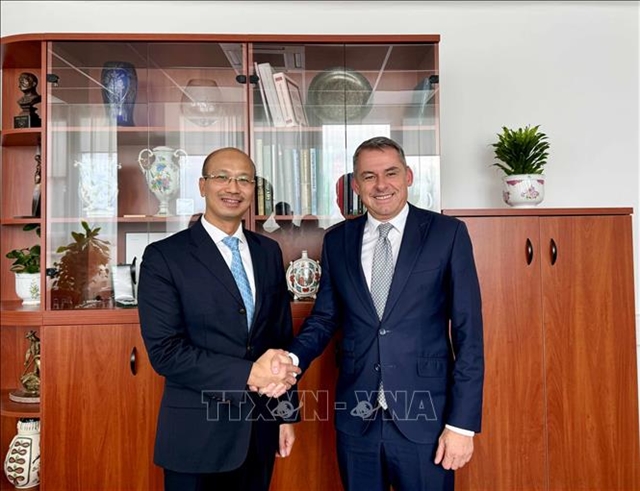
Việt Nam, Switzerland to turn education, sci-tech, innovation into cooperation focus
1.
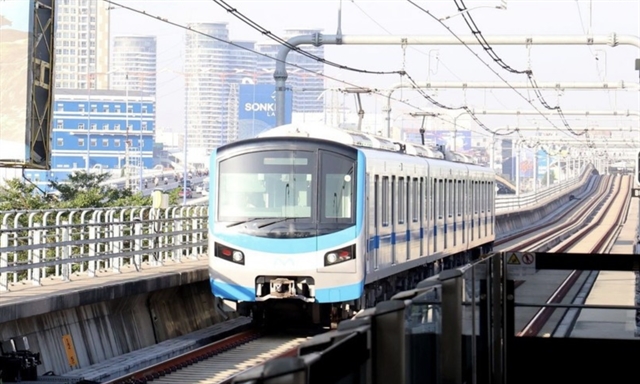 |
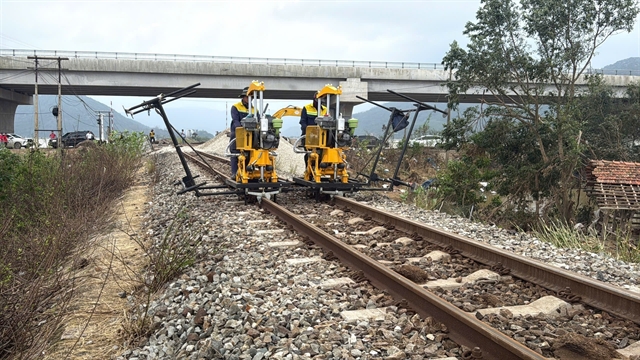
| Three key metro routes expected to complete by 2030 to improve regional connectivity and link Tân Sơn Nhất and Long Thành international airports. — VNA/VNS Photo |
HCM CITY — HCM City aims to complete three key metro routes by 2030 to improve regional connectivity and link Tân Sơn Nhất and Long Thành international airports, city authorities said.
At a press briefing on the city’s socio-economic performance late last week, Nguyễn Kiên Giang, deputy head of the Division for Traffic Structure Maintenance and Operation under the Department of Construction, highlighted the strategic importance of the new transport links.
City officials have recently submitted proposals to the Prime Minister and Deputy Prime Minister Trần Hồng Hà, calling for the acceleration of Metro Line 2’s two sections – Tham Lương-Bến Thành and Bến Thành-Thủ Thiêm – together with the Thủ Thiêm-Long Thành urban railway, which they say hold the greatest potential for early implementation.
The proposals also include continued investment in Metro Line 6 to strengthen connectivity between the two airports.
In late October 2025, the Prime Minister issued Decision No. 2404, approving adjustments to the national railway development plan for the 2021-30 period with a vision to 2050. Under the updated plan, the Thủ Thiêm-Long Thành route will be reclassified as an urban railway and integrated into provincial planning by both HCM City and Đồng Nai Province.
Giang said the city has identified the key transport projects that will be prioritised for implementation between 2026 and 2030, with emphasis on developments that enhance inter-regional links and expand the metropolitan area in line with the city’s growth strategy.
By 2030, the city expects to complete three major routes: Metro Line 2’s Tham Lương–Bến Thành section, its Bến Thành-Thủ Thiêm section, and the Thủ Thiêm–Long Thành urban railway – all serving to strengthen airport-to-airport connectivity.
For the Bến Thành-Tham Lương section of Metro Line 2, municipal authorities have instructed specialised agencies and investors to expedite appraisal and approval procedures with the goal of starting construction before January 19, 2026, to mark the 14th National Party Congress.
Regarding the Bến Thành-Thủ Thiêm and Thủ Thiêm-Long Thành sections, the Department of Finance is advising the People’s Committee on investment options, including a PPP model under a BT contract. The city is also preparing to update the project into the list of works governed by Resolution 188/2025 and aims to commence construction as early as possible so the routes can be operational by 2030.
Challenges remain significant, Giang noted, particularly in land clearance, financing, technology transfer and the development of local railway industries. The routes pass through densely populated and central communes, where construction may affect existing high-rise buildings and essential technical infrastructure.
For underground metro lines, complex engineering requirements and high investment costs mean progress could be delayed if legal procedures and funding mechanisms are not fully aligned.
Transit-oriented development (TOD) will also require close coordination between urban planning, transport, finance authorities and private investors to ensure synchronised development along metro corridors. “This is a new model for the city, which is gaining experience from international cases while piloting its own approach,” Giang said.
To speed up progress, HCM City plans to fully leverage its special policymaking authority under Resolution 188 and the Railway Law to streamline investment preparation and project execution.
The city is also reviewing and updating urban development plans around stations and depots to support TOD, particularly along Metro Line 1 (Bến Thành-Suối Tiên) and Metro Line 2 (Bến Thành-Tham Lương).
In addition, the city has finalised a capital mobilisation plan for the urban railway network, launched training programmes to strengthen human resources for the rail sector, and is reviewing land reserves to propose a list of land assets for BT projects to the People’s Council.
Resettlement plans are also being developed to support land acquisition for major transport works.
“With these measures, the city is confident that project timelines can be significantly shortened, ensuring progress and quality while building a modern public transport system that effectively connects the urban core with surrounding regions and meets the mobility needs of residents,” Giang said. — VNS
Society
 Society
 Society
 Society
 Society
 Society
 Society
 Society
 Society
 Society
 Society
 Society
 Society
 Society
 Society