 Society

Việt Nam, Switzerland to turn education, sci-tech, innovation into cooperation focus
1.
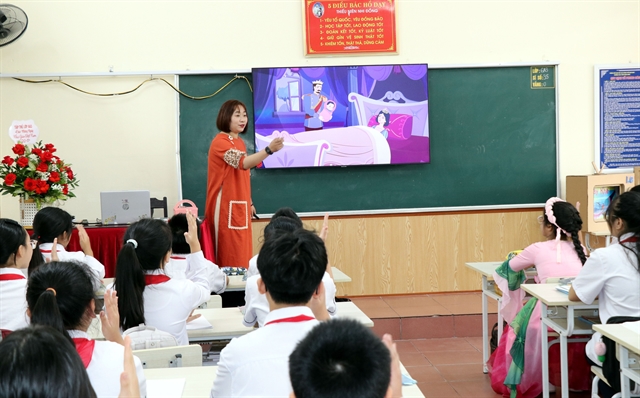 |
| A teacher in the northern province of Ninh Bình uses AI-generated illustrations to make her literature lesson more engaging. — VNA/VNS Photo |
HÀ NỘI — The Ministry of Education and Training has drafted a plan that for the first time introduces structured AI learning across all levels of general schooling.
The ministry says the push reflects the speed and scale of technological change, with AI rapidly reshaping economies, labour markets and everyday life.
The draft framework divides AI learning into four interconnected strands.
It begins with human-centred thinking, underscoring that technology must ultimately serve people and teaching students how to identify real-world needs before judging whether an AI solution fits.
A second strand focuses on ethics, equipping learners to recognise privacy risks, algorithmic bias and the legal and moral questions surrounding automated decision-making.
A third explores techniques and applications, introducing the basic principles behind how AI systems work and guiding students through hands-on use of common tools.
The final strand moves into system design, encouraging students to progress from simply consuming AI-powered products to building or refining simple systems of their own, with problem-solving as the organising instinct.
Learning content would be tailored to age groups.
In primary schools, children would engage with simple, intuitive applications that help them recognise AI in daily life while learning early lessons about data protection and copyright.
Secondary school students would begin using AI tools to produce digital work and support their studies, alongside basic instruction in how AI operates and what ethical responsibility looks like in a digital society.
At the high school level, students would be encouraged to design or improve simple AI applications through science projects, with a stronger focus on creativity, innovation and linking AI skills to future careers.
Schools could also offer elective modules for students who want a deeper technical grounding, whether in programming, system development or specialised areas of AI.
If approved, the ministry plans to complete teaching materials and train a core group of educators by December 2025.
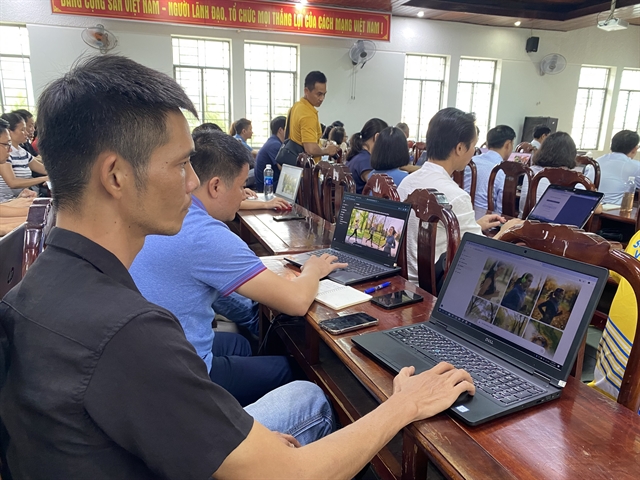 |
| Lecturers at the Đà Nẵng Sport University are trained in AI in September. |
Pilot implementation will run from December 2025 to May 2026 across selected schools, followed by a review in June 2026.
A refined framework would then be proposed for nationwide rollout in subsequent school years.
In parallel with student instruction, the ministry is also testing ways to deploy AI in school administration and to help teachers with lesson planning, assessment and classroom management – part of a wider effort to modernise Việt Nam’s education system for the digital era. — VNS
Society
 Society
 Society
 Society
 Society
 Society
 Society
 Society
 Society
 Society
 Society
 Society
 Society
 Society
 Society