 Society

AIMCONNECT 2026 Held in Singapore, Bringing Global Automotive Leaders Together to Explore the Future of AI, Trust and Connected Mobility
1.
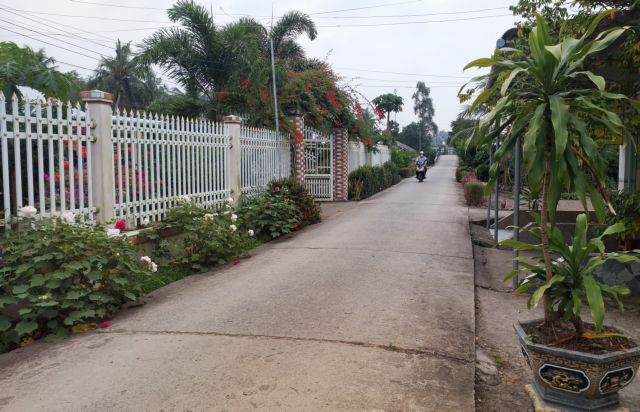 |
| Rural roads in Cà Mau Province have been concreted. — VNA/VNS Photo Tuấn Kiệt |
CÀ MAU — Cà Mau Province has effectively built new-style rural areas, transforming the countryside and promoting socio-economic growth.
Under the national target programme on building new-style rural areas, the southernmost province has adopted comprehensive measures.
Vĩnh Lộc Commune was once a remote area with a dense network of rivers and poor transport links. When the programme was launched 15 years ago, the commune prioritised improving its transport infrastructure.
It now has 35 inter-commune roads and 11 hamlet and inter-hamlet routes, with a total length of more than 60 kilometres.
Roads are now accessible all year round.
Trần Thành Hon, deputy chairman of the commune People’s Committee, said that besides the efforts of local authorities, the success is also owed to the enthusiastic participation of local residents, especially in the form of land donations for building roads, schools and health centres.
They have also contributed labour and money to improve their area, he added.
For instance, Trương Thị Hạnh from Cầu Đỏ Hamlet donated more than 1,000 sq.m of land to build a road and a commune health centre.
Bình Tốt A Hamlet in Vĩnh Phước Commune is also a bright example of building new-style rural areas.
Sử Công Hầu, a local resident, said: “Since the programme began, households have paid more attention to hygiene, planting and maintaining green fences and ornamental flowers around their homes, creating a clean and green landscape.”
The programme has driven progress in infrastructure and socio-economic development, particularly in transport and the environment.
Trần Văn Liêm, Secretary of the Vĩnh Phước Party Committee, said the commune’s infrastructure and economy have both made significant progress.
People’s mindset has shifted from looking to wait for support to actively taking part, he said.
They now see building new-style rural areas as both a right and a responsibility, he said.
The commune has introduced several effective farming models, including rice–shrimp farming, organic rice cultivation and developing products recognised under the national “One Commune – One Product” (OCOP) programme, that have helped increase incomes, protect ecosystems and adapt to climate change, he said.
“Since the two-tier local government model was introduced [on July 1], alongside stabilising the organisational structure, local organisations and associations have also actively promoted and encouraged residents to maintain and meet the criteria of building new-style rural areas.
“The commune also reviews and evaluates criteria to plan timely upgrades.”
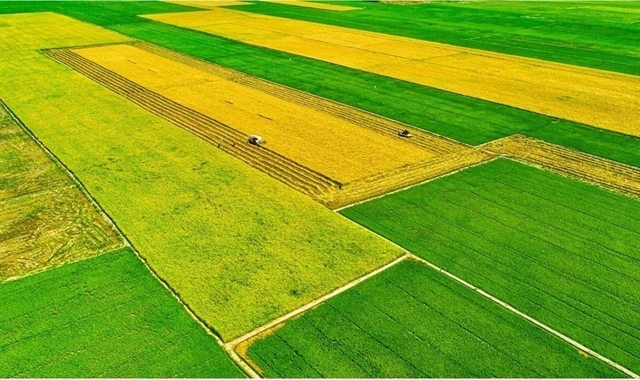 |
| Large-scale fields in Cà Mau Province use machines for various agricultural tasks. – VNA/VNS Photo |
Sustainable development
After 15 years of implementing the programme, 43 out of 55 communes in Cà Mau have been recognised as “new-style rural communes.”
Three have achieved “advanced new-style rural commune” status and one has reached “exemplary” status.
Since 2021, the province has allocated nearly VNĐ48.53 trillion (US$1.8 billion) for the new-style rural area programme.
According to its coordination office for new-style rural areas, the programme has mobilised the combined strength of the entire political system and local communities.
As a result, living standards have improved, and many successful production models have been expanded, it said.
The province focuses on developing production linked to economic restructuring suited to local conditions, while promoting the use of technology in cultivation, husbandry and aquaculture to enhance value, exports and sustainability, it said.
With the motto “Building new-style rural areas has a starting point but no endpoint, and people’s satisfaction is the measure of success,” it plans to strengthen communication about the programme’s significance through diverse and engaging forms.
It will also ensure close coordination between sectors, authorities and localities in the implementation of the programme.
Efforts will focus on restructuring the rural economy in line with the realities of each area while ensuring it aligns with new-style rural area development.
The province will work to address environmental pollution, household waste and pesticide residues and the supply of clean water to rural residents, especially in areas severely affected by climate change.
The coordination office has instructed communes to prioritise the effective use and operation of infrastructure projects meant to foster local socio-economic development.
It has also encouraged continued public engagement in building sustainable new-style rural areas, turning localities into truly liveable countryside communities. — VNS
Society
 Society
 Society
 Society
 Society
 Society
 Society
 Society
 Society
.jpg) Society
Society
 Society
 Society
 Society
 Society
 Society