 Society
Top Vietnamese leader highlights new horizon for Việt Nam–Denmark cooperation
1.
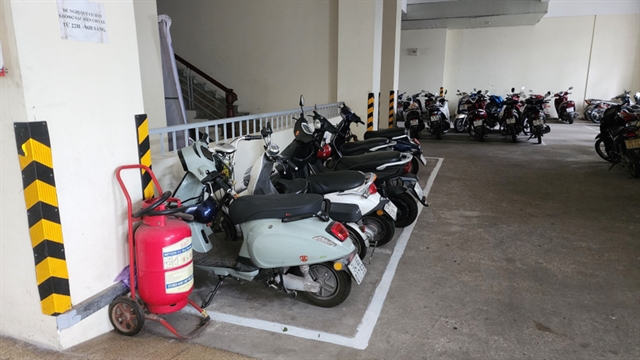 |
| A designated charging area for electric motorbikes at an apartment building in Hà Nội. — VNA/VNS Photo |
HCM City — HCM City authorities have urged the Ministry of Construction to establish clear national regulations for installing electric-vehicle (EV) charging stations in apartment buildings, citing safety risks and growing disputes involving developers, building managers and residents.
In a recent submission, the city’s Department of Construction said existing apartment design standards, particularly national code QCVN 04:2021/BXD, do not address EV charging infrastructure.
Key gaps include requirements for designated parking or basement spaces, ventilation and smoke-extraction systems, minimum distances from fuel-powered vehicles, and electrical-system specifications.
Officials have warned the lack of technical and fire-safety rules for EV chargers and lithium-ion-powered vehicles in enclosed spaces complicates design approvals, safety inspections and requests to retrofit older buildings.
Recommendations
To keep pace with surging EV adoption, the department recommended the ministry adopt internationally recognised standards such as IEC 61851, IEC 62196 and NFPA 70.
It also called for dedicated national standards covering EV charging stations across all building types, from high-rise apartments to outdoor parking lots.
The city has proposed amending national condominium management regulations to spell out procedures for repairs or design changes, including the installation of charging equipment, to prevent conflicts between residents, developers and management boards.
Beyond the housing sector, the city has asked the ministry to provide guidance on installing or upgrading charging facilities in other types of buildings, with clear links to land-use rules and zoning requirements.
It has also suggested revising the Construction Law so that EV-charging installations would not require a construction permit, provided they do not affect a building’s structural integrity and comply with fire-safety and environmental rules.
Concerns about fire risks associated with lithium-ion batteries have fuelled similar disputes in other provinces, officials noted.
HCM City currently has more than 39,500 electric cars and nearly 87,000 electric motorbikes.
Outside residential complexes, the city hosts roughly 1,000 charging stations. Operator V-Green runs the largest network, with around 900 stations, 9,400 chargers and 14,700 charging ports, while Selex Motors operates about 50 battery-swap locations.
City leaders plan to expand EV infrastructure significantly, including the installation of at least 1,500 fast-charging poles at key sites and a rapid scale-up of battery-swap networks to support Việt Nam’s transition to greener transport. — VNS
Society
 Society
 Society
 Society
 Society
 Society
 Society
 Society
 Society
 Society
 Society
 Society
 Society
 Society
 Society