 Society

ONYX Hospitality Group Wins Best Local Hotel Brand – Thailand for the Second Consecutive Year at the TTG Travel Awards 2026
1.
|
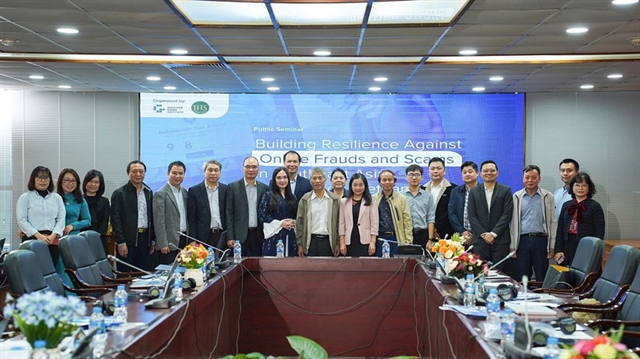
| Delegates attend the seminar. Photo courtesy of Việt Nam Academy of Social Sciences |
HÀ NỘI — Recommendations and solutions have been discussed to safeguard security in cyberspace, carefully suited to Việt Nam's current conditions.
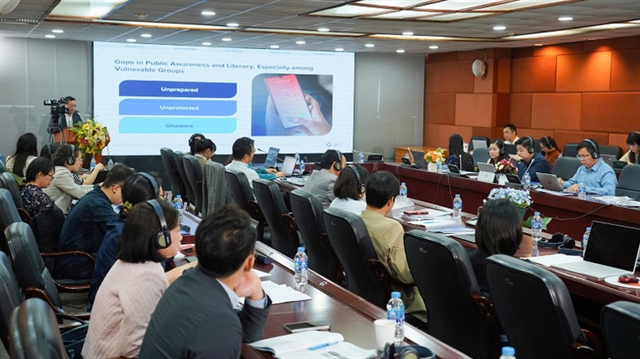
Experts at an international seminar, titled 'Building resilience against online frauds and scams in Southeast Asia: Spotlight on Việt Nam', proposed strengthen national capacity to ensure the country is less vulnerable to potential attacks.
The seminar was held in Hà Nội by the Institute of Human Geography and Sustainable Development under the Việt Nam Academy of Social Sciences, in collaboration with the Tech for Good Institute (TFGI) of Singapore.
It acts as a forum for scientific dialogue, bringing together leaders, researchers, companies, social organisations and community representatives to explore the landscape of online scams and fraud in Southeast Asia from multiple fields.
Participants also proposed mechanisms to build and strengthen user resilience against increasingly sophisticated forms of scams.
Cybercriminals are exploiting emerging technologies such as artificial intelligence (AI) to automate and personalise fraudulent activities. In 2024, Asia accounted for more than half of the total global financial losses related to scams.
Việt Nam's digital transformation has achieved remarkable progress. However, similar to other countries in the region, online scams and fraud cases are on the rise. Last year, authorities recorded 10,000 online fraud cases, with estimated losses of nearly US$759 million.
From January to August 2025 alone, the number of online scams surged by 65 per cent compared to the same period last year. These figures highlight the urgent need to strengthen domestic resilience and enhance cross-border cooperation to combat transnational cybercrime.
|
| An overview of the international seminar, titled 'Building resilience against online frauds and scams in Southeast Asia: Spotlight on Việt Nam.' Photo courtesy of Việt Nam Academy of Social Sciences |
Citra Nasruddin, Programme Director of TFGI, said: "Given the cross-border nature and rapid growth of online scam tactics, an 'all-of-society' approach is essential to protect citizens and strengthen trust within the digital ecosystem."
Lê Văn Hùng, Deputy Director of the Institute of Human Geography and Sustainable Development, said: "Online scams are increasing, with methods becoming more diverse and sophisticated, especially as digital transformation accelerates across most sectors in Việt Nam."
"This issue significantly affects business operations of enterprises and households, as well as the daily lives of citizens. Therefore, discussions aimed at identifying comprehensive solutions, from state management agencies, businesses, social organisations and improvements in public awareness, are extremely important."
Keith Detros, Programme Manager at TFGI, cited the results of the institute's latest report, titled 'Building Resilience Against Digitally-enabled Scams and Fraud in Southeast Asia: A Whole-of-Society Approach,' as saying that governments around the world are responding to online scams and fraud in various ways, from new laws and regulatory measures to public-private partnerships, consumer education campaigns and community initiatives.
Given the rapidly evolving and cross-border nature of digital fraud, countries need to adopt a whole-of-society approach in the coming time to protect people and maintain trust in the digital ecosystem, he added.
One of the key highlights of the workshop is the capacity-building approach structured around four pillars that guide anti-scam efforts throughout the entire process, including Protection – Identification and Detection – Response and Recovery – Adaptation. — VNS
Society
 Society
 Society
 Society
 Society
 Society
 Society
 Society
 Society
 Society
 Society
 Society
 Society
 Society
 Society